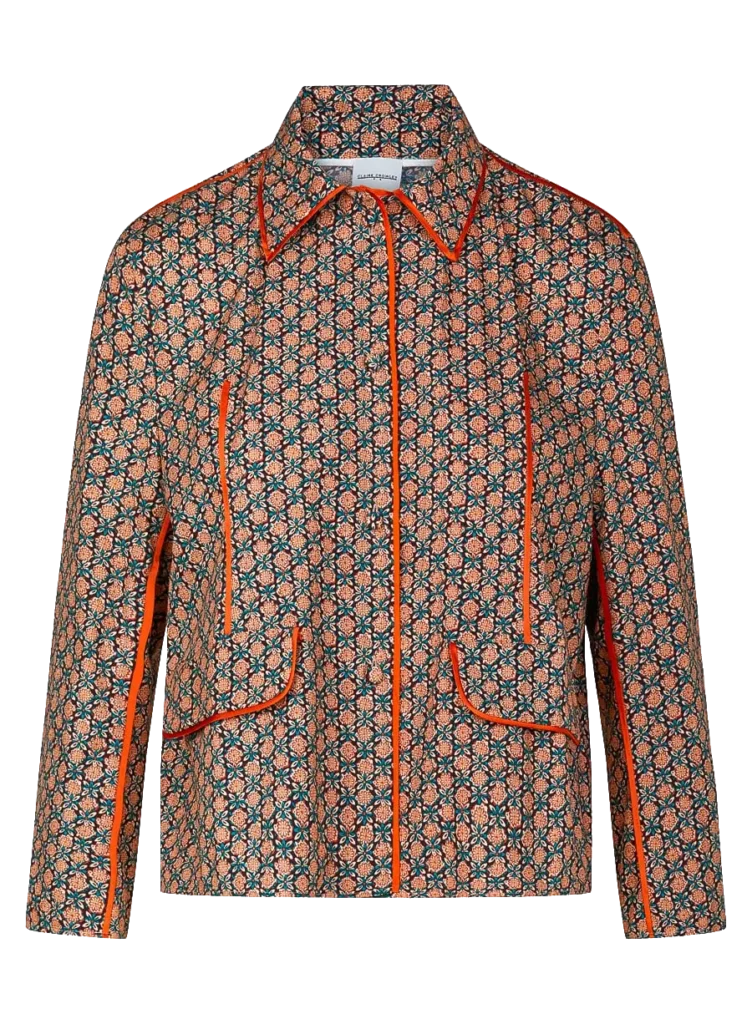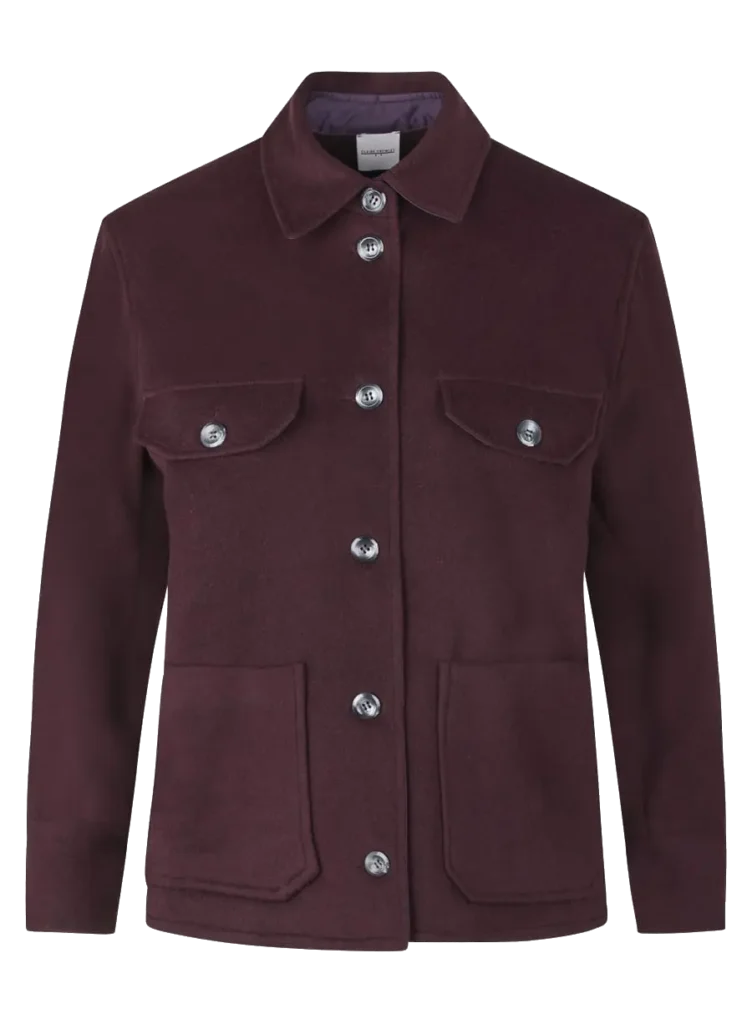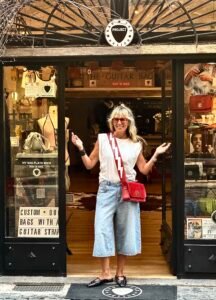
Claire Crowley is the kind of designer who quietly reshaped the rules—one well-made piece at a time, never compromising her integrity or straying from her guiding ethos: “Collect and cherish,” alongside Vivienne Westwood’s mantra, “Buy less. Choose well. Make it last. Quality, not quantity.”
Based in Rome, she built her eponymous label from the ground up, creating elegant, wearable pieces that blend British tailoring with Italian craft—and putting her own unique twist on the classics. Her collections have been shown at top trade fairs in New York, London, and Paris, and sold in boutiques across the U.S. and Europe. She’s dressed generations of loyal clients, collaborated with seamstresses once employed by Fendi, upcycled deadstock fabrics into sustainable designs, and stayed fiercely committed to slow fashion long before it was a trend.
In this candid interview, Claire shares how she got started, what keeps her inspired, and why the future of craftsmanship depends on what—and how—we choose to value.
Interview with Claire Crowley of Claire Crowley Portable
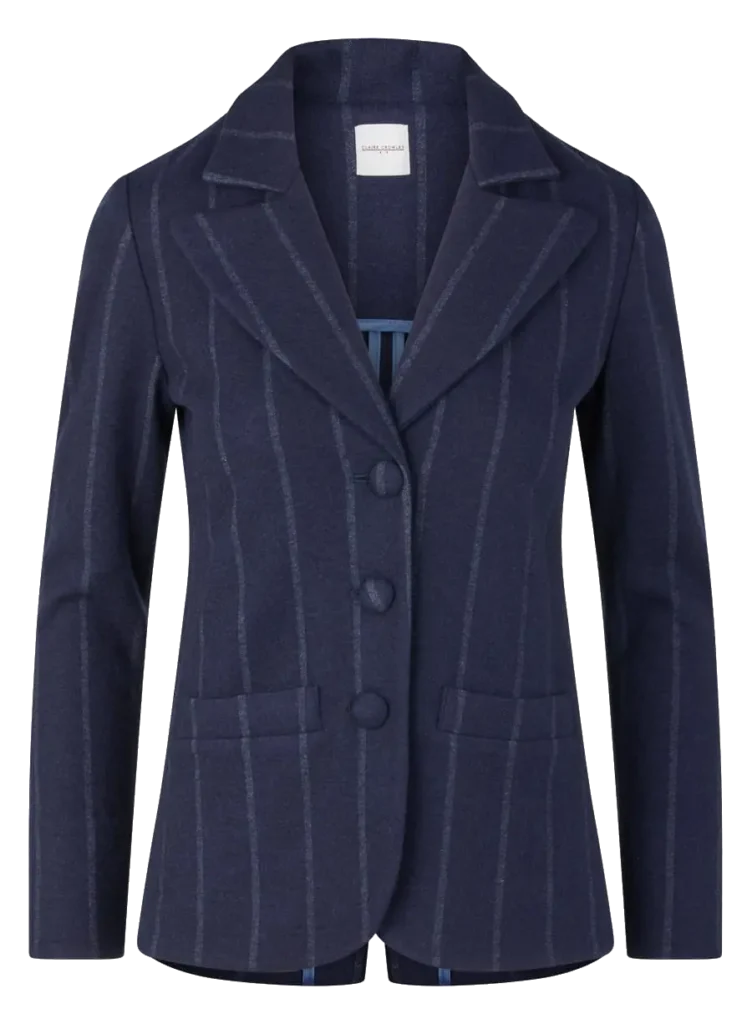
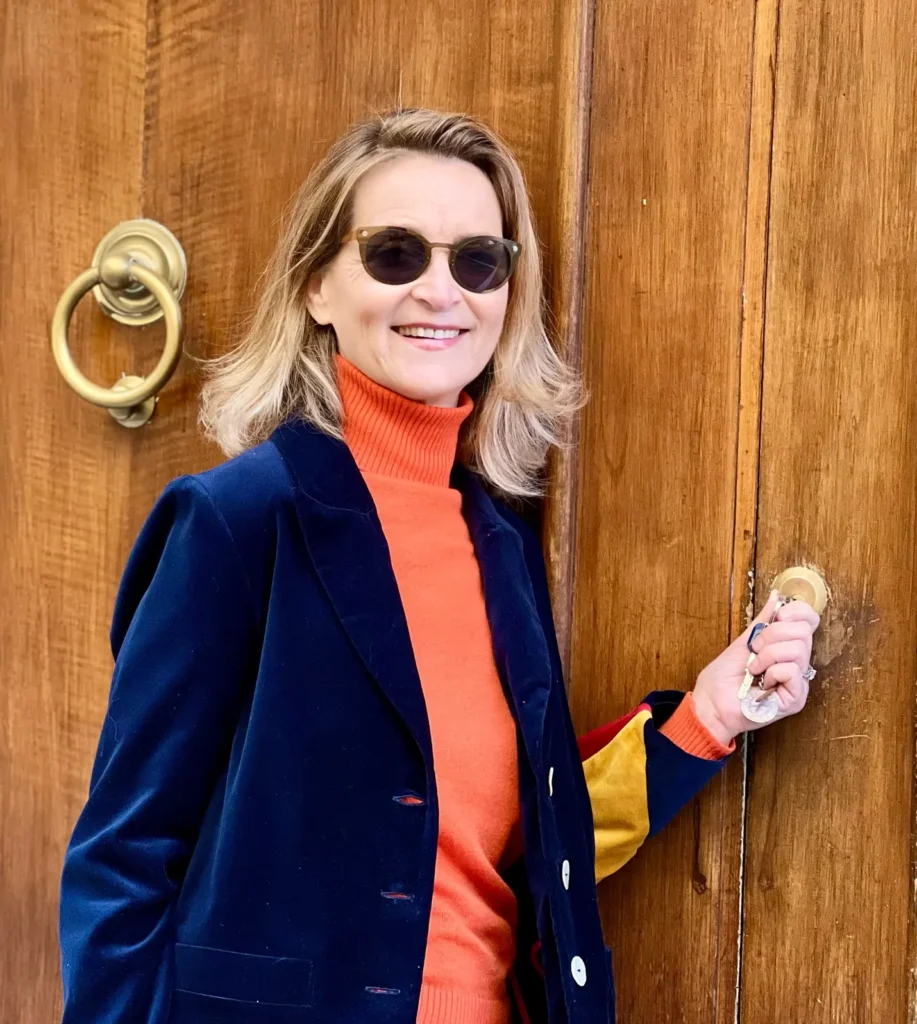
It’s a cold, brisk, and sunny February morning when I meet fashion designer Claire Crowley at a local café near her studio in Rome’s Parioli neighborhood. Slim and soft-spoken, she nonetheless has a powerful presence. Wearing a cheerful orange rollneck with a crisp dark blue velvet blazer from her own label, she exudes a quiet elegance. With her blonde patrician bearing and immaculate “cut glass” British accent, Claire might at first seem slightly intimidating—but as soon as she begins to speak, it becomes clear that she is kind, down-to-earth, and utterly approachable. Like the impeccable velvet blazer she designed, a closer look reveals unexpected flair (in the blazer’s case, a bold scarlet and mustard sleeve reminiscent of David Bowie’s glam-rock heyday).
Born in Rome to English parents, Crowley was raised in the Eternal City where she attended St. George’s International School. After a brief stint in London in the early ’80s, she returned to Rome, married an Italian, and raised three children—all while building a successful fashion line, Claire Crowley Portable, now sold in select stores in the U.K. and U.S., as well as online and through private appointments at her Rome showroom.
Describe yourself in 3 words.
Practical, and although it seems “controsenso” (contradictory), disorganized, straightforward.
If you had to pick a motto for your brand, what would it be?
“Collect and cherish”.
Is that the same motto you would pick as your own personal motto?
Yes. I don’t like to have things that I don’t use and that I buy just because maybe they’re in fashion… I’ve always collected clothes. I’ve always had a thing about getting something, some piece that I really liked and made me feel really good. And I get rid of things in the sense that I give them to people, to my friends, to my children. I like giving things away as well, but I think it’s so nice to have something that always makes you feel: “Wow, I really feel good in that! I want to keep it; it reminds me of a period in my life.”
How did you start designing?
Well, basically when I was young, I was always dressing up, but we didn’t have much of a choice in clothes then, we didn’t have a lot of stuff. So, I used to play around with vintage clothing a lot and I was always the one, that if we went to a party, I would put together looks. I’ve always had this thing about patching things together or mixing them together. And then I did a few little jobs for a friend of mine in London, and she was in fashion. And she was the one that suggested to me to start doing my own collection as I really loved coats and jackets. She said, ‘Why don’t you make a little collection of your own and then start selling it to people?’ And I thought, okay, why not? I’ll try. She really pushed me a tiny bit because I wasn’t- that confident… and that’s how it all started.
I love that story, not just because of what a good friend she was to you, but especially because it’s about a woman helping another woman, which isn’t always the most common perception of how things work in the fashion industry. It’s sort of the antidote to the Devil Wears Prada.
We grew up together. We’d known each other since we were about twelve. And we shared all of our summer holidays because we had a holiday home in Malta, both of us. She’s Maltese and she became a very successful designer and built a very successful business…she had a very good business mind…She sat down with me one morning and said, “Look, everybody loves what you do: you always turn up with these pieces and everybody wants them and wants to sell them.” She made me go with my pieces to the shop in London, which is called the Cross, and they were my first clients.
Was it hard to learn the business part?
I was incredibly lucky. I learned the business as I went along, mostly by asking questions and speaking to people who had been in the industry for years—in creative roles, technical roles, all sorts. Everyone was so generous with advice and contacts. That’s how I found the two seamstress sisters who made my very first collection of coats—and they still do my samples today. They’re now in their late 80s and 90s, and they used to work for Fendi back in the day.
They were the old-school type—so precise and proud of their craft. In the afternoons, they’d meet discreetly in cafés around Piazza di Spagna with private clients to make custom wardrobes, as long as they weren’t copying Fendi designs. When I first came to them, my designs were all patched together—experimental and a bit chaotic—and they were so kind and patient. They’d say, “Claire, if you want this effect, you need this type of cut,” or “For that line, you need this kind of stitch.” Their feedback was invaluable. That experience really shaped how I approach design today.
Together, we produced my first full collection of coats, which I took to a trade fair in New York called Coterie. They accepted me, and that’s when I started doing the business in a more serious way. It was all so hands-on. I was buying fabric stock around Florence, producing everything with these two incredible women, and somehow managing to fulfill orders from shops across the U.S. and Europe. The first year I only did New York, but after that, I was doing trade fairs in New York, Paris, and London.
Back then, I used to sit at my booth and write order after order. And because I was working from leftover stock fabric, I had to be strategic. I made friends with the big fabric stock sellers and would ask them to hold rolls for me—“I’m buying three meters now to make a sample, but can you put the other 20 meters aside until February?” And they would. I’d show up at trade fairs with all my swatches, and when I sold out of a fabric, I’d just say, “That’s it—no more!” It was kind of unbelievable how I managed to pull it off, but I had so much help from good people. It was a real community effort.
Do you think that would’ve happened if you weren’t in Italy? Or is that one of the good things about being in a country like Italy where when there’s a personal relationship, they really do go to great lengths for you even in a professional context?
Absolutely. In Italy, business is personal. I’ve worked with many of my suppliers for over 25 years. We’ve grown up together. Recently, I sent a friend to one of my fabric suppliers. I phoned ahead to let them know she was coming. Later, she came back and said, “Claire, it was like a password. The moment I said your name, everyone lit up.” That kind of care and loyalty—it just doesn’t exist everywhere.
What’s the state of craftsmanship in Italy today? Are skilled workers still easy to find?
Unfortunately, no. There’s a real crisis in skilled labor. One of my main factories has 12 machines but only two or three trained seamstresses. They simply can’t find new talent. The younger generation is not entering the trade, and fast fashion has made it seem like these skills aren’t valuable anymore.
Another factory I work with is run by a woman who has extremely high standards. She’s tried hiring interns from fashion schools, but she says she doesn’t have time to train people who aren’t already skilled. And that’s the problem—we’re losing a generation of artisans because there’s no system to pass on the knowledge.
Speaking of a crisis in the future of artisanship, you told me a saddening anecdote about a 90-year-old shoemaker—can you share it here?
Of course. There’s a Neapolitan shoemaker I know who’s in his 90s. He still works every day and his hands are magical—what he makes is true art. One day, a foreign client of mine wanted to visit and watch him work. I asked him, and he had to decline—not because he didn’t want to share, but because his insurance wouldn’t allow anyone else in the workspace. He was so apologetic. It broke his heart not to say yes.
To me, that moment symbolized something larger: we have these masters of craft who still care so deeply, but the world around them is changing fast—and not always in ways that protect or honor their work.
If you were not a fashion designer with your own brand, what would you be? Or what else would you do?
I wasn’t doing this; I’d probably be doing it for somebody else. I love production. I love the contact with the factories and everything to do with production. I am now going to do a project for another person and follow all her production and her styling for a very interesting project which is going to come out next year.
You’re also working as a consultant now—what does that involve?
Yes, I’ve started working as a consultant on a very interesting project. I’m helping a client—someone who’s very busy and based abroad—develop a new collection. I guide her through everything: choosing materials, working with Italian factories, and coordinating production and styling. It’s a role I love because it combines creativity with structure, and I genuinely enjoy building those relationships with the artisans and manufacturers.
What is your best-selling item?
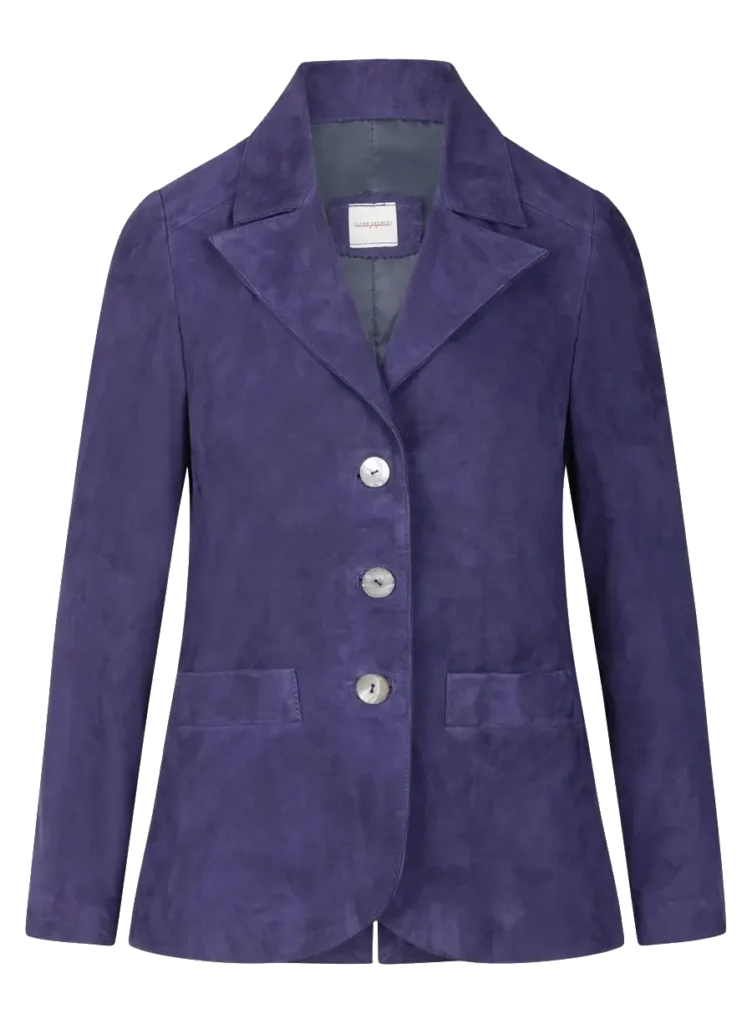
Blazers, my blazers, everybody likes them, and they cover the whole range,
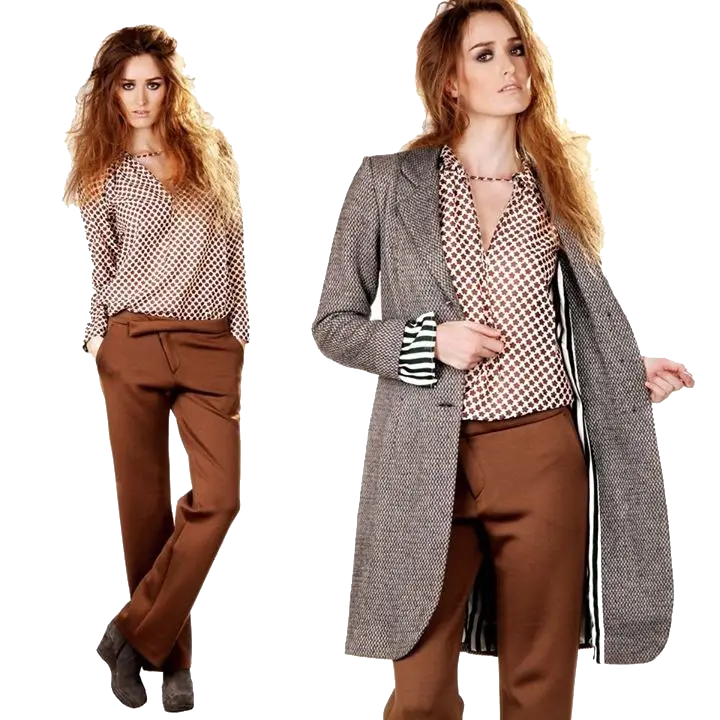
Is that your favorite item? Yes, it is. Love doing blazers and coats. My first collection, which was called KCC Roma, and which I sold worldwide was blazers and coats. When I started off in the trade fairs, I used to have three styles of coats and two styles of blazers. Then I developed them into summer, winter, different grains, pockets that could be taken off and put in and used as a bag.
Speaking of favourite pieces, there’s a special and unique design you created that really caught my eye. Can you tell me how that come about?
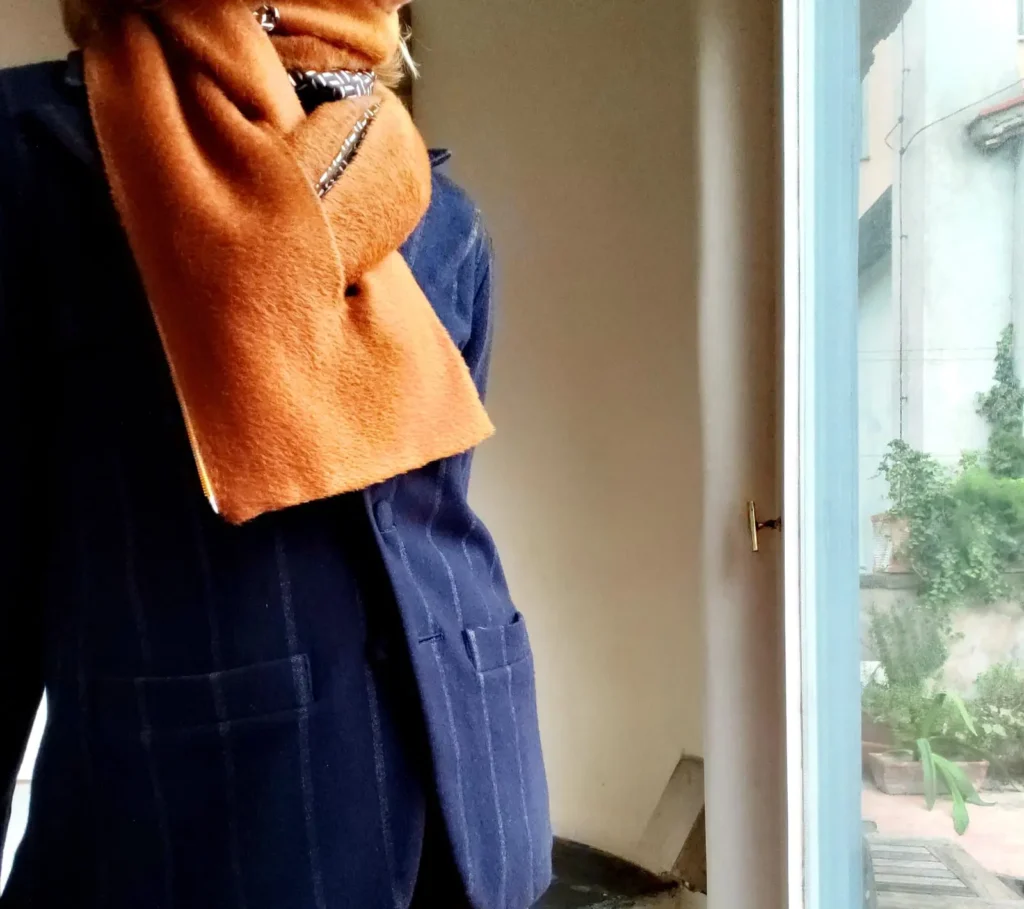
That started by complete accident, actually. A dear friend of mine once gave me a fleece scarf with a zip up the front to wear while riding my scooter. It was warm and functional, but it wasn’t quite there, design-wise. So I decided to create my own version.
I reimagined it with warmth, elegance, and practicality in mind—making it longer, adding deep pockets, and designing it so it could be tied in different ways. I originally made them from dismantled vintage Astrakhan coats, but even though they were upcycled, fur wasn’t the right choice for online sales. People can get very upset. So now I’m using a new, luxurious eco-fleece I found at a Milan trade fair. It’s velvet-like on the outside, soft inside, and I’ll be launching a new scarf collection soon.
What is the most challenging thing about what you do and what is the most rewarding?
I would say that the most challenging thing is probably confronting your collection every year with the people who come to see it, with the public because sometimes you wonder whether you took the wrong trip. You just wonder whether people will understand. When you start off creating, you go into this sort of fantasy land… and then you wonder whether your message is strong enough for people to understand.
The most rewarding is when people do get what you are doing…for me, the most rewarding things when people really understand the care that I take in the manufacturing and the fabrics, which we all take for granted now.
Ten years from now where do you see yourself and your brand?
I see myself creating more even more capsule collections and even more sophisticated collections because there will be so much more interesting materials that are being developed now. That’s what I am so curious about, it’s making clothes for the future and I’m finding new, very, very sophisticated materials.
I thought it was so refreshing and straightforward when you wrote that your pricing philosophy is to set profit margins at two to three times the cost of production—not seven to ten like many others do. Honestly, I didn’t even know what the average markup was. I’ve never heard anyone in fashion actually spell out the numbers before.
No, people usually don’t. But I think it’s really important—if you want to be transparent, you have to explain how it all works. I’ve noticed this especially working directly with clients. People often don’t understand the process behind creating a collection. They think it’s just imagination and a pretty dress magically appearing. But there’s so much more involved.
When you see 20 beautiful dresses hanging on a rail, behind each of those are usually multiple samples. If I’m lucky, I’ll only have made one—but more often it’s two or more to get it right. Each one costs money and time.
Then comes the production phase. Today, all factories use plotters—large-format printers that produce paper patterns for cutting fabric. These aren’t one-time tools; you have to pay to print them every time. That alone adds cost before a single piece is sewn.
So, when I price a piece, I’m not marking it up 300%. I add everything up and apply a modest markup—maybe 2.5 times the cost. That’s how I keep things fair. And I think it’s important to talk about this, especially now, when fast fashion has distorted people’s sense of value.
Do you think if someone wanted to start a line now—say, using a good tailor to make a small collection—it would be more affordable than producing through a factory?
It depends. Tailors are great for individual pieces—I have a tailor I use when making something for my husband or kids. But when you’re producing a collection, you also need to handle sizing, and that’s an entirely different ballgame.
Sizing is mathematical. You used to have a modellista—a pattern maker—who would manually calculate all the different sizes with a ruler. Now, computers and plotters do that, but you still have to produce and pay for each version of the pattern. A tailor might be able to create one size beautifully, but scaling that up to 38, 40, 42, etc., for production? That requires technical knowledge. And today, one of the biggest challenges in production is that we’ve lost a generation of skilled pattern makers and seamstresses—again, because of fast fashion. It’s just not seen as necessary or profitable anymore.
Favourite Source of Inspiration in Rome: Anything to do with DolceVita era.
Favourite Source of Inspiration in Italy: The beauty of all the cities in Italy. The aesthetics.
Favourite Source of Inspiration in the world: The future. The future in front of us, the new world.
What is one thing everyone coming to Rome should experience? There’s a cafè I would send everybody to: the Villa Medici. Why? Because for me it’s the most beautiful place in Rome. The position, the gardens, the atmosphere. And I think people just forget about it; they just walk by it. Also, the Palazzo Corsini. I love the quantity of beautiful statues that there are in there.
Favourite Style Icons : Cate Blanchett, Grace Kelly and Jackie Kennedy
Favourite Designers: Vivienne Westwood, Yves St Laurent, Halston and [renowned Nigerian designer] Kenneth Ize, I like him a lot because it’s something different, and he uses all these striped and I love stripes.
If you could have three dinner guests living or from the past, present or future, who would they be and what would you ask them?
I’d like to have Vivienne Westwood. I’d ask her how she managed to be so coherent her whole life. She always campaigned and did her collections based on her vision of how she thought the world should be, even if it wasn’t. She was an activist and against war and against consumption. She was always very convinced about what she did.
Another one of my dream dinner guests would be Albie Sachs—he’s a South African activist I learned about in Live to Lead, a documentary I watched just yesterday. He was a white man who stood up against apartheid, fighting alongside Black South Africans. The authorities kept arresting him, and eventually he was exiled from South Africa.
But what really struck me was what happened next—his car was bombed. He lost his arm, and the sight in one eye. And yet, he said the most traumatic part of it all wasn’t the physical damage—it was the confinement, being imprisoned. What’s even more extraordinary is that he later met the man who had ordered the bombing. And he forgave him.
That kind of courage and conviction—like with Vivienne Westwood in her own way—just fascinates me. To wake up every day and say, I believe so deeply in what I’m doing, I don’t care if it costs me everything—even my life. That’s the kind of integrity and bravery I’d want to explore at my dream dinner table.
The third person would be Giorgio Armani. I’d just ask him all about his whole life in fashion because I love what he does. I’d ask him to give me some good advice.
Do you have any words of advice for aspiring designers starting out now?
One of the things I would say is it’s very important to have good personal relationships with the people that you’re working with. Because that will make a difference to how much you will get one and how much attention is taken to what you do. It’s very important that you respect them as well. And when you are producing something, you always have to think of who’s going to produce it for you and respect what they propose to you.
It’s very important to study, study, study, research, research, research. I find that everybody now is just producing the idea of something that everyone else has already made. And that’s not the answer because at the moment there’s so much of the same stuff around, and why would anyone want to choose you? Because you’re producing exactly the same thing as your neighbor is or as somebody else’s, the same version of that stuff. So I think it’s really important to research, to find out about new materials because the most important thing in fashion is materials. Everything else has been invented. Cuts and styles have been invented. I think materials are the bases of everything that you do. And if you don’t research new things, you can’t compete. So you have to be very serious about it. You can be creative and clever and have good taste, but that’s not enough if you really want to do it properly.
What would your advice to your younger self be? It doesn’t necessarily have to be work-related.
To be determined to stay in your beliefs and not get distracted by what other people expect you to do. Because if you go that way, you get it right.
For more about Claire,
Instagram: @clairecrowleyofficial
Website: www. clairecrowley‑portable.com
Photos claire Crowley