
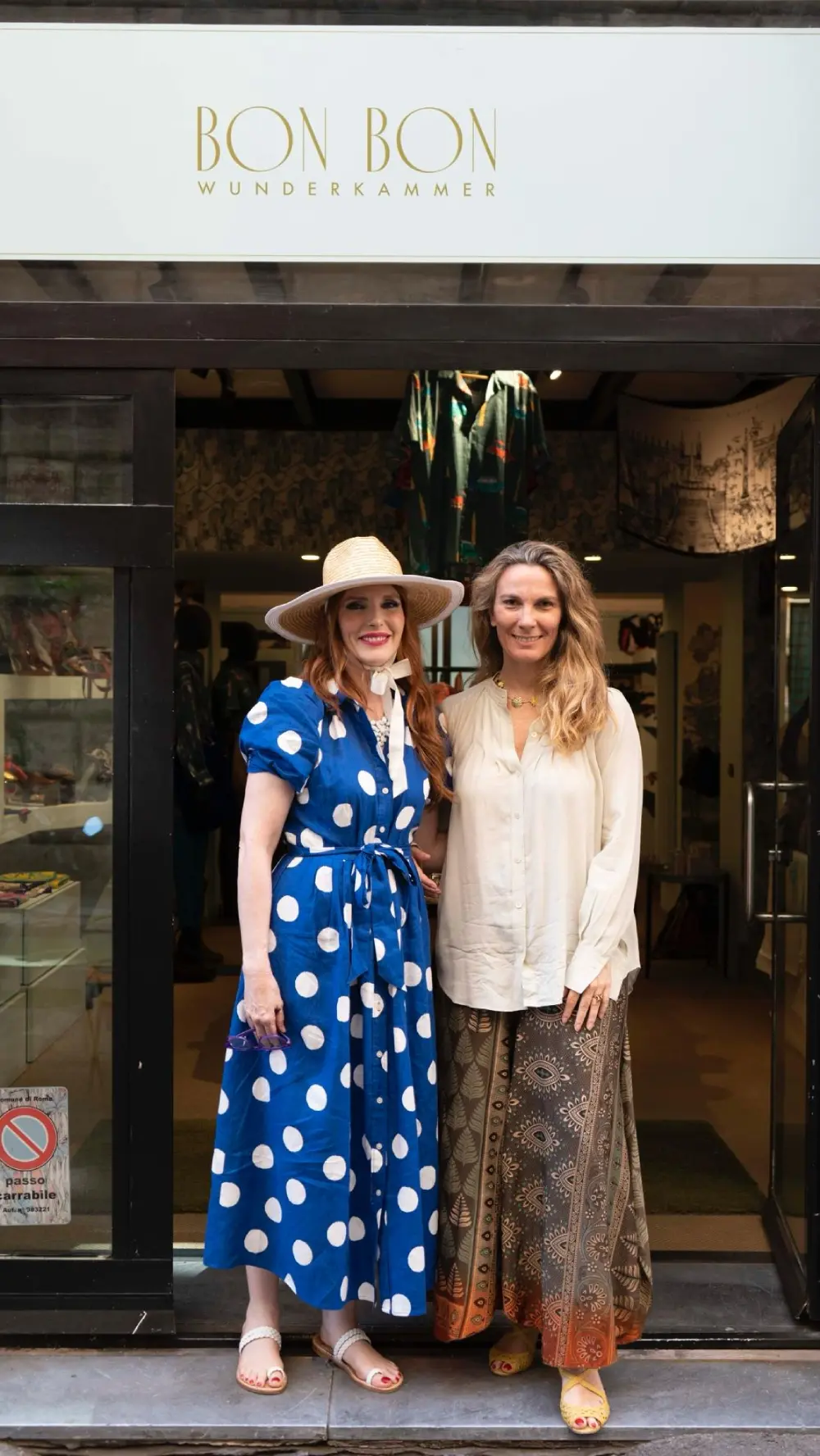
As a self-proclaimed colour addict, I’ve always felt that colour is more than aesthetic—it’s emotional, symbolic, and both an energy and a language in itself. When combined with storytelling, it becomes a powerful tool of self-expression, one that doesn’t just decorate but communicates. For me, that naturally extended into portraiture and painting in oil, where the act of creating becomes another form of storytelling. Painting from life, especially, transforms into a dialogue rather than a solitary pursuit—a conversation not only between portrait and sitter, but also with the artists who came before. It’s a way of reflecting someone’s inner light back to them, honoring Michelangelo’s belief that the human form is “the most sublime earthly expression of the divine.
Here, beauty is not an afterthought; it’s a way of life. It’s woven into everything, from the lyrical language (news isn’t just good, it’s beautiful; a film isn’t just enjoyable, it’s beautiful) to the warm greetings of “Ciao bella.”
In everything from the “dolce far niente” (the sweet art of doing nothing), to the way Italians make the most of fresh ingredients when cooking and prioritize friendship and connection, there’s an undeniable mastery—not just of life, but of living beautifully. In a country where every stone has a story, I’m continually inspired and awed by the elegance that surrounds me. Even the water-stained facades of ancient buildings become abstract tapestries, quietly contributing to beauty in everyday life.
Italian women, in particular, embody this ethos of beauty with grace and subtlety. Their style is unpretentious, unfussy, and yet always elegant. While Milan may lean toward high fashion and fast trends, in Florence, Rome and beyond, you’ll find women beautifully turned out for the most ordinary errands. Even the school run is a style statement. They make it all look so effortless.
Italians have a word for this graceful ease: sprezzatura. Coined by Baldassare Castiglione in The Book of the Courtier (1528), it refers to “a certain nonchalance, so as to conceal all art and make whatever one does or says appear to be without effort.”
It’s the art of making difficult things look easy—especially when it comes to style. That innate sense of beauty and balance, shaped by centuries of artistry and craftsmanship, is part of Italy’s cultural legacy.
This blog is inspired by Italy itself and by the women who live here—like my eternally chic friend Laura, whose daily outfits deserve their own dedicated archive, or my friend Vivia, a fashion designer who fuses British whimsy with Italian elegance. These women—and many others of every age—are my muses.
It’s also what inspired me to create Style Notes from Italy: a series dedicated to the people, designers, artisans, ateliers, and street style moments that make Italian fashion so uniquely compelling. Take my friend Benedetta, for example. On a school run in Rome that happened to fall on Valentine’s Day, she nonchalantly threw on a red gown from her own label—as one does. Layered with a textured overcoat, a printed scarf, and a black bag casually slung over her shoulder, she struck that perfect balance between intention and instinct.
This is sprezzatura embodied.
I’m an American artist living in Rome, with a lifelong passion for colour, portraiture, storytelling, and self-expression. After graduating from Harvard with a degree in English and American Literature, I moved first to New York City to study theater and artistic anatomy, and then to Italy to study fine art and classical figurative painting in Florence. What started as an artistic pursuit became something deeper. Living here reshaped how I saw everything—not just how to compose a canvas, but how to live with intention and attention to beauty.
As a self-proclaimed colour addict, I’ve always felt that colour is more than aesthetic—it’s emotional, symbolic, and both an energy and a language in itself. Combined with storytelling, it becomes a powerful tool of self-expression. That’s what drew me to portraiture and to painting in oil: for me, painting from life is a welcome exception to the often solitary nature of the craft. It’s a conversation—a dialogue between portrait and sitter, and with the artists who have come before. It’s also a way of reflecting someone’s inner light back to them. I’ve always been inspired by Michelangelo’s belief that the human form is “the most sublime earthly expression of the divine,” and I try to honor that in every portrait I create.
Italy deepened my devotion to beauty. Here, it’s everywhere: in the way people dress, the architecture that surrounds them, and the care put into even the simplest meals. That attention to detail has taught me so much about style, balance, and grace. Over time, I’ve absorbed not just that way of seeing, but that way of living—an ethos I’ve embraced not only as an artist, but as someone who believes in the transformative power of creativity and expression.
That’s what I hope to offer others too: a way to reconnect with their own essence—through colour, shape, and story.
Browse through tales of creative vision and the hands that bring Italian craftsmanship to life