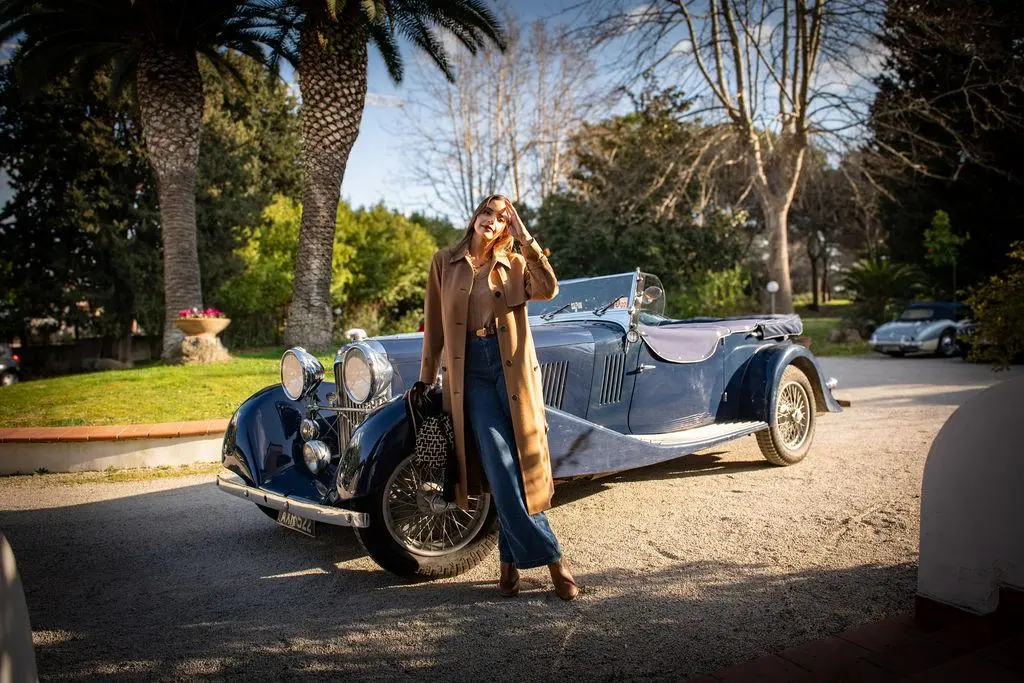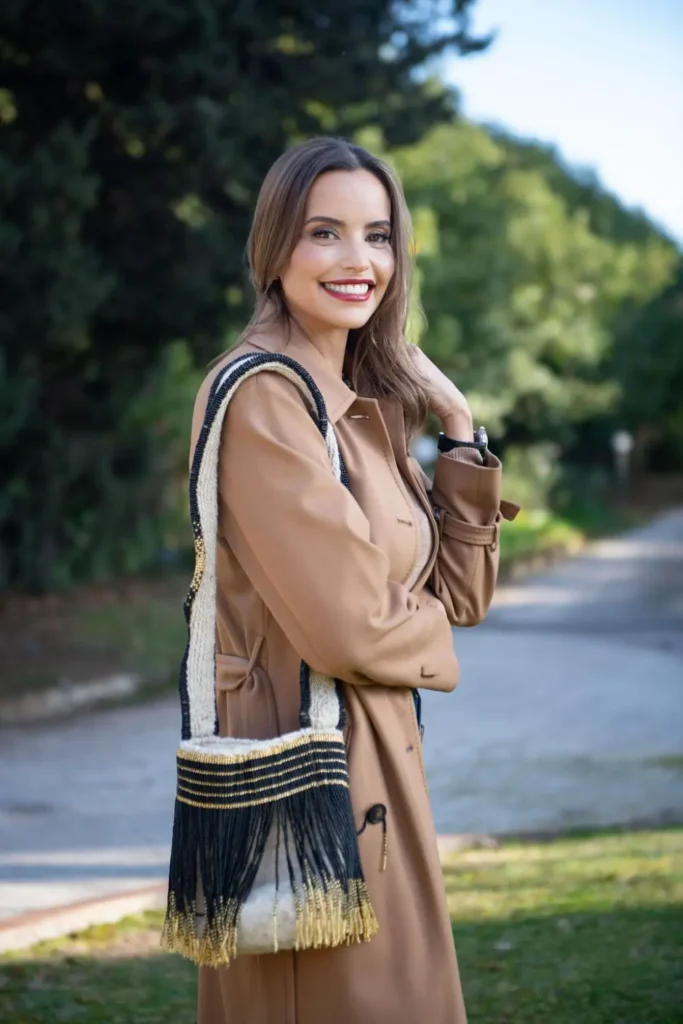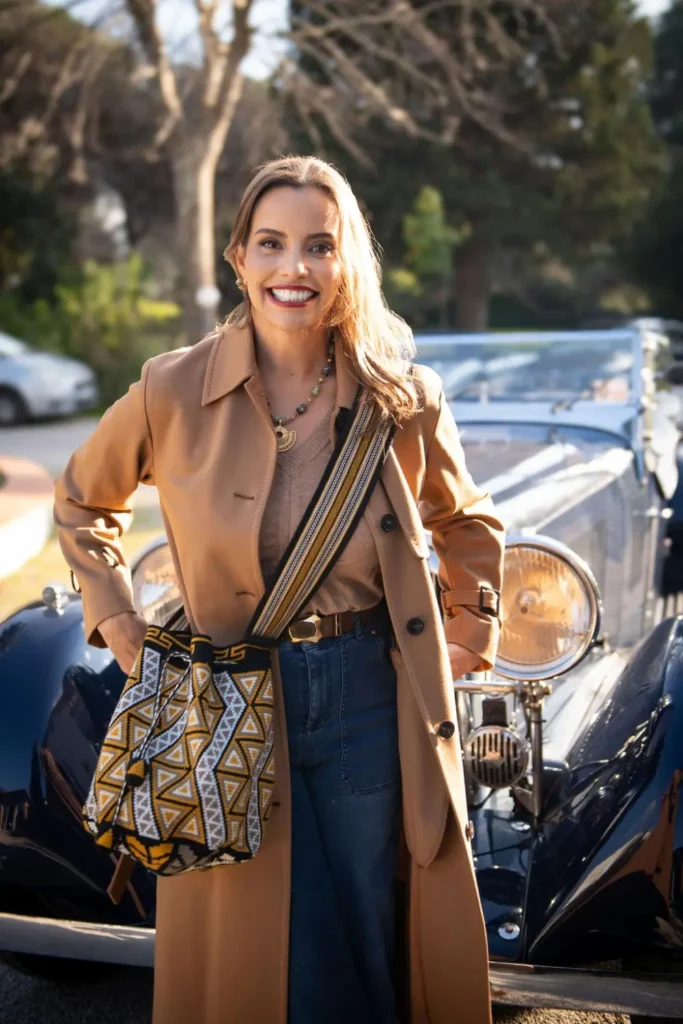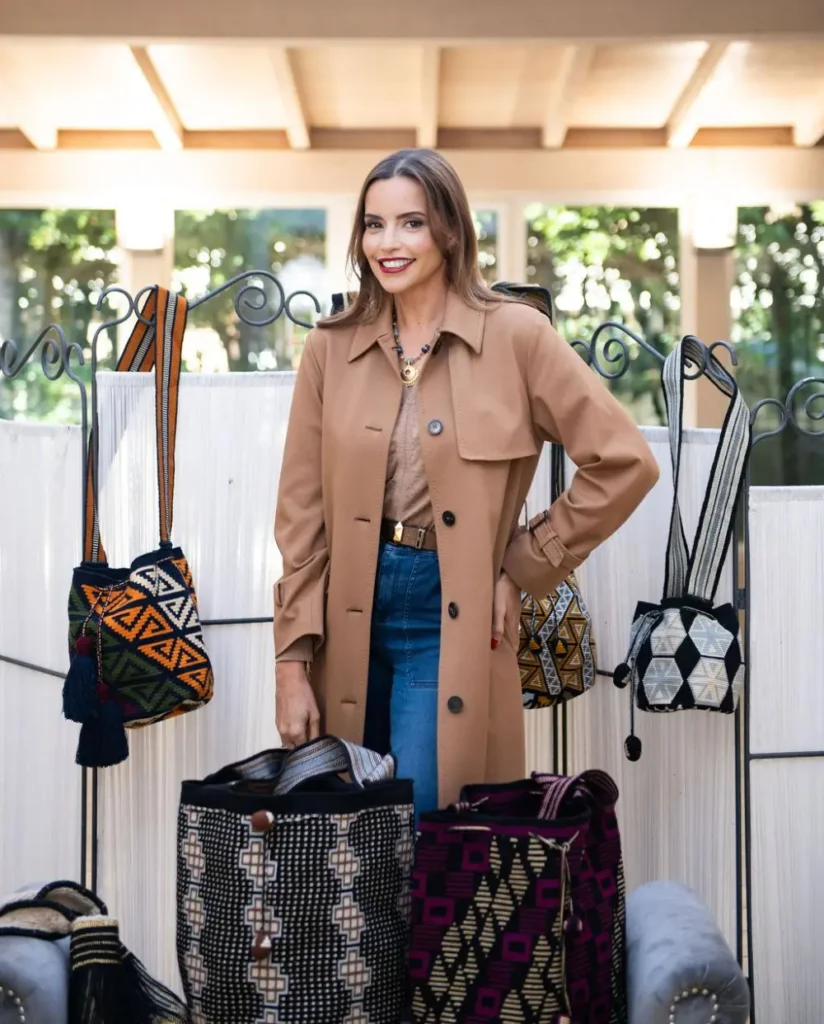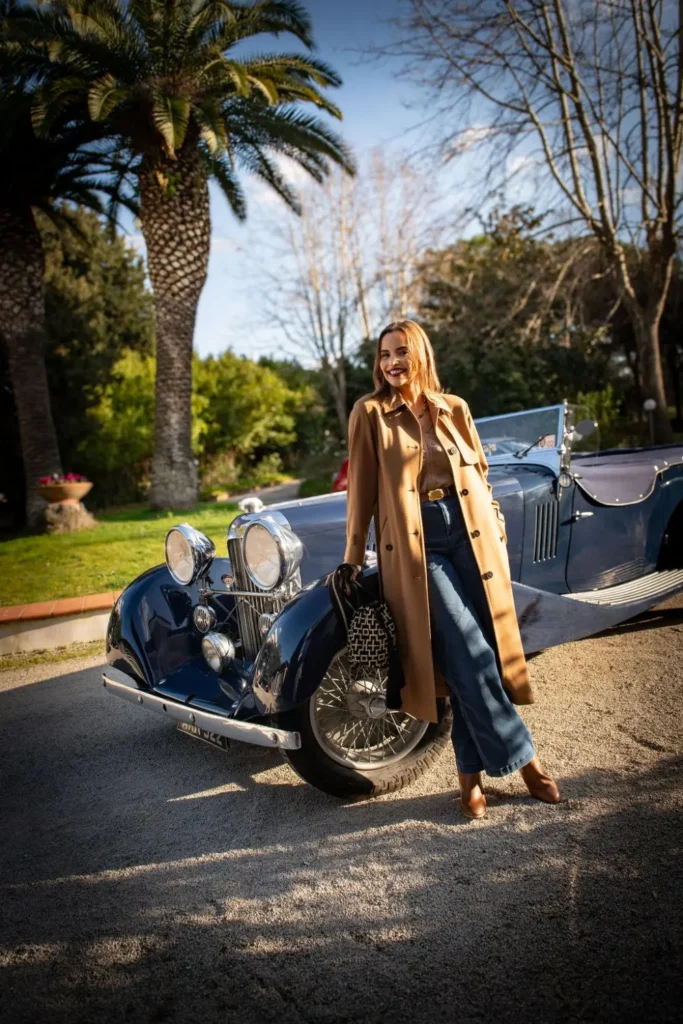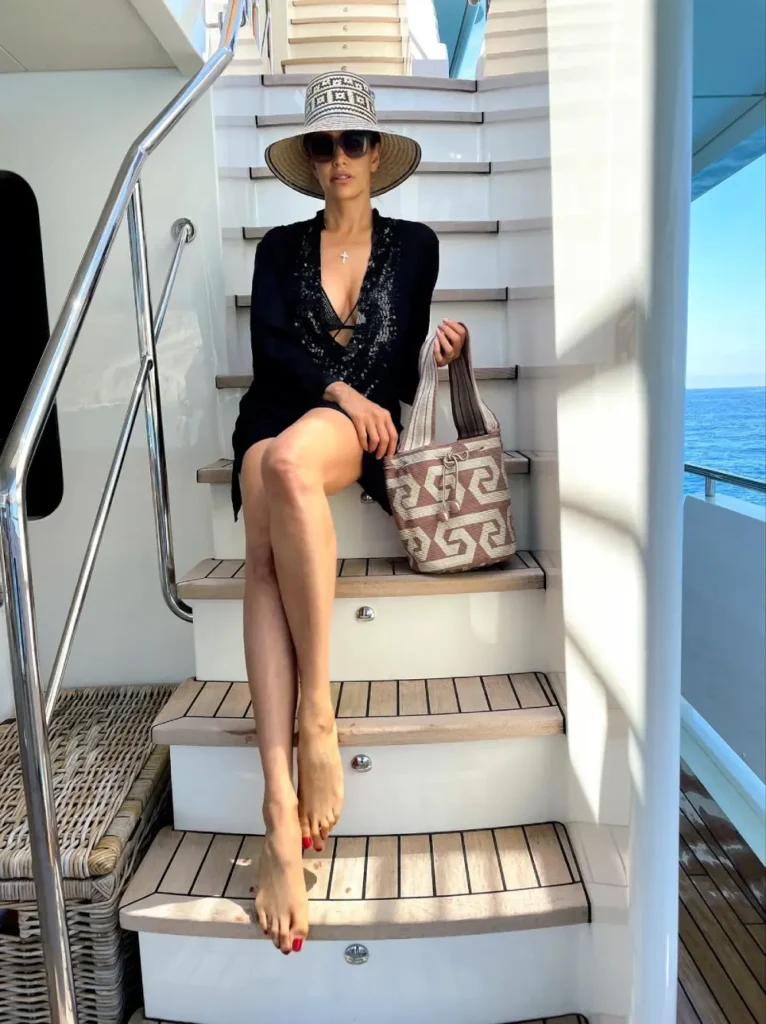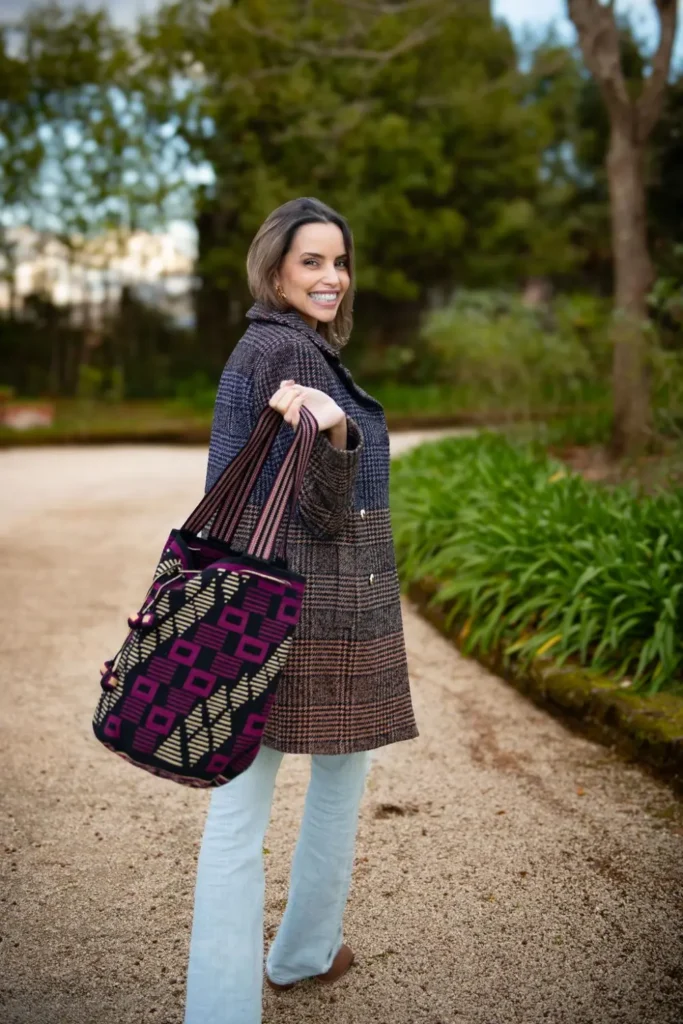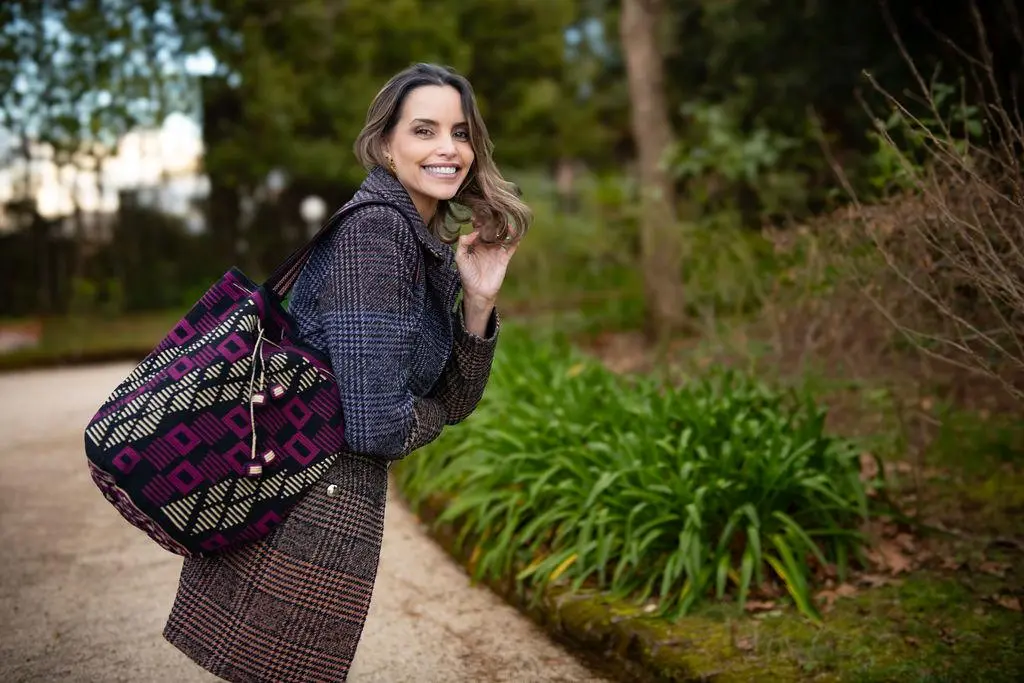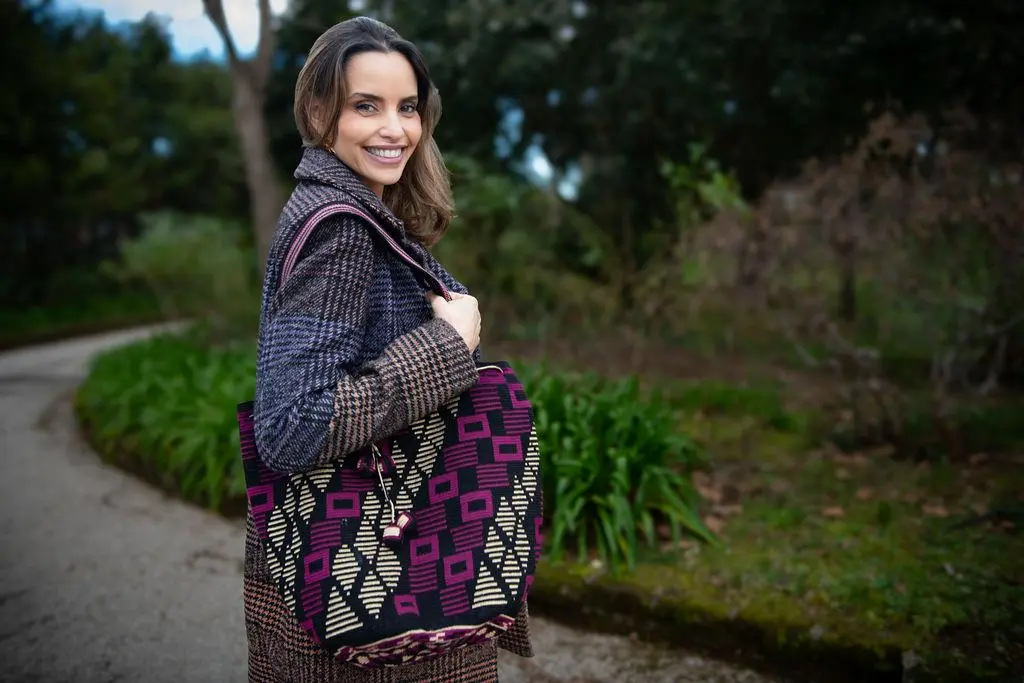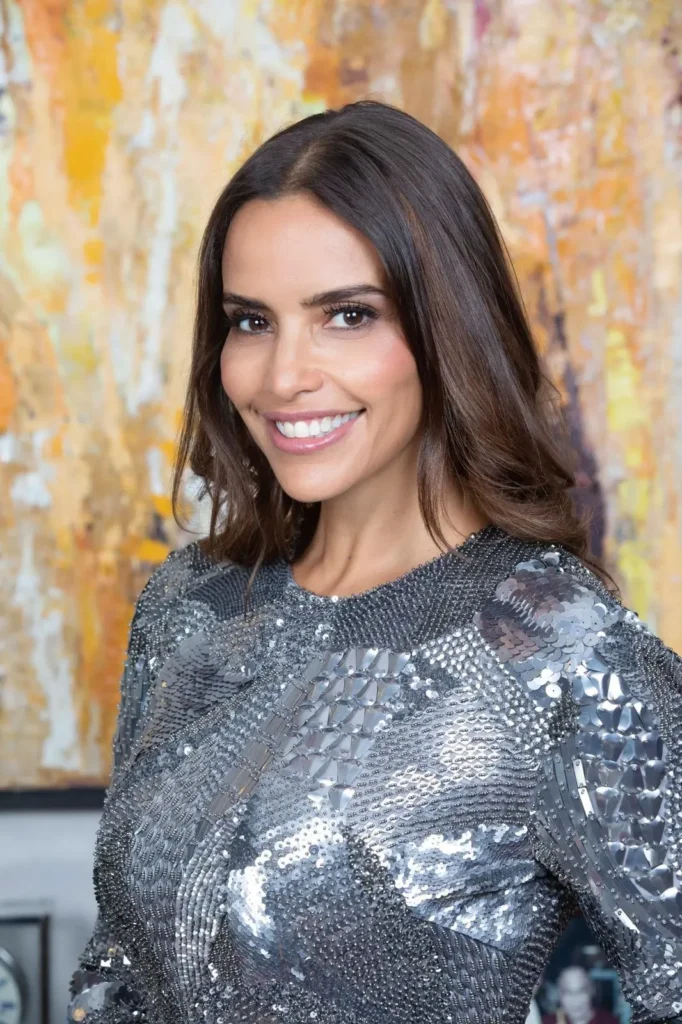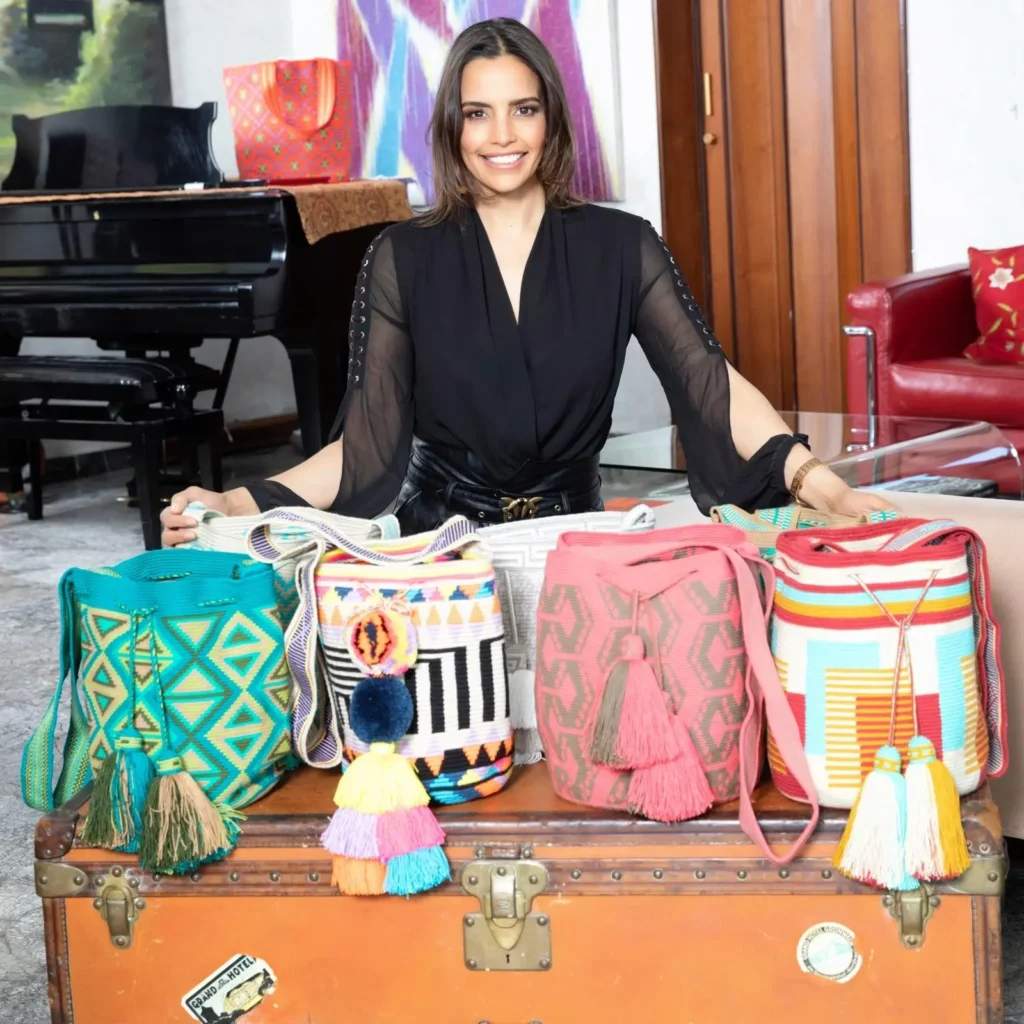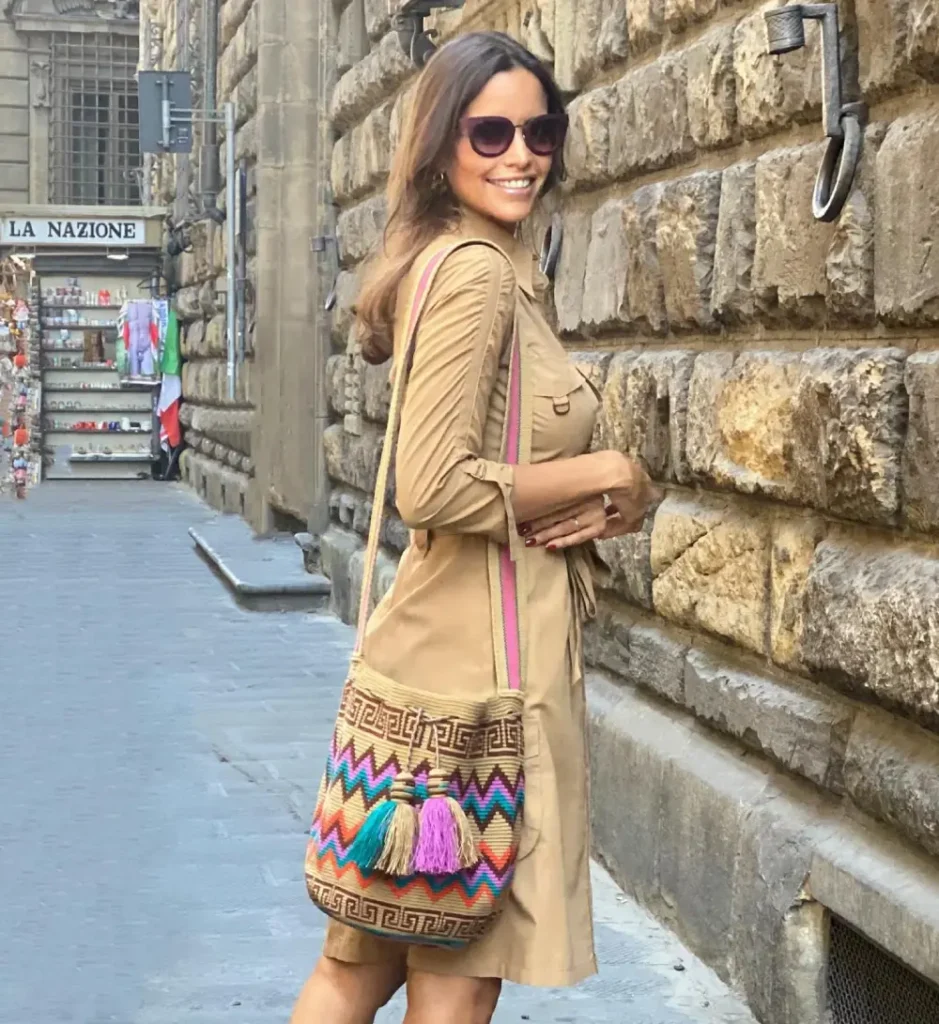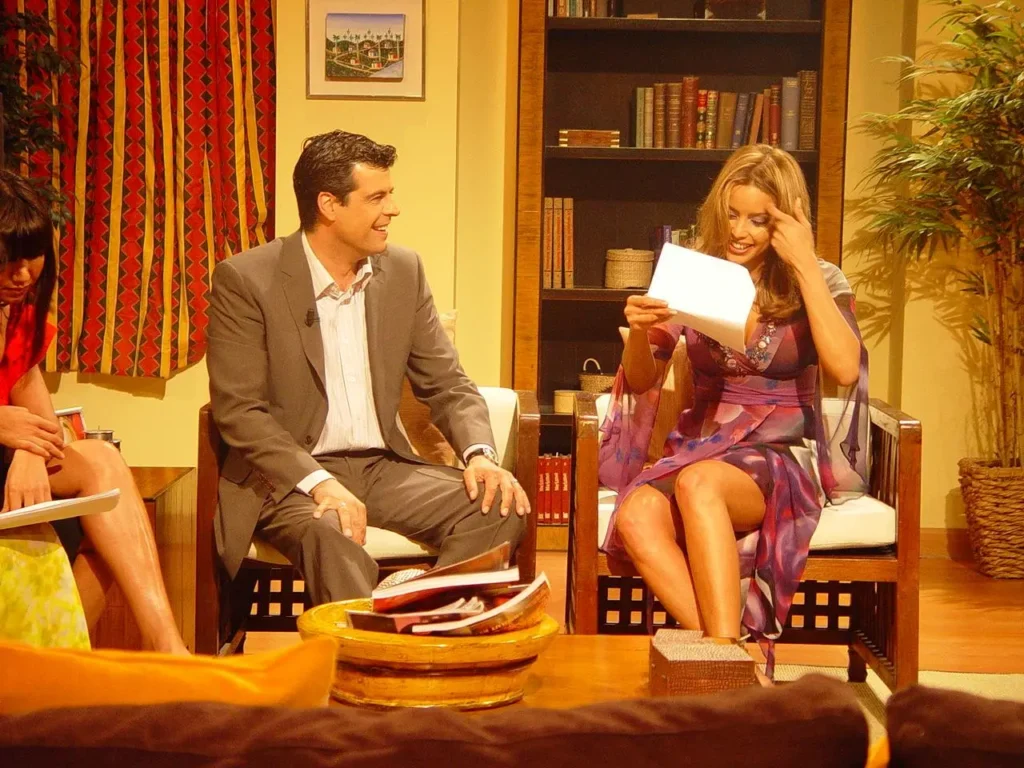
Sol Azul is a handcrafted accessories brand founded by Rossana Redondo, a Colombian entrepreneur and former engineer, model, and TV presenter. Based between Rome and Bogotá, Rossana partners with indigenous women artisans from Colombia—primarily from the Wayuu and other communities—to co-create vibrant, meaningful pieces that blend ancestral craftsmanship with contemporary design. Each item is handmade using traditional techniques passed down through generations, resulting in one-of-a-kind bags that carry deep cultural roots and personal stories. Through SolAzul, Rossana is not only preserving heritage craftsmanship, but also fostering economic dignity, female empowerment, and cross-cultural dialogue. The brand’s name—SolAzul, meaning “Blue Sun”—evokes light, joy, and hope, much like the mission behind it.
Interview with Rossana Redondo, Founder of SolAzul
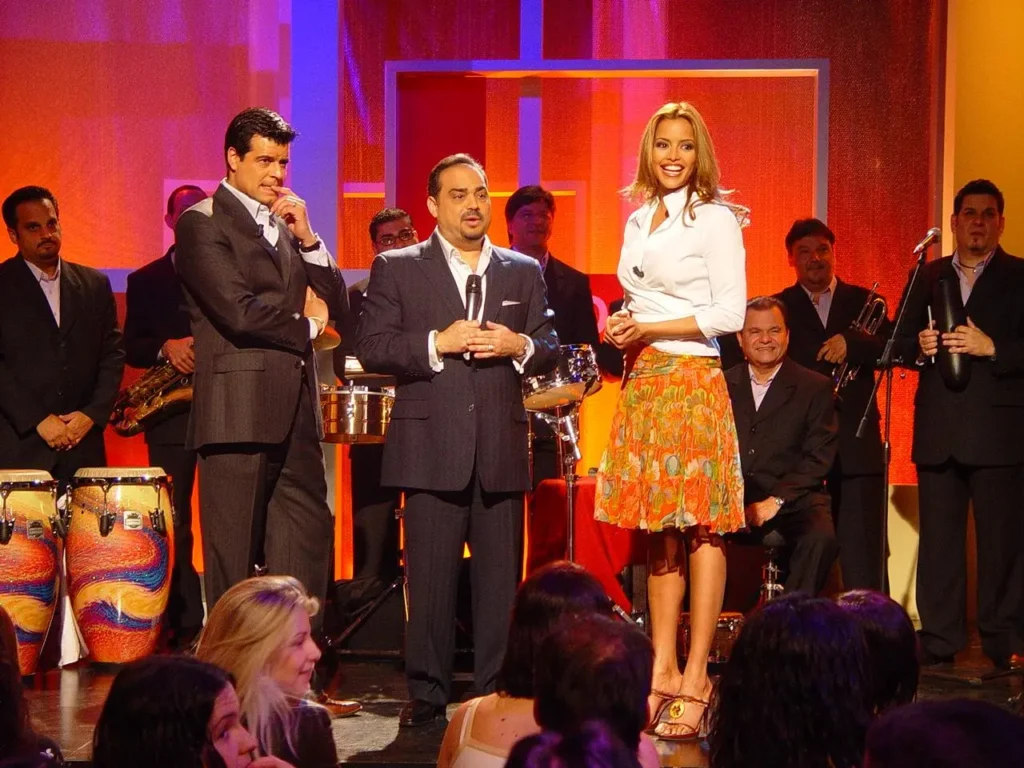
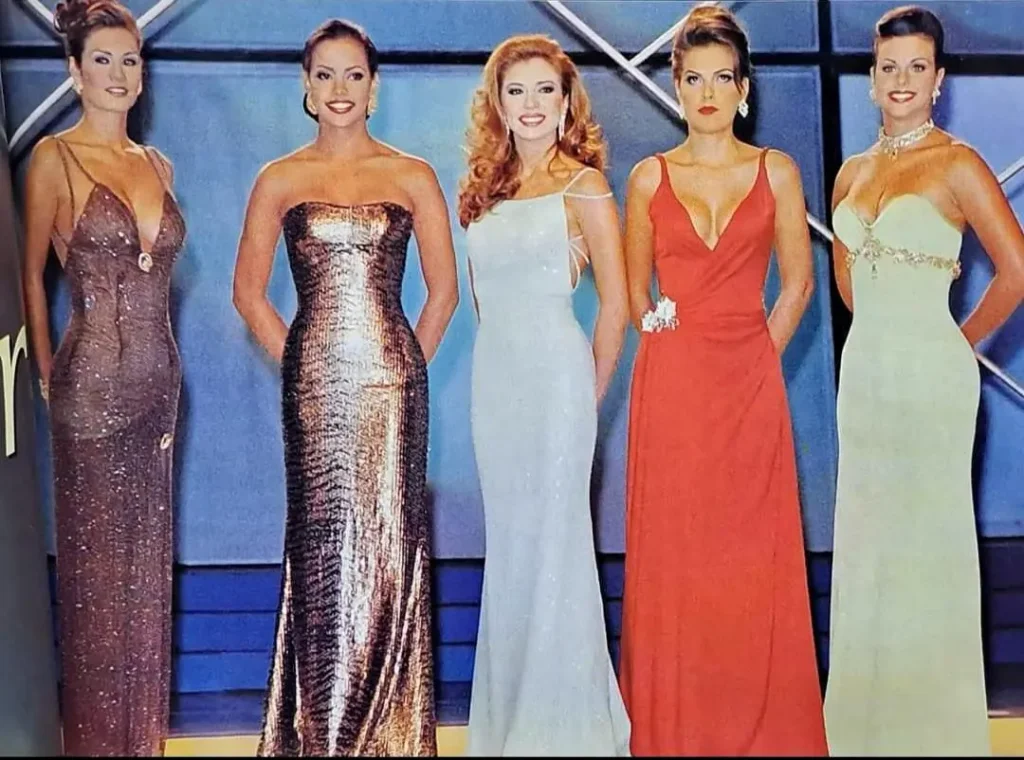
Rossana Redondo is a woman of many virtues, talents, and interests. She’s also someone who is a walking paradox—in the best possible way. Within five minutes of speaking to her, she’ll dash any stereotypes to smithereens. She has the looks of a diva yet couldn’t be more down-to-earth and approachable. With the outer appearance of a beauty queen—quite literally, as she was once crowned Miss Colombia—she also has the analytical mind of an electronic engineer, the drive of an entrepreneur, the vocation of a humanitarian, and at the heart of it all, the soul of an artist and spiritual seeker.
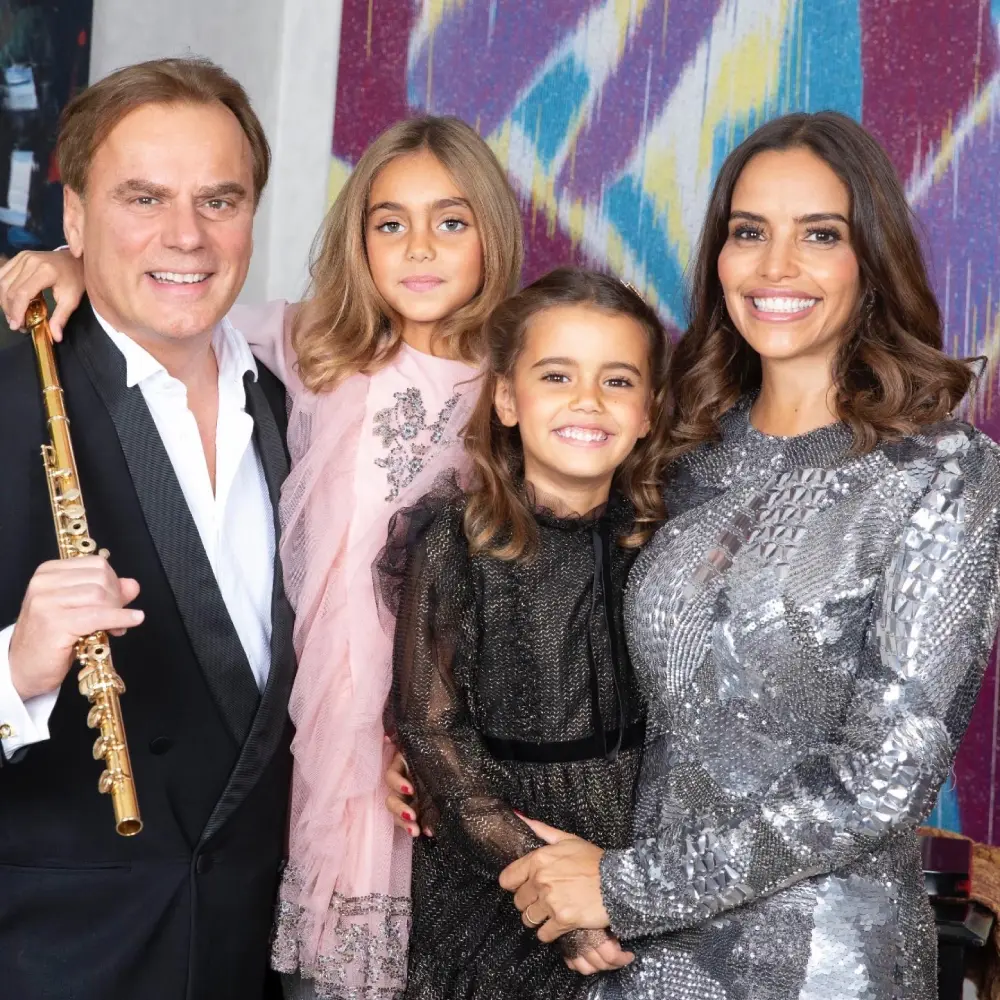
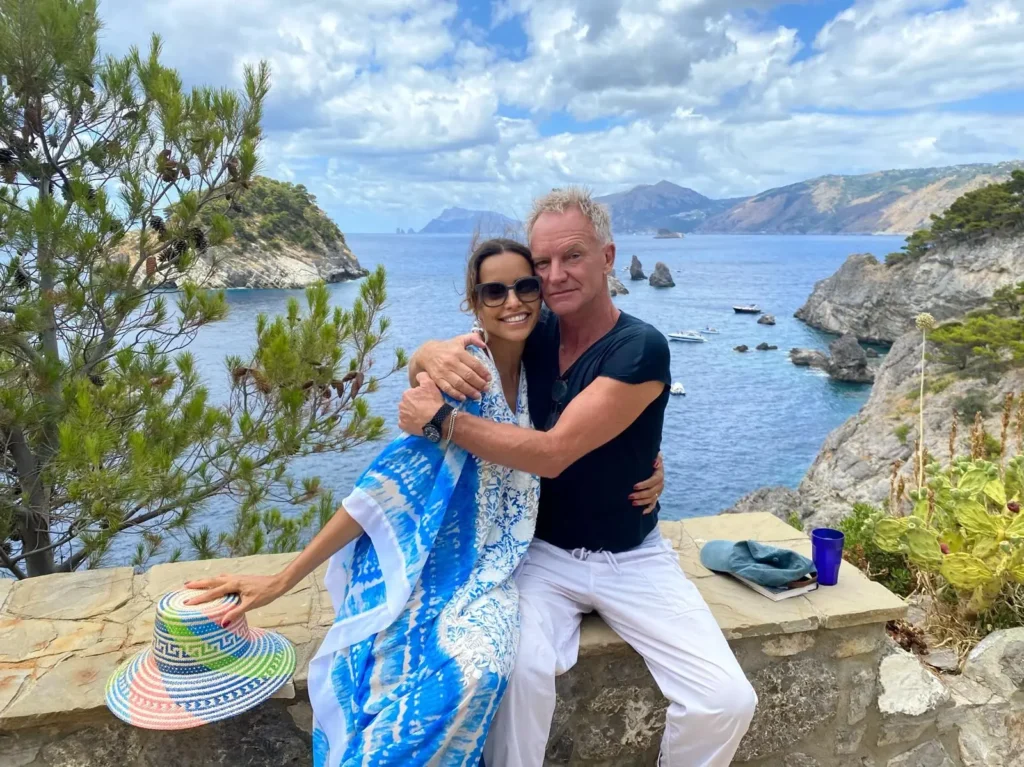
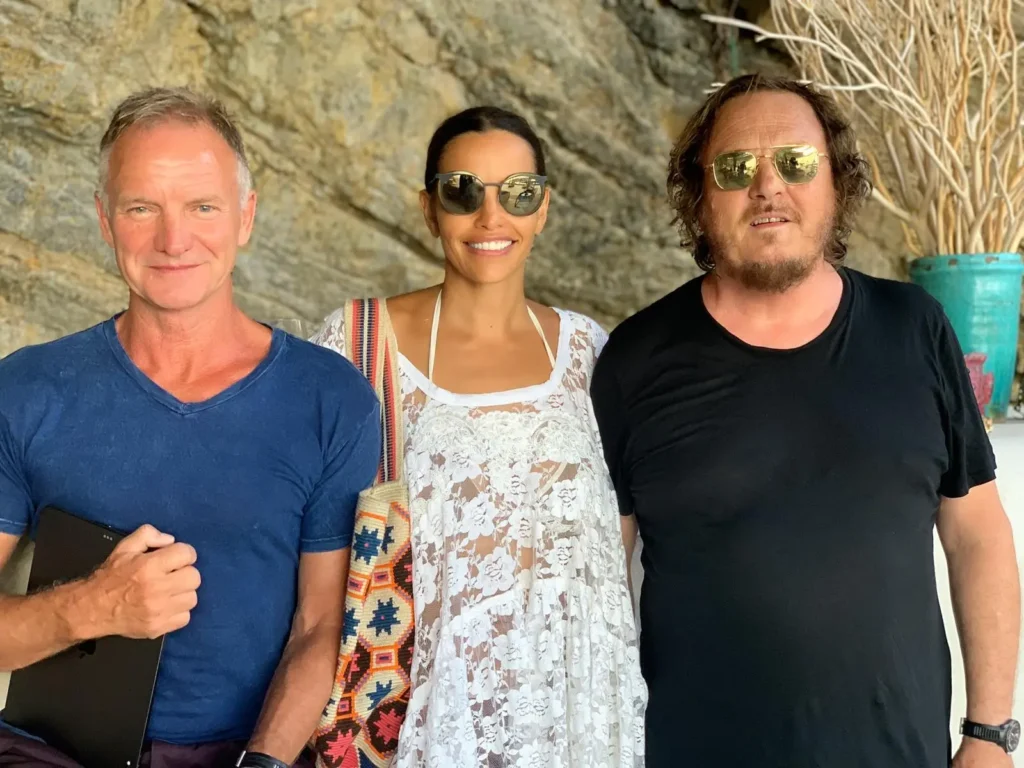
She truly has an embarrassment of riches, but what I love most about Rossana is that she defies expectations and stereotypes at every turn. Married to renowned Italian flutist Andrea Griminelli, she could easily have embraced a life of ease and glamour, spending her time traveling the world alongside him and his musical collaborators—Sting, Andrea Bocelli, and Wyclef Jean, to name a few. But instead, what occupies her heart and her time is something entirely different: preserving the ancestral weaving traditions of Colombia’s indigenous women and helping them build better lives through dignified work and fair wages.
[Translated from the original Italian.]
How and when did you realize you wanted to do what you’re doing now?
It started with a foundation I created. My husband and I were attending a lot of charity events, and I saw how poor certain areas were — especially La Guajira. When a company offered €3,000 to sponsor our wedding, I gave it to a trusted foundation. They used every euro well. That showed me that you can help directly.
I spent almost 14 years organizing concerts, fundraising, and helping children in extreme poverty. But eventually, I realized that too much giving without creating opportunities can rob people of dignity. They become passive. That’s why I shifted from donations to fair work.
What changed for you?
During the pandemic, I got stuck in La Guajira, and that was when I stopped donating and started buying. I asked the women to make bags and I paid them [directly]. That changed everything. When you give things away, they don’t value them. But when they earn, they feel proud.
I had donated through the foundation for almost 14 years. But eventually I felt empty; I saw these kids growing up — and nothing was changing. We gave them food, vaccines, clothes… but they were just receiving. And that takes away your dignity. They stopped trying. That’s when I said: I want to help people build something.
And that’s when SolAzul was born?
Yes. I stopped giving things away. Now I pay fairly — often more than fair. These bags take two months to make. The traditional weaving was disappearing and by paying the women artisans to keep producing, I helped bring it back.
Aren’t indigenous craftmanships in Colombia protected by UNESCO?
In theory, yes. In practice, no. Protection means nothing if people can’t survive from their craft. What matters is that someone is willing to pay what it’s worth. Not out of pity, but out of respect.
What’s your role?
I’m not the one making the bags — they are. My job is to tell their story, explain the value, create a bridge. That’s what gives me joy.
How did you come up with the name SolAzul?
Actually, the name SolAzul came from the name of an [open water] swimming group I used to swim with in Colombia. It’s also a way we refer to the sun when it touches the water in a particular light. That light stayed with me. When I had to pick a name for the brand, it felt perfect.
And it means “Blue Sun”. To me it’s the perfect balance between opposites — fire and water, masculine and feminine, the sun and the sea. It’s that harmony, that moment when everything aligns.
In the indigenous traditions of Colombia, a “sol azul” is a rare early morning light — one that doesn’t appear often, but when it does, it’s seen as a blessing, a sign of prosperity for the whole community. That symbolism gave the name even deeper meaning for me.
When did you decide you wanted to work with artisans?
Since I was a little girl. In Guajira, where I was born, we had many artisans, and I always loved how they used their hands, how they created objects with soul. So, I’ve always had a deep respect for craftsmanship—real craftsmanship. It’s not a trend for me; it’s something I grew up with.
Later, when I started traveling, that love just grew. I would stop in every village, ask questions, watch how they worked, how they dyed the fabrics, how they wove. I learned so much just by observing. And I realized there was an ancestral knowledge that was disappearing.
So, for me, working with artisans is not just about beauty—it’s about preserving that knowledge. It’s a way of resisting the fast-fashion system that consumes everything quickly and forgets the human hands behind the work.
That’s why SolAzul is not just a brand. It’s a mission to support these people, give them dignity, and bring their work to a wider audience—but with respect. With true collaboration. Not exploitation. That’s very important to me.
What are the values behind your brand? Authenticity, identity, respect—for the Earth, for people, for traditions. I’m not interested in doing something just to sell. I want people to feel something when they wear a SolAzul piece. It has to be meaningful. And joy. SolAzul is also about joy, color, the sun. It’s about celebrating life, even with all its difficulties. It’s about remembering who we are, where we come from, and expressing that through beauty.
Who is your ideal client?
A woman who’s free. Who doesn’t care about trends but listens to herself. Someone who chooses what to wear based on what she feels, not what others say. She could be any age—what matters is her awareness.
I love it when a woman puts on one of my pieces and suddenly stands taller, or smiles, or says, ‘This feels like me.’ That’s the kind of woman I design for. Not someone who wants to show off—but someone who wants to feel aligned with herself.
Is there a celebrity you’d love to see wearing one of your bags?
Angelina Jolie — but not because of her style. It’s more because of who she is as a person.
Any other public figures?
Carla Bruni. She’s very elegant, she writes songs, she sings, she’s cultured — that’s what I appreciate. She has everything, but she still wants something special. For her, it’s not about the brand — it’s about meaning. That’s another person who could wear one of my bags, for sure.
Catherine Middleton would be someone else because of her great humanity.
What’s the hardest part of your job?
And then there’s the logistical part—working with artisans means long production times, communication issues, customs, delays… Everything takes time and patience. But it’s worth it. Even the hard parts are worth it.
The hardest part of what I do now is keeping up with the marketing—promoting the brand and products. It’s constant, and it’s exhausting. There are days I’m highly motivated, and other days I feel like giving up. Even if others help, you are the one who must keep the momentum going, and if you stop, you feel it immediately.
You’ve had such a rich and varied career – can you walk us through some of the key chapters?
I’ve always been passionate about many things, so I think I do projects in cycles. I’m an electronics engineer, but then I became a professional model, traveling the world. Later, I was a TV presenter in Spain and Colombia, then I acted in Colombia. I even imported flowers from Colombia while living in Madrid, ran a business center, and dedicated years to the foundation before starting this brand.
Every stage of my life has had its own focus. As a student, I even dressed in a masculine way because in engineering there were so few women—I wanted respect. Physical beauty wasn’t important in my family either; intelligence was. But then life brought me to Miss Colombia, which opened up a whole new world for me.
Sounds as if becoming Miss Colombia changed the course of your life?
Totally. I was still in engineering school. I had never worn makeup. It was all new. I learned quickly. And I realized: beauty has power — but without substance, it means nothing. That’s why I kept studying, kept growing.
Fame has a light and a dark side. It gives you opportunities and allows you to help others, but it also exposes you to judgment and misinterpretation. There were moments when I hated the spotlight. But I’ve also seen how visibility can give credibility and open doors for meaningful work.
What’s the most rewarding part?
The most beautiful part is when the women tell me ‘Thanks to this job, my daughter can go to school,’ or, ‘We fixed our roof.’ That makes me cry every time. It’s very emotional. It’s not just business—it’s something human.
The most gratifying part is giving these artisans work. When I don’t place orders, they don’t earn income. That makes me feel …like I’m really helping. It motivates me to keep going. Last year was very hard because I lost my mother, and I felt terrible. But the artisans gave me strength, because if I lost my drive, they wouldn’t sell, they wouldn’t earn. Helping them achieve financial independence is the most meaningful part of this work for me.
Sometimes I have an idea, and I say, “I want to make a bag with this pattern, and I want these colors.” Other times I’m inspired by something I’ve seen — in nature, in a dream, in a painting — and I say, “Let’s do something that feels like this.” Sometimes I give them a color palette. I tell them, “I want it to be pink, green, yellow, with turquoise…” And sometimes they follow it, sometimes not. That’s the beauty of handmade work — you don’t control everything.
Other times, they show me a design, and I fall in love with it immediately. I say, “Wow, I hadn’t thought of that combination — let’s do it.” And we go with it. There’s a lot of spontaneity. And also, I have to adapt to what they have. Sometimes I want a certain thread or color, and they say, “No more,” or “We can’t find that anymore.” So it’s also a bit like cooking with what’s in the fridge. But I love that. I don’t want Sol Azul to be rigid. I want it to be alive — a dialogue between me and them. I might have a vision, yes, but they bring it to life. And often they surprise me.
Yes, because they give me the possibility to choose the colors. I send them an idea, and they say, “We can do this, we can’t do that.” And when I go back there, I realize that sometimes they have [logistical] problems, like, “We no longer have these colors.” So I have to choose something else, or sometimes they’ve done something different and I have to accept it because they’re handmade.
What is the most rewarding part of working this way?
The best part is that every piece is truly unique. For me that’s important. And I love it when someone says, “I want this exact same bag,” and I say, “It’s impossible, because it doesn’t exist anymore.” That’s something that makes it special.
But also, I love being there. I love going back. For me, going to Colombia is going back to a part of myself. It’s not just about doing business — it’s about reconnecting with my roots. I go and I eat the food I love, I visit the beach, I listen to music, I dance — I become myself again.
What’s your relationship like with the women you work with?
I see the women. I see the women working, and I talk with them. And I understand their lives are not easy. Many have to take care of their kids alone, many don’t have education. And when I give them work, I feel like I’m doing something good. Even if it’s small. But you know, I never wanted to make them feel like I was just “helping.” No. This is work. They deserve to be paid. They are artisans, they are creators, they have value. I hate that people see it as charity. It’s not charity — it’s dignity.
What do you love most about seeing new designs come to life?
What I love most is when I go back and they say, “Rossana, do you like this new design we made?” And it’s better than what I asked for! Because they’re creative, they innovate. It’s a collaboration. That’s why I never wanted SolAzul to just be about selling products. For me, it’s a story. It’s a connection…
What makes your approach unique when it comes to the visual language of the bags?
I really like geometric shapes—lines, diamonds, squares. These forms don’t belong to their traditional communities. They have what’s called kanaz — patterns based on their ecosystem based on the desert. I began introducing geometric elements that weren’t originally part of that vocabulary. We combine their technique with my input.
Are you the one designing them?
I wouldn’t call myself a designer. I just know these bags really well — I’ve worked with them my whole life in Colombia and Europe. What I’ve tried to do is blend my concept of fashion and elegance with the more traditional, ethnic style, thanks to my exposure to Europe and the rest of the world.
What do you want people to understand when they wear a SolAzul bag?
I want people to understand that when they wear a bag, it’s not just fashion — it’s a story, it’s a life, it’s a tradition. And now, you see, I’m trying to explain this to Italians, to Europeans. Because here people love craftsmanship, but they don’t know these women. They don’t know the desert. They don’t know the Wayuu. So I try to educate. I try to explain that behind each piece, there are hours and hours of work, there’s knowledge that’s passed down through generations. And I want them to feel proud wearing something that has a soul.
Are you experimenting with new designs or materials?
I’m starting to design new shapes. I sketch ideas, and then I send them, and they say, ‘This is complicated, but we’ll try.’ And sometimes it works, and sometimes not. But it’s a beautiful process. Some clients ask for things in leather, or for things that are more structured. And I say, ‘Maybe one day.’ But right now I want to keep the essence. I don’t want to lose the meaning. Of course, I’m always thinking about evolving. I’d love to one day collaborate with Italian artisans too — mix cultures, create something new that respects both traditions. But without rushing. SolAzul is slow by nature. That’s the beauty of it.
How do you approach growth and scaling as a brand?
There are some brands that grow fast, but then they lose their identity. I don’t want that. Even if it takes more time, I want to stay true. Sometimes people say, ‘You need to scale,’ and I say, ‘But why?’ I want each piece to matter. I had an investor once say, ‘We could multiply this 10 times,’ and I said, ‘No, thank you.’ I’m not interested in mass production. I’m interested in soul. That’s what makes SolAzul what it is.
How did you find the artisans in Colombia with whom you collaborate?
A friend of mine who was working with some indigenous people, and she introduced me to one of them. She was already working with them on a different project. So I went to meet them, and then I went to different parts of Colombia where I had contacts and met others. For example, the one that I met in Bogotá was working with women in the south of Colombia, and she was buying directly from them and then selling in Bogotá. So I didn’t meet the actual artisans at the beginning. And now I work with three or four different groups. One of them I met through my aunt, one I met through this friend, and one I met at a fair. So I have different connections.
You’ve said that you always wanted to do something with artisans and fashion. When did you first get that idea?
I’ve always liked crafts. My grandmother used to sew and crochet, and I remember watching her. My mom also painted ceramics, and we always did things with our hands. So I’ve always had a passion for handmade things. And when I was living in Spain, I started a brand with a friend, a small brand of clothes and accessories. And I realized I really liked that. Then I stopped because I moved to Italy, had kids, and started working again in my field. But I always kept the idea in my head that someday I would come back to this.
Was it daunting starting a business in another country?
Yes. Very. Especially because of all the bureaucracy in Italy. You feel like you don’t understand anything. It took me a long time to figure out how to do things, even simple things like invoices, VAT, registration. And I had to ask a lot of people for help. I think the language wasn’t a problem, because I speak Italian, but understanding the system was hard. I was afraid I would make mistakes or get fines. And I was also afraid of failing, of course.
How did you push through that fear?
I think I had this strong need to do something that was mine. I didn’t want to go back to working for someone else. I wanted to build something. And every time I doubted myself, I thought, “I’m doing this for me. I want to try.” Also, my husband supported me a lot. He told me, “If it doesn’t work, it’s okay. You will have tried.”
What have you learned personally from working with the artisans in Colombia?
I’v learn so much from them. Every time I go to Colombia, I learn from them. Their patience, their way of seeing time — it’s different. It slows me down, in a good way. I used to be very fast, very anxious. But now I’m more balanced. Thanks to them. And I hope to bring that to the people who wear my products. That feeling of grounding. Of something real. Even the name — SolAzul — it’s a symbol. The sun, the light, the blue sky, the sea. It’s hope.
What kind of feedback do you get from your customers?
People have told me the bags make them feel special. That’s the best compliment. Because it means they feel seen. And I want them to see the women behind the bags too. Their names, their stories. I’ve started adding tags with the name of the artisan. Like, ‘Made by Maria,’ or ‘By Yuliana.’ So people know… That’s something I want to do more of. Celebrate them. And maybe one day bring them to Italy. Do a fashion show with them. That would be my dream. Let them be proud. Let them be seen. Because they are the real stars. Not me. I’m just a bridge. A connector. But a happy one. I feel lucky every day to do this. And I hope it keeps growing, slowly, but deeply.
Would you like to tell more of Sol Azul’s story through media?
I’m thinking about doing more content. Maybe short videos showing the process, the women working, how a bag is made. People love to see that. And you know, my husband always tells me, ‘You should be in front of the camera again. You were great on TV.’ Because I did some television in Spain, years ago. And I miss it, sometimes. Maybe I’ll go back to that. Combine it with SolAzul — do something educational, maybe a short docu-series. I think now people care more about meaning. They want to know the story. And I can help tell it.
If you had a magic wand, what would you do for the women you work with?
Sometimes I imagine… what if I had a magic wand? What would I do? I’d build a big house for the women. With light, with air conditioning — it’s very hot in the desert — and a space where they can work, rest, bring their children. Someplace dignified. Because they often work in very hard conditions.
Do you ever imagine expanding beyond bags into a full lifestyle brand?
Yes, I’d love to bring SolAzul into other types of products too. Maybe one day have a whole lifestyle line — tableware, home decor, all made with artisan techniques. Because it’s not just about bags. It’s a way of life.
Would you like to open a store someday?
I’d also love to open a concept store. Somewhere beautiful — maybe in Rome, maybe in Bogotá. Where people can see, touch, experience the pieces. And maybe do workshops. Invite artisans from different places. Mix cultures, create new things. But I know I have to go step by step. SolAzul is growing slowly, and that’s okay. In the future, I see it as a small luxury brand. Not big, but with soul. Something people recognize because it has meaning. And I want people to feel something when they see it. Not just, ‘Oh, that’s pretty,’ but ‘Wow, that has a story.’”
Has the entrepreneurial journey been harder than you expected?
When I started, I had no idea how hard it would be. There were moments I cried, moments I thought of quitting. But something inside me kept going. And every time I go back to Colombia and see the women smile, I remember why. This isn’t just a brand. It’s a bridge between two worlds. And I’m proud to be building it.
If you weren’t doing this — if SolAzul didn’t exist — what would you be doing?
What would I do if I didn’t do this? I’ve always loved communicating, speaking in public, even acting. I’m not formally trained, but I’ve always dreamed of doing something like that—something that gives me visibility and allows me to create more opportunities for others.
And not just working with the Wayuu people (the indigenous community I work with now), but with other indigenous communities in Colombia. We have so many talented artisans across the country. I’d love to run a business I’m passionate about, but also build a strong team, because this is too much work for one person.
I’d love a job like a TV presenter or host, or even acting—something that gives me visibility and amplifies this mission. That would be perfect for me.
Describe yourself in 3 words:
Depends on the time of your life; because there are very joyful moments, but maybe that’s not what defines me the most deeply. Maybe… “deep”? I don’t like superficial things, I’ve lived a lot, and I’ve lived deeply. I’ve also been very determined, when I want something, I go for it, so “strong”. Life is too short to spend it bored. Hopefully, also “kind”.
If you could have three guests at dinner — even people who are no longer alive, from the past or the future — who would you invite, and what would you ask them?
I’d ask Mandela how he accessed that ability to rise above his environment — if he always believed in something bigger than the world he came from. That’s a quality many great figures in history seem to have. They’re told all their lives, “This is your reality,” and they refuse to accept it — they think bigger and manage to change it. So, I’d ask him what made him so certain he could change such an unfair, unequal reality — and how he actually did it.
Angelina Jolie — I’d ask her to teach me. I’d love to learn from her. I admire her — not just because she’s beautiful. I’ve known many famous people, and I don’t get starstruck easily. When you know them personally, you realize they’re just like us. But I admire how she’s combined everything — I’m sure that if I had her visibility, I’d do the same… I wouldn’t ask “How did you do it?” — I’d ask, “How did you become the kind of person who could do it?” I’d love for her to teach me that.
And to Einstein — I’d ask about his theory of quantum physics. He understood that classical physics works for the macro world, but he was the one who opened the door to quantum physics. He discovered that, at the smallest scale, we’re not matter — we’re energy, we’re waves. And wherever you focus your attention, that’s where matter appears. I’d ask him: how did you come to such a genius realization? Was it an inspiration from heaven, or what?
Since we usually talk about fashion on this blog, who are your three favorite style icons?
That’s not my strong suit, to be honest — I don’t follow fashion very closely.
It doesn’t have to be someone from the present day; even from the past, is there anyone whose way of dressing you admired?
Not really. I haven’t thought of anyone whose style I love. I mean, I admire elegance. I like people who are truly elegant, not flashy. I don’t like anything vulgar or over the top — like an outfit that’s too shiny or loud. If it’s full of rhinestones, it can be beautiful, but it’s too much for me. I prefer something more essential, more graceful.
Can you think of someone from the past?
I like very essential things, with strong personality—so I really like Audrey Hepburn. I love her, because she had a face that was very, very simple—but at the same time very strong, right? A very defined identity, and then very minimalist, elegant… so I like that. I don’t like very elaborate fashion—I like fashion that’s consistent with a person.
Then I also like some Latin American icons, for example I like Frida Kahlo. I mean, I like her not so much for her aesthetic, which is interesting, but for her character. Because she was a person who… I don’t think she was easy to get along with. But she expressed everything she was. Even in pain, she expressed herself. And she created a very strong identity, very coherent, and that I really like. So I’d say Audrey Hepburn and Frida Kahlo. The third one? Maybe someone like Rita Hayworth or Grace Kelly — yes, Grace Kelly. She was very elegant, always perfectly put together. When I was little, I didn’t really follow famous people or look up to stars. I didn’t admire celebrities much — even now. But yes, Grace Kelly represents that very “lady-like” style. Very feminine and poised — that’s what I appreciate.
If you knew you would be stranded on a desert island, what three objects would you bring?
Hmm… music. I don’t know how, but I’d need music. A notebook and pen—because I need to write, always. And something from my daughters. Even a photo. I need that connection.
Let’s talk about sources of inspiration. Who or what inspires you most?
Nature. Especially when it comes to colors. They fascinate me endlessly. I’m inspired by elegance too — when I see a well-dressed person walking by, I imagine how one of my bags would look with their outfit. Here in Rome, I get a lot of fashion inspiration.
Is there a color or combination that really struck you recently?
Yes — the phrase “cornflower blue” [a washed chambray blue, or a linen-dyed indigo blue] comes to mind. That kind of deep blue combined with contrast. I like harmony — I don’t love using basic colors for my bags because they feel boring. Even when I do a crocodile bag, I like it to have interesting color combinations. I often use colors from the same [seasonal colour analysis] season to keep it harmonious.
If someone is visiting Rome for a day, what would you recommend they do?
Walk. Walk everywhere. Especially along the Tiber. I love nature — parks like Villa Doria Pamphili during the week, or even Lake Bracciano outside the city. But Rome itself is a museum. Just walk it.
In Rome, you’re inspired mostly by fashion, and in Colombia by nature?
Exactly. And as I always say, my bags are largely created with the artisans. I give the initial color combinations, but they often add their own touches. It’s a collaborative process, and they deserve a lot of recognition.
If you had a magic wand, what would you change in the world instantly?
I would eliminate poverty. Because when a person is born into poverty, they start life already behind. There’s so much hidden talent, so many beautiful souls, so much potential that never gets a chance to grow — just because they were born into scarcity. That’s not fair. Therefore, yes, with a magic wand, I’d eliminate poverty. So everyone starts with a fair shot.
I’d make people feel more connected to each other, and to the planet. I think we’ve forgotten we’re all part of the same thing. If we felt that, really felt it, we wouldn’t treat each other—or the Earth—this way.
What advice would you give to anyone starting out?
My advice to others? If you have a dream, start working on it. First, dream it, visualize it, and get very clear about what you want. Follow your passion even if it doesn’t immediately bring money. Passionate work is the kind that lasts.
Money follows the things you do with passion. So first identify what that is and don’t waste time on other things that don’t fill your life. Then start doing it, even if you don’t know how. Do it, because by doing it you will learn how, since many people wait to get their degree or to become an expert. Instead, I discovered – and I have a degree – but I truly learned many things by doing them without knowing how first.
And then the need to do it led me to learn the right things to learn at every moment, so that this thing could succeed. So I would say: do it. Don’t wait for the perfect moment, don’t wait until you know everything, don’t wait… just do it, start doing it. And if I could go back, I would definitely focus much more on this, for sure.
I would advise people to first identify what they truly love. And when you identify it, be really clear about it, without thinking about what your father wanted, without thinking about what your mother wanted. Have the courage – the courage to realize that your life is yours. They lived their life, your environment will criticize you, they will judge you, but in the end, your life is your own.
Take responsibility for your life without thinking too much about others. I would have thought more about myself, I would have started to do what I truly loved and studied everything related to what I loved, what was difficult for me, and what came easily and naturally. What was easy for me? Speaking in public, communication, maybe being a journalist.
What’s the biggest lesson you’ve learned so far?
That true value comes from within. Fame, success… those are things that come and go. But when your work aligns with who you are inside, you feel whole. And that’s what SolAzul gives me.
Where do you see SolAzul in 10 years?
I would like to be in a space where there is a physical place that welcomes artisans from all over Latin America, not just Colombia. A place where their crafts are exhibited and sold fairly, where their stories are told. A foundation, a center — not just to sell, but to preserve culture. And I see myself traveling a lot to tell this story. Maybe with a team of women, each one with her own superpower, helping bring all of this to life. That’s what I see. That’s what I’d like.
Eventually, I would love for SolAzul to become a luxury brand known internationally — not just for bags, but for artisan-made lifestyle products. Things like home decor, even tableware. Still handmade, still grounded in tradition, but with elegance and global appeal.
Where do you see yourself in 10 years?
In 10 years, my dream would be to be a presenter or host of a TV program that travels the world meeting extraordinary people—individuals who have transformed their lives and the lives of others using the power of the human mind and spirit. I’d love to inspire viewers to do the same.
I envision creating a company that not only preserves Colombian craftsmanship but also builds a global network of artisan communities. I’d like to run workshops, maybe even schools, and create products made with love and time—because that’s what’s being lost in this world of mass production.
Have you always had this sense of mission?
Yes, I’ve always felt this sense of mission, even if I didn’t know how it would take form. It’s like… I knew I wanted to do something with purpose. And it’s funny, because when I was younger, I worked in television, I presented programs in Spain, and I loved it — the energy, the communication. But I always had this other part inside me, the part that wanted to tell stories in a different way.
And my husband says to me, “You should do more videos, you should tell this story online, because you know how to talk to the camera!” And I say yes, I would love to, I would love to go back to presenting. Not like before, but in my own way. Maybe one day.
It’s all connected — SolAzul, the storytelling, the creativity, the women. It’s all part of one thread. And maybe the next chapter will include video, or books, or something I haven’t even thought of yet.
But I’m open. That’s the most important thing I’ve learned. To stay open. Life will show the way, if you listen.
And for now, I’m just grateful. Grateful that I can do something I love. Grateful that it means something. Grateful for the people I meet. Like you. It’s a gift. Thank you for this interview.
If you could give your younger self some advice, what would it be?
Trust yourself. You’re enough. You don’t need to prove anything to anyone. And stop trying to please everyone. Do what makes your soul shine—that’s the only thing that matters.
And I’d tell her that being different is not a flaw—it’s a strength. That sensitivity, intuition, creativity… they’re superpowers. Don’t hide them to fit in. Use them.
I’d also tell her: “Start. Don’t wait for the perfect moment, don’t wait to know everything. Don’t wait — just do it.”
And if I could go back, I would focus much more. I would help myself first of all to identify what I really loved — not what my father loved, not what my mother expected. I would have had the courage to realize that it was my life. They lived their own. People around you judge you, criticize you — but in the end, they live their lives, and you must live yours. So, I would take responsibility for my life, without thinking too much about others’ opinions. I would have thought more about me, I would have started doing what I truly loved.
I would have studied everything related to that — what I loved, what came easily, what was natural to me. For example, speaking for others — communication. Maybe I would have studied journalism. Because I did that job later, even without a degree — and that created resentment in some journalists. They’d say: “She never studied journalism, and now she’s the lead figure on a TV talk show.” But that wasn’t my fault. Life gave me an opportunity, and I took it with gratitude. If someone else had been given opportunity, they would have taken it too.
I’d tell my younger self: “Take the opportunities. Work with what you love. What you’re passionate about. You’ll have success.”
My husband is a good example — a flautist. People say classical musicians don’t make money. But he became one of the best. If he had listened to his father and become an accountant, he would’ve lived a miserable life. He would’ve hated it — even if others loved that job. Instead, he worked with what he loved, and he made a good life for himself doing something most people say you can’t live off of — because he was great at it.
I’d say: “It doesn’t matter what it is. If it’s what you’re meant to do, you’ll succeed. You have to listen to your heart.” The mind sometimes leads us down completely wrong roads. Listen to your heart. All the right things align with it. That’s where you’ll find real success — not just doing what society calls “success,” but doing what you love. That’s real success. And when you do what you love, you’ll attract the right people. Life starts working.
I would change that — I listened too much to my mind. I tried too hard to make others happy. And it brought me pain. Now I don’t want to listen to my mind anymore. I want to listen to my heart. Even if I’m 80 — who cares? Life starts now. The part of me that always tried to control everything — that part is fading. I’ve got no time to stay stuck in that. Everything I do now, I do with impact and from the heart. And everything I do that truly leaves an impact on me, I will carry it with me. All the light you bring into the world is your legacy – it’s my legacy too. It’s not just light for others; it’s the true light. That light I bring to the world — that’s my true wealth. That’s what I carry with me.
⸻
Rossana Redondo