“Beauty is everywhere,” says Tina Sondergaard. From falling in love with Rome at first sight to building one of the Eternal City’s most distinctive fashion boutiques, the Danish designer reflects on creativity, craftsmanship, the spirit of Borgo Pio and the extraordinary grandmother whose resilience shaped her life.
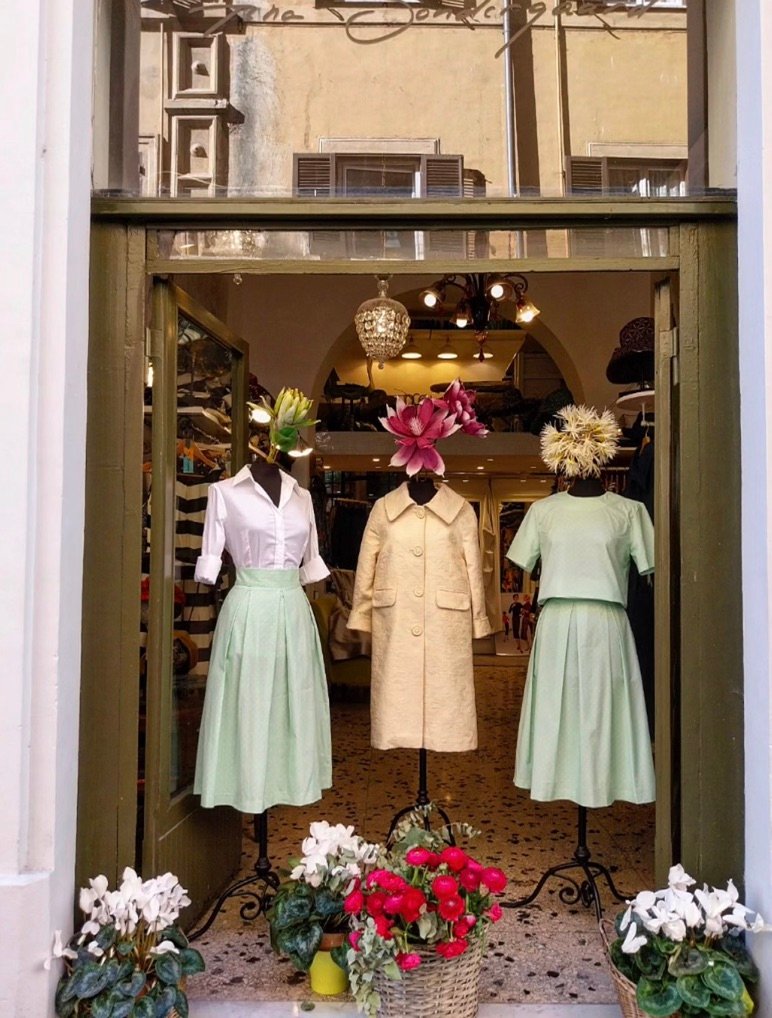
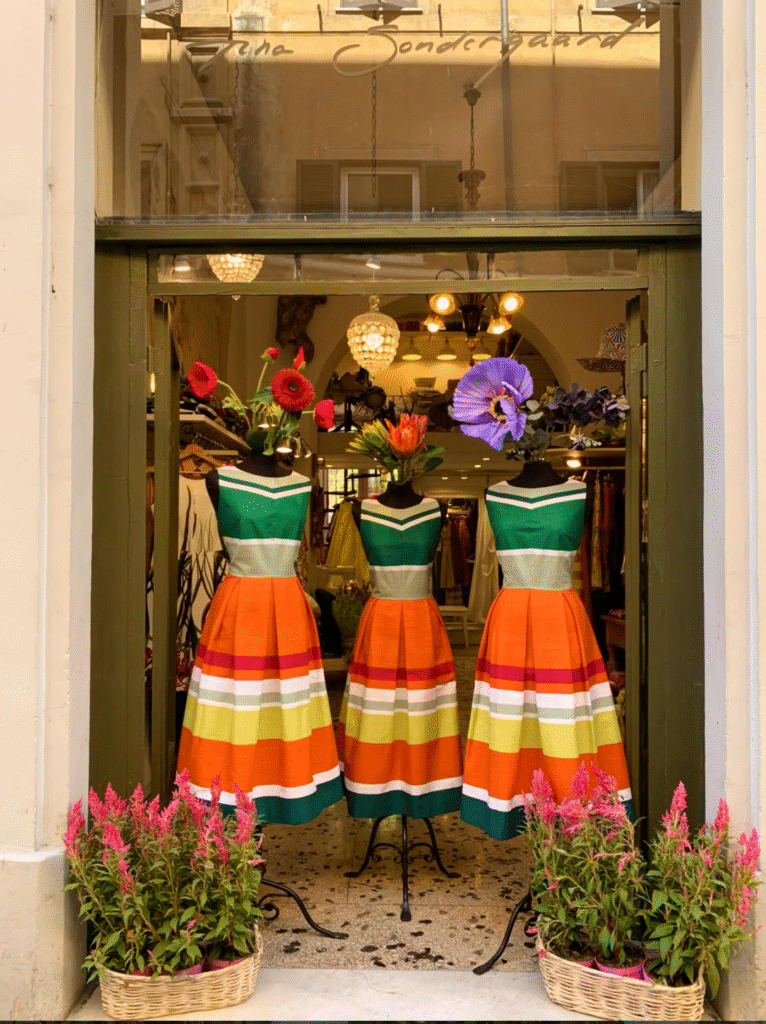
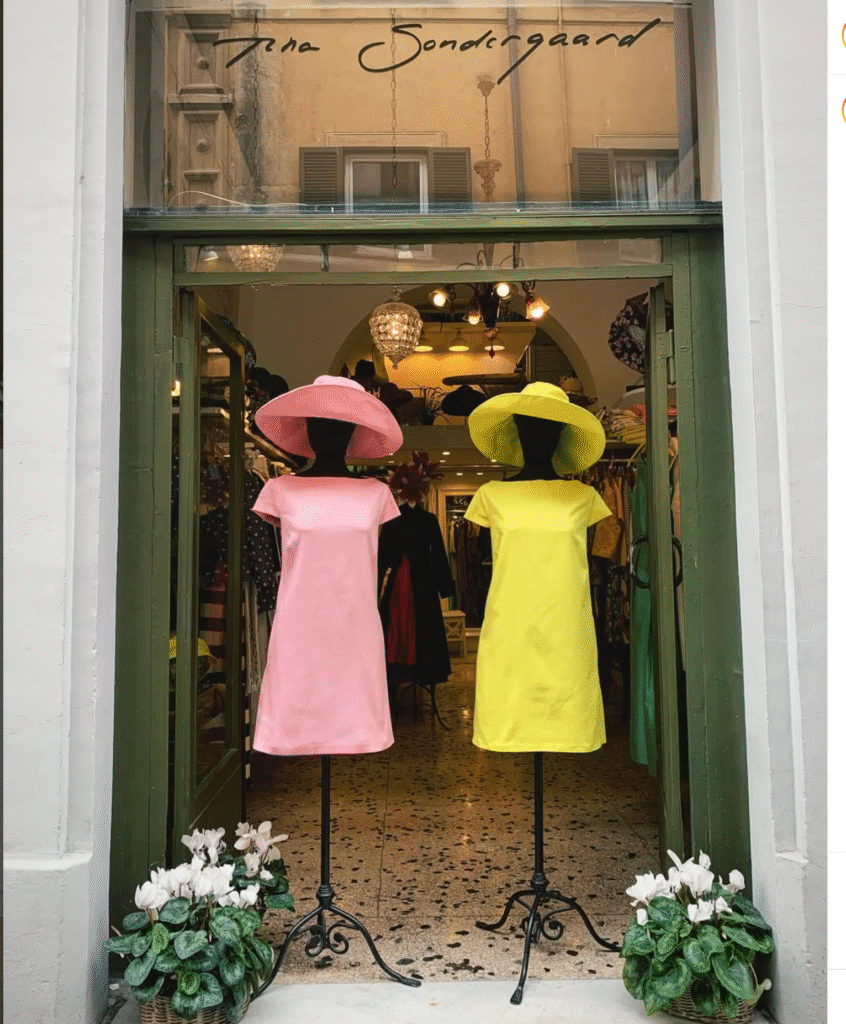
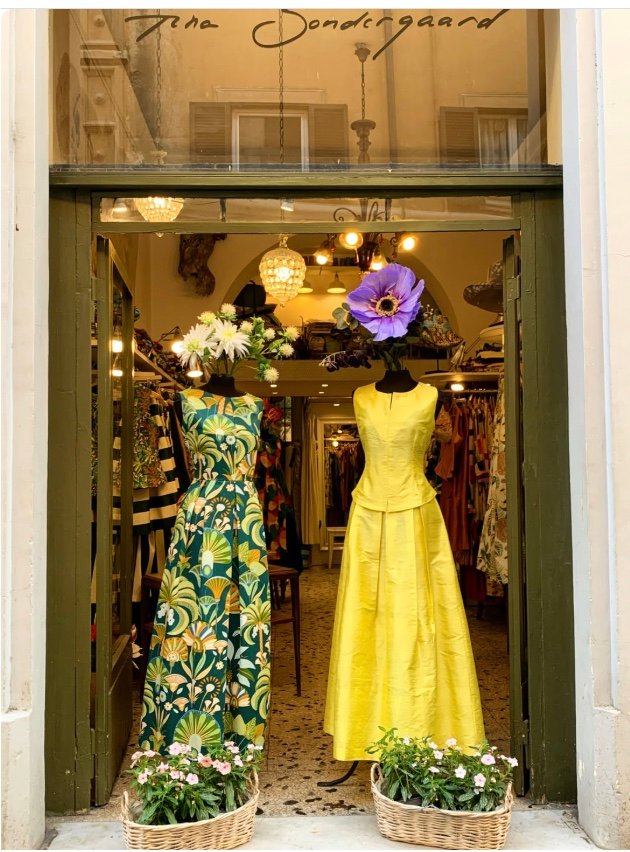
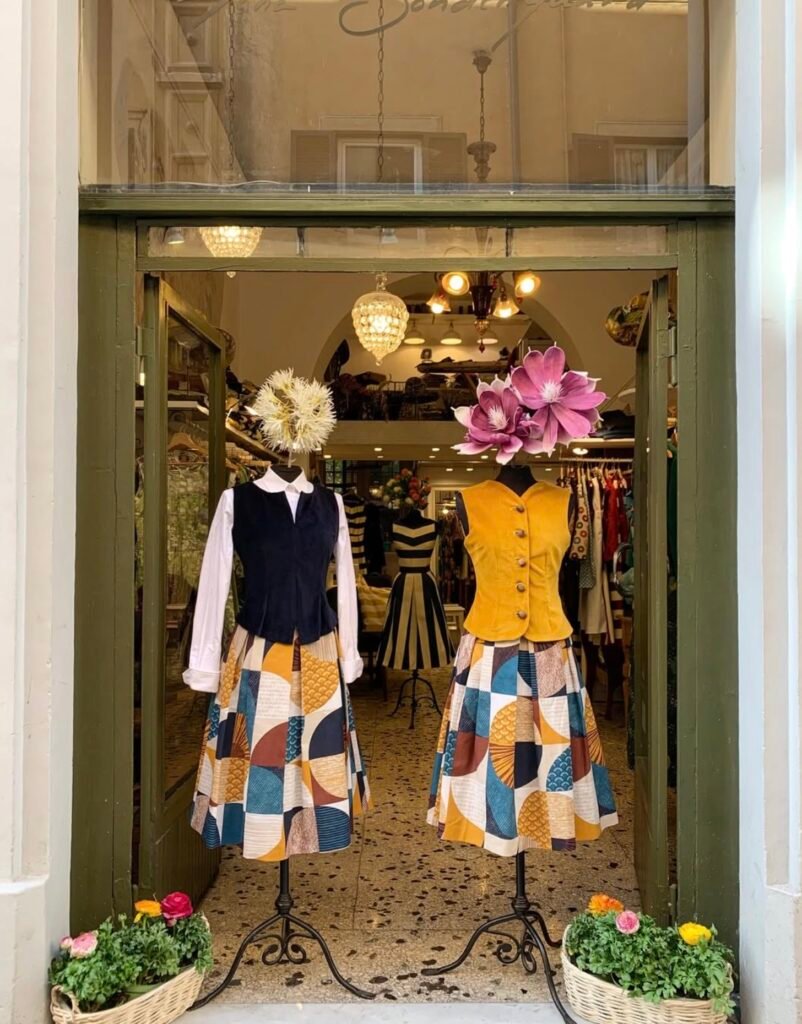
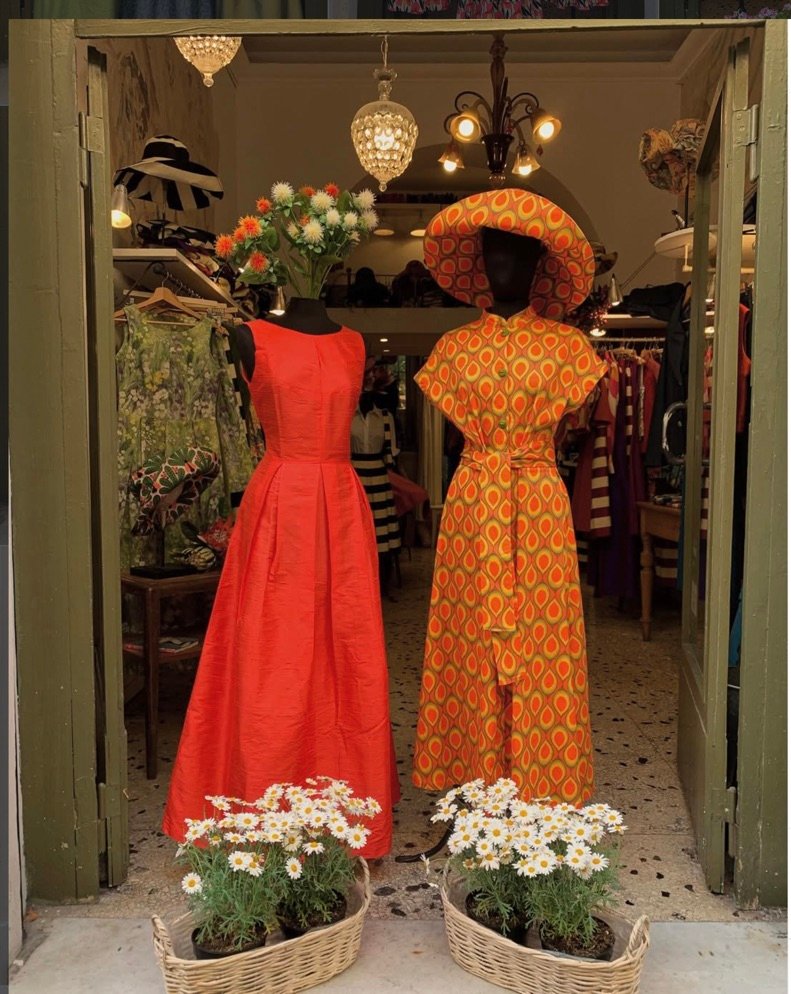
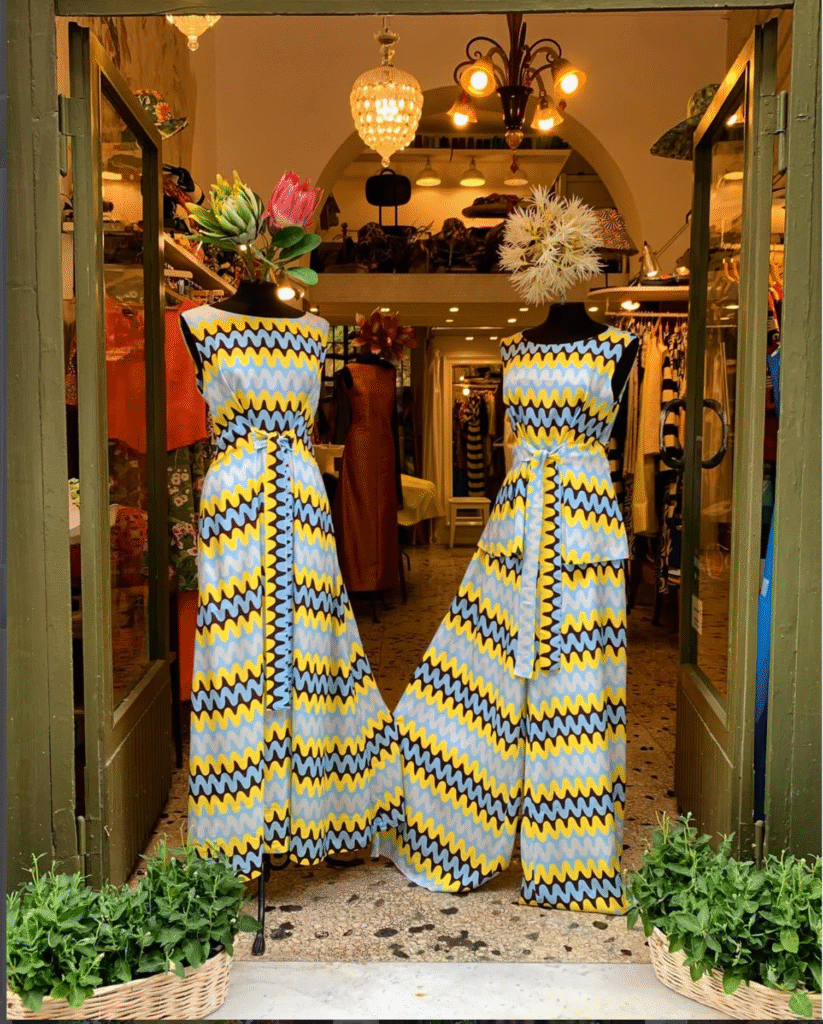
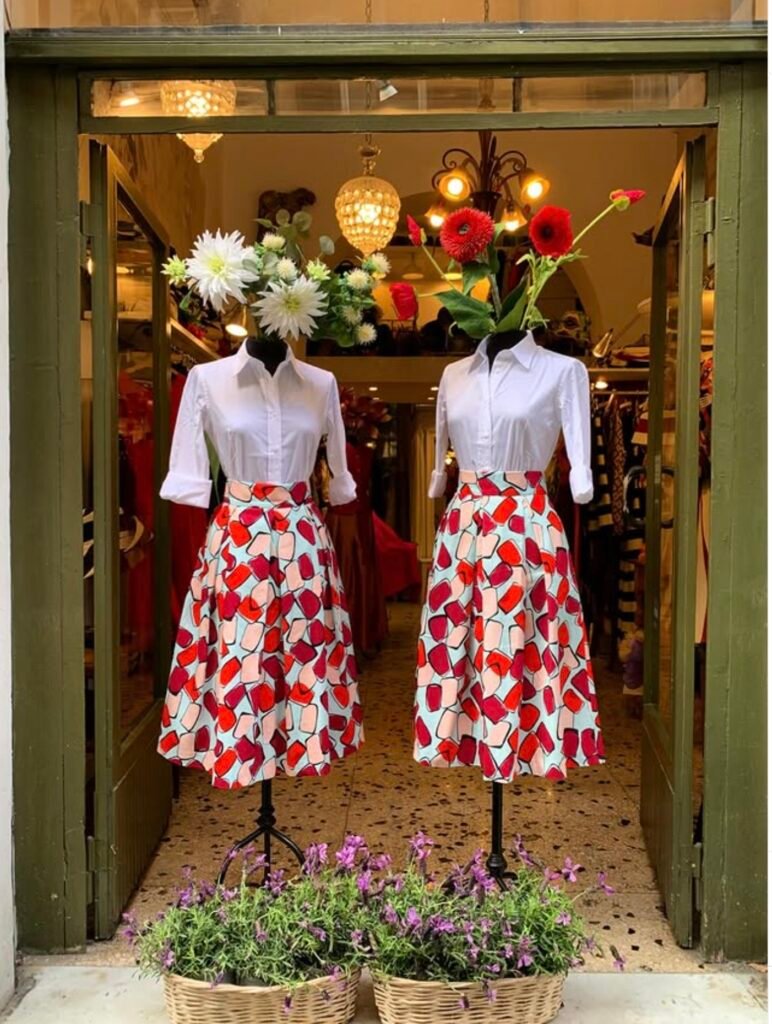
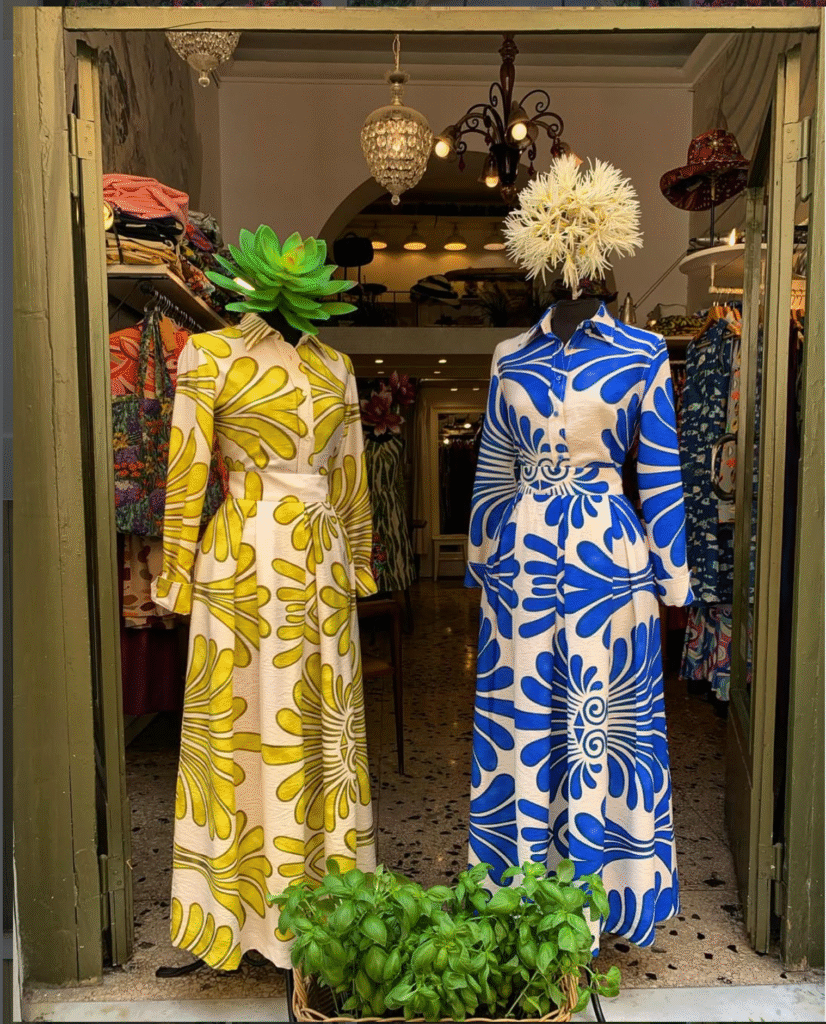
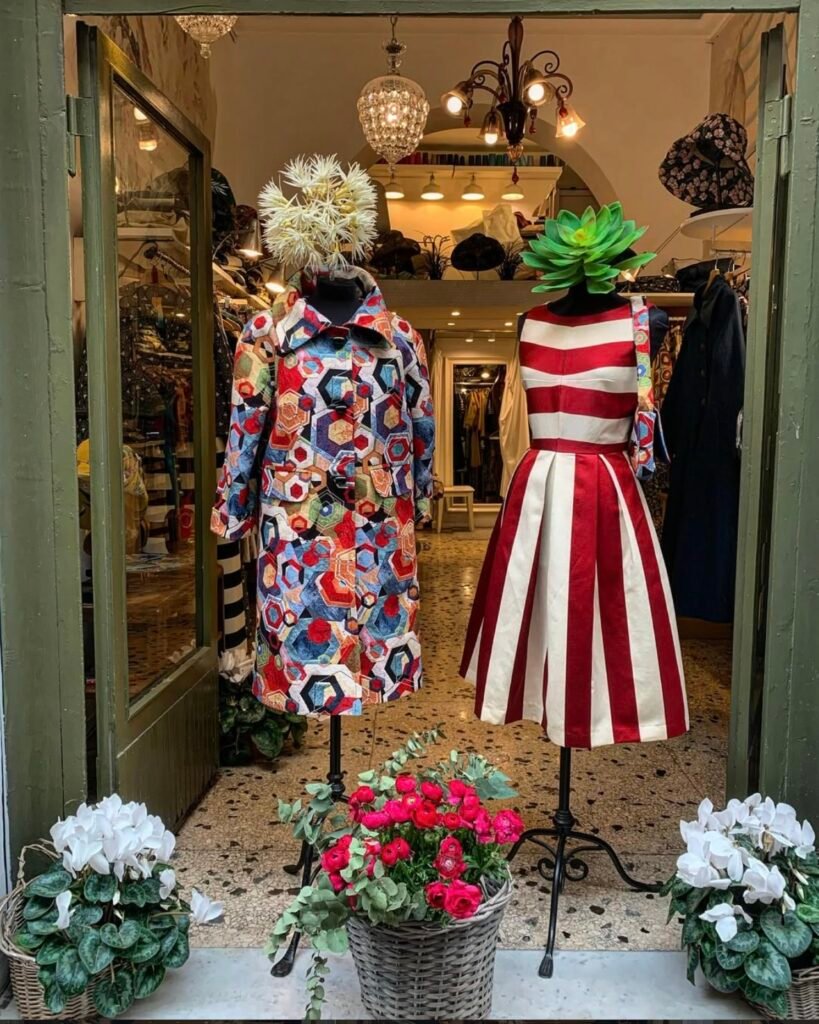
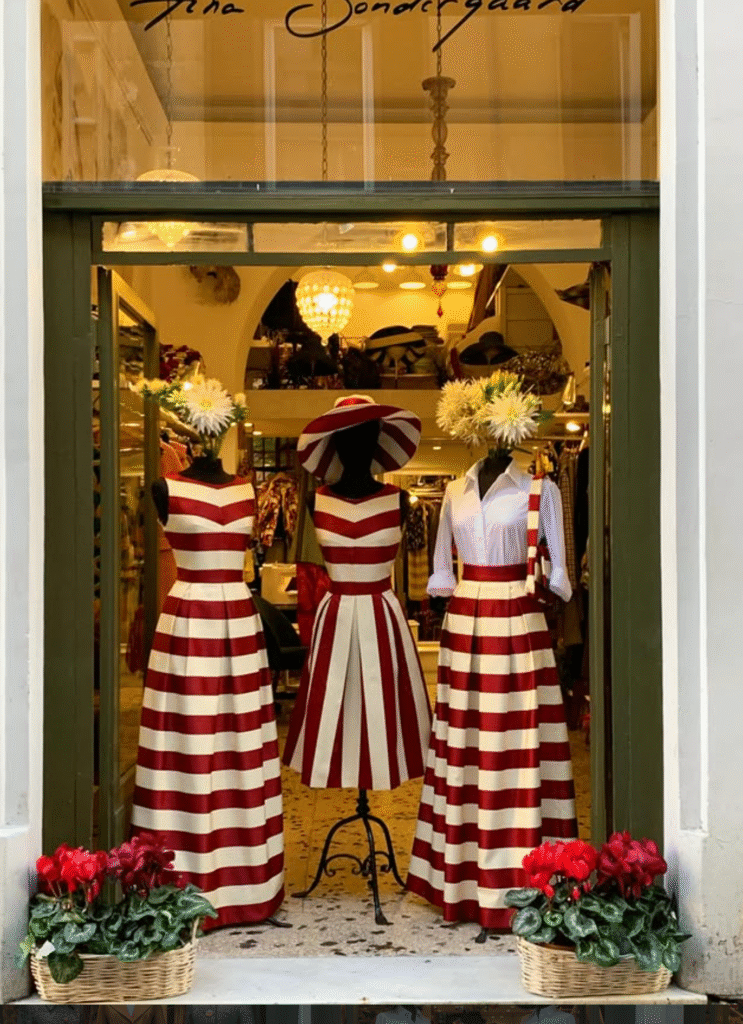
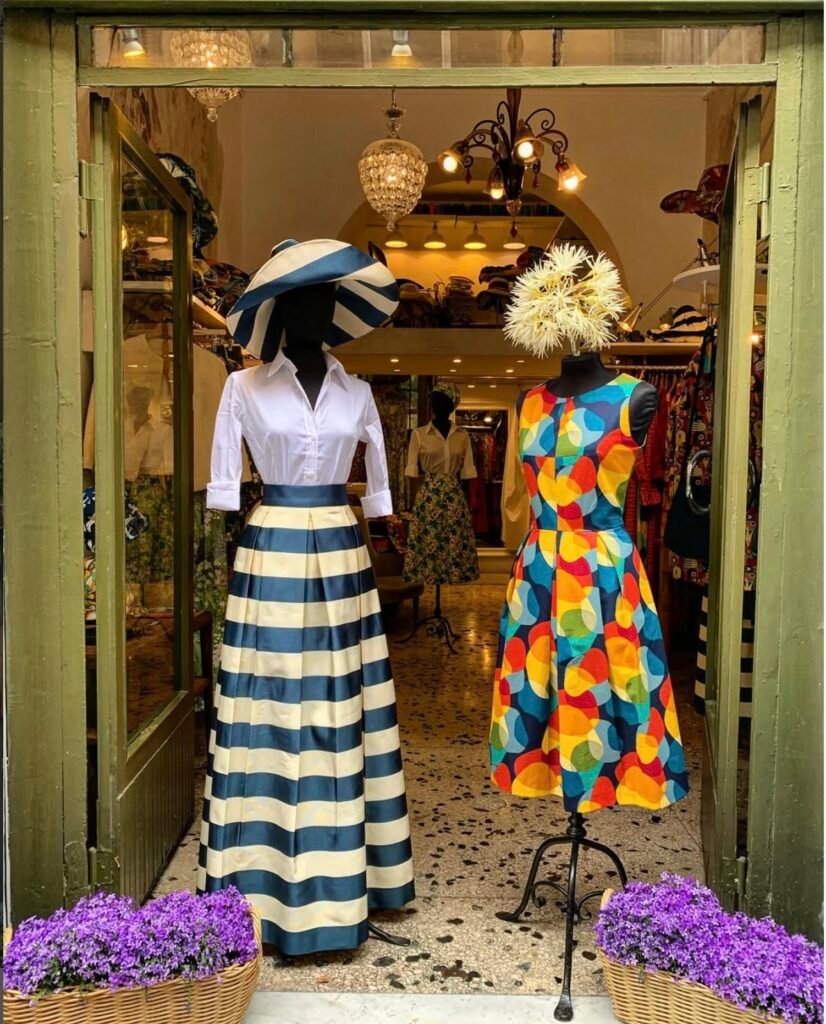
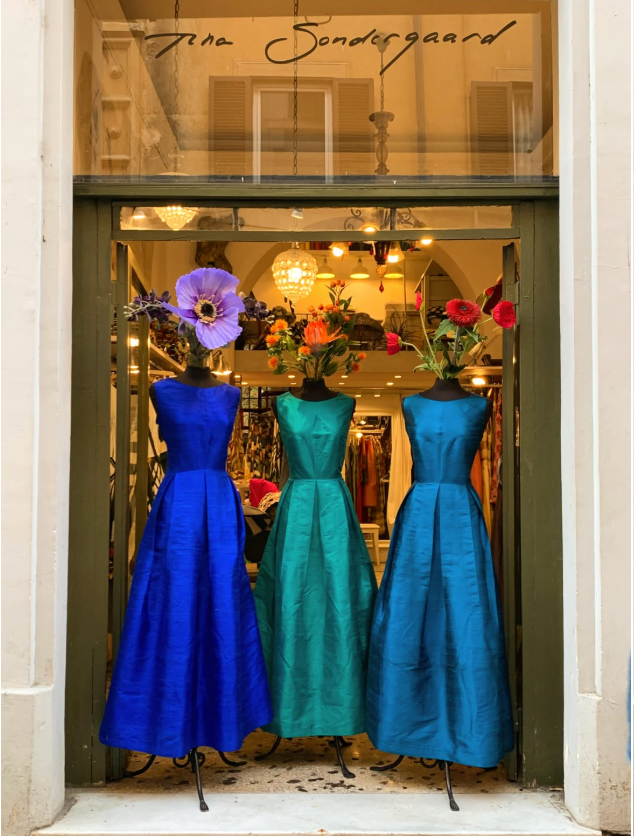
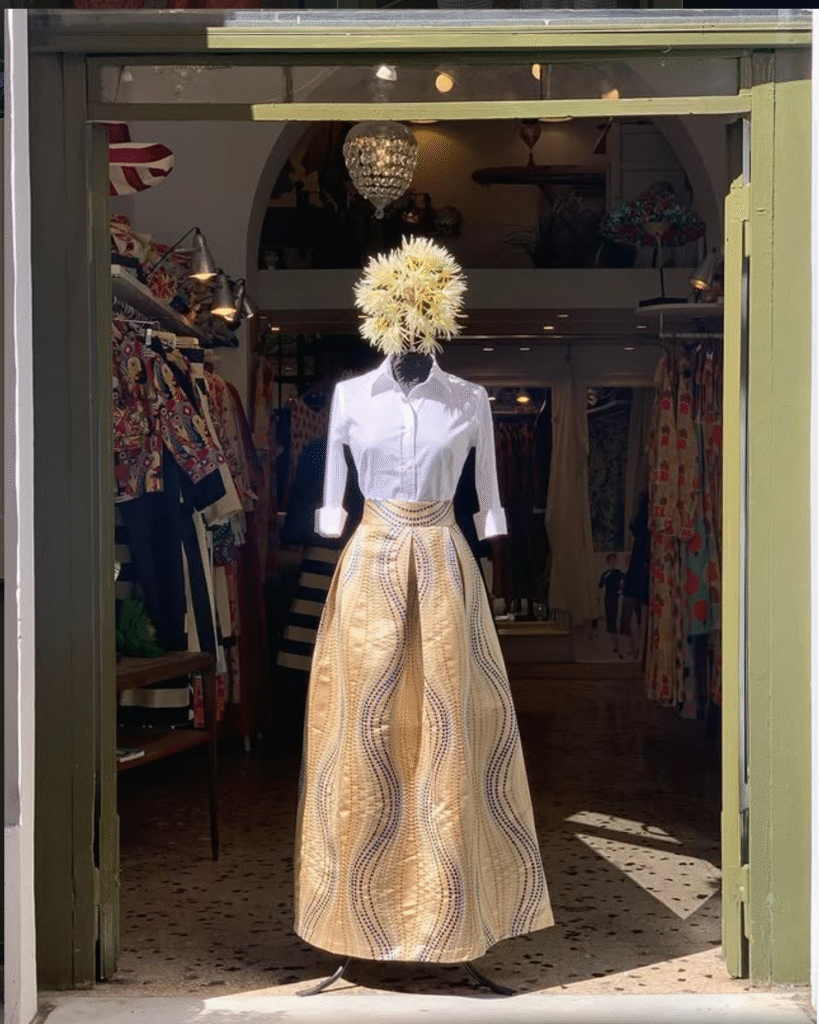
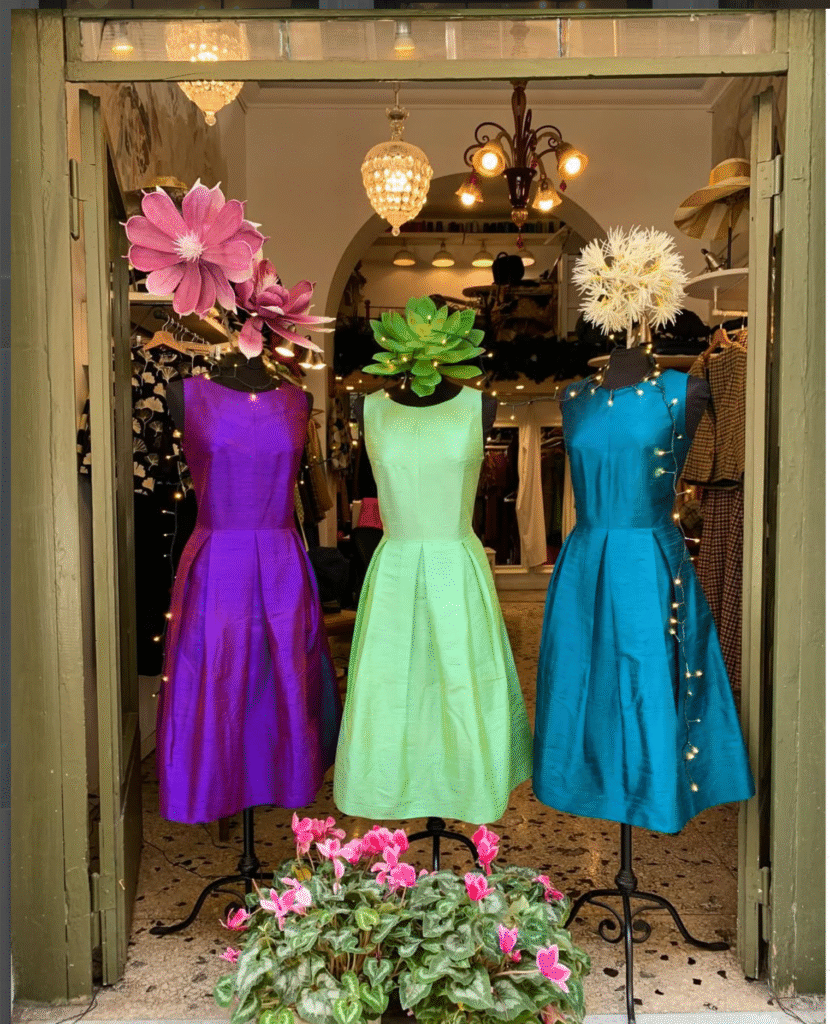
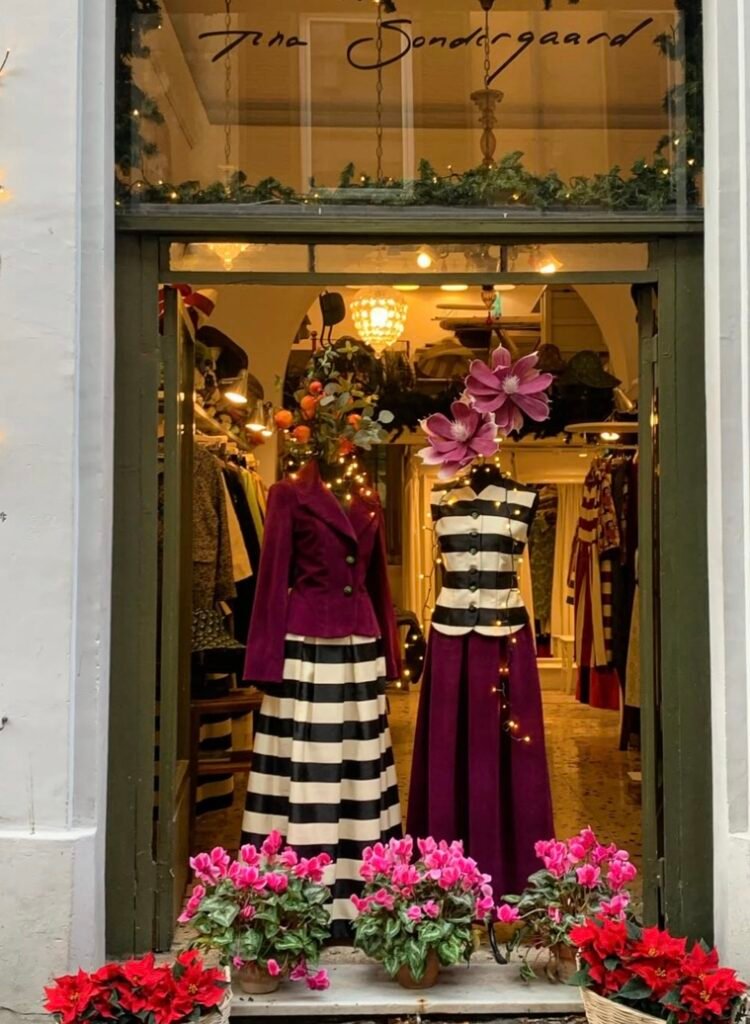
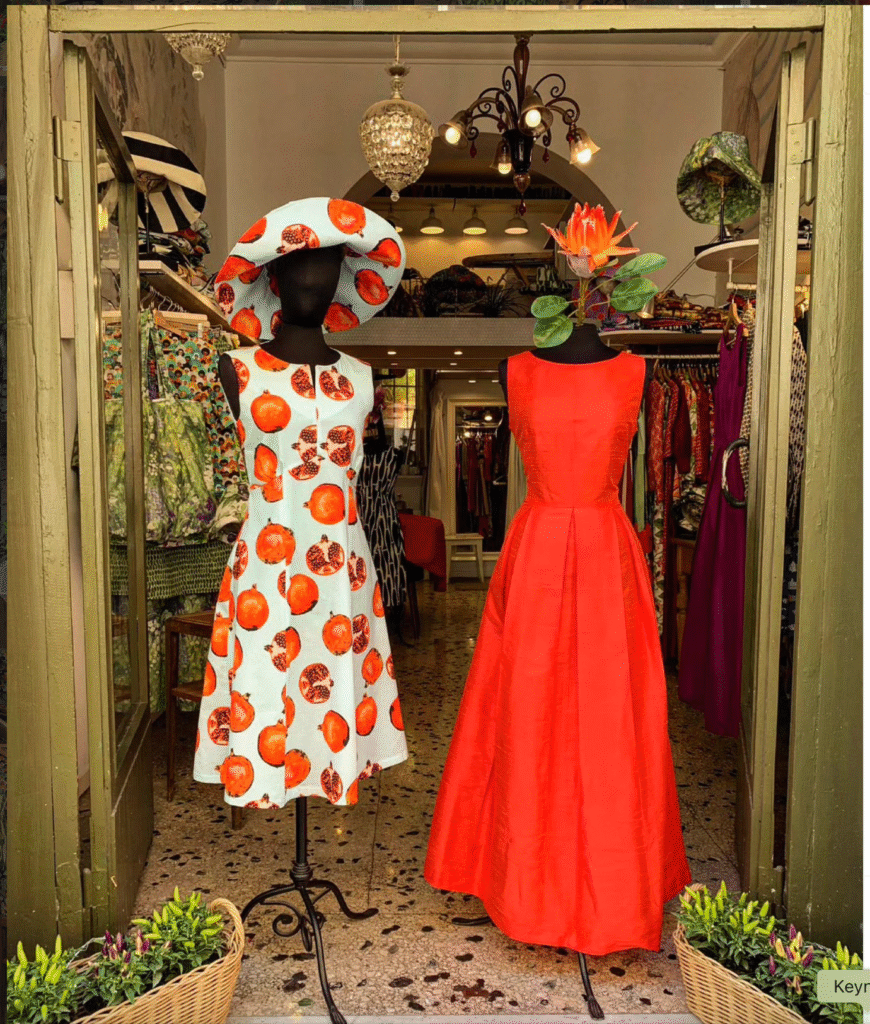
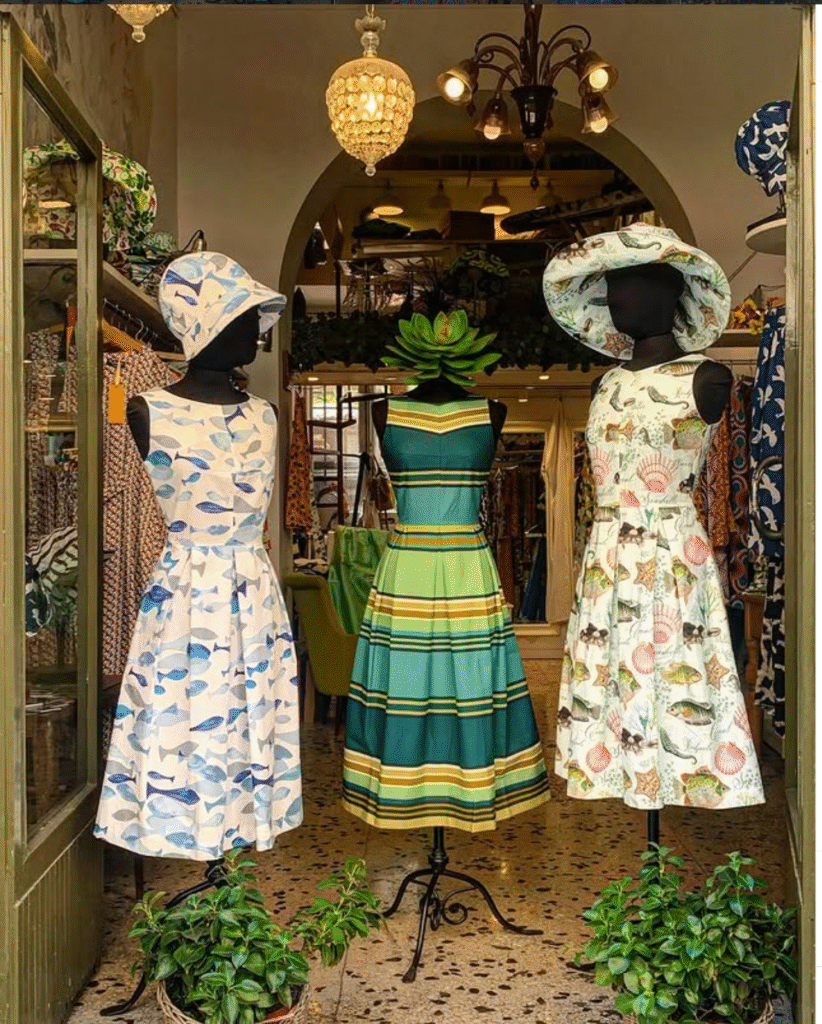
Window display photographs courtesy of Tina Sondergaard
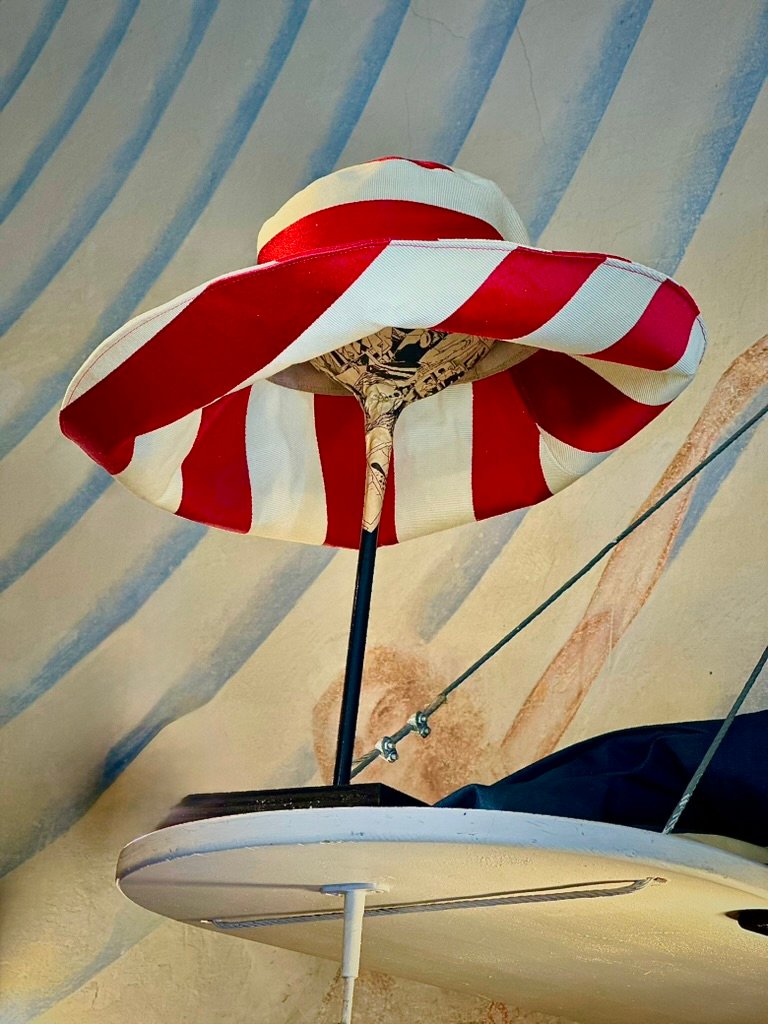
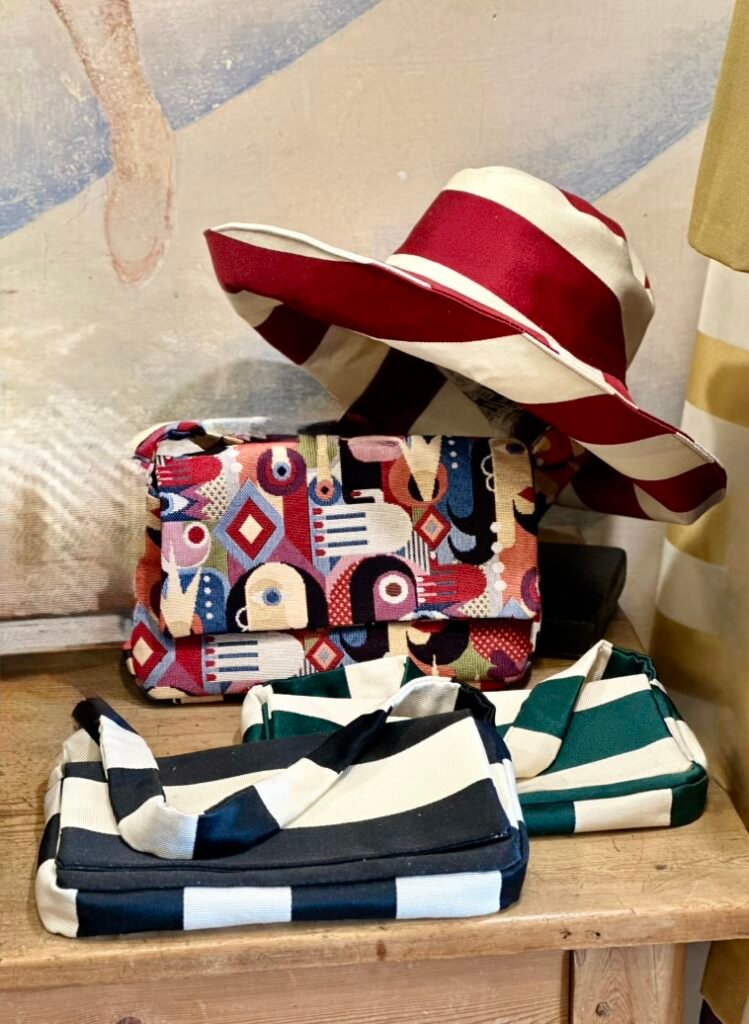
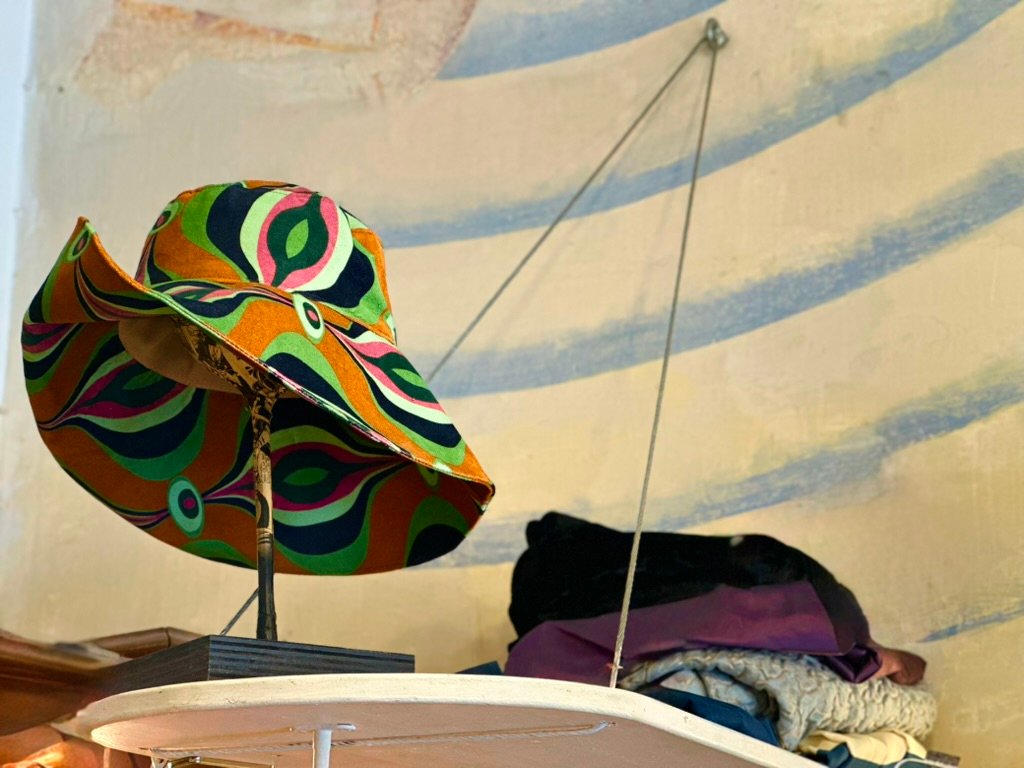
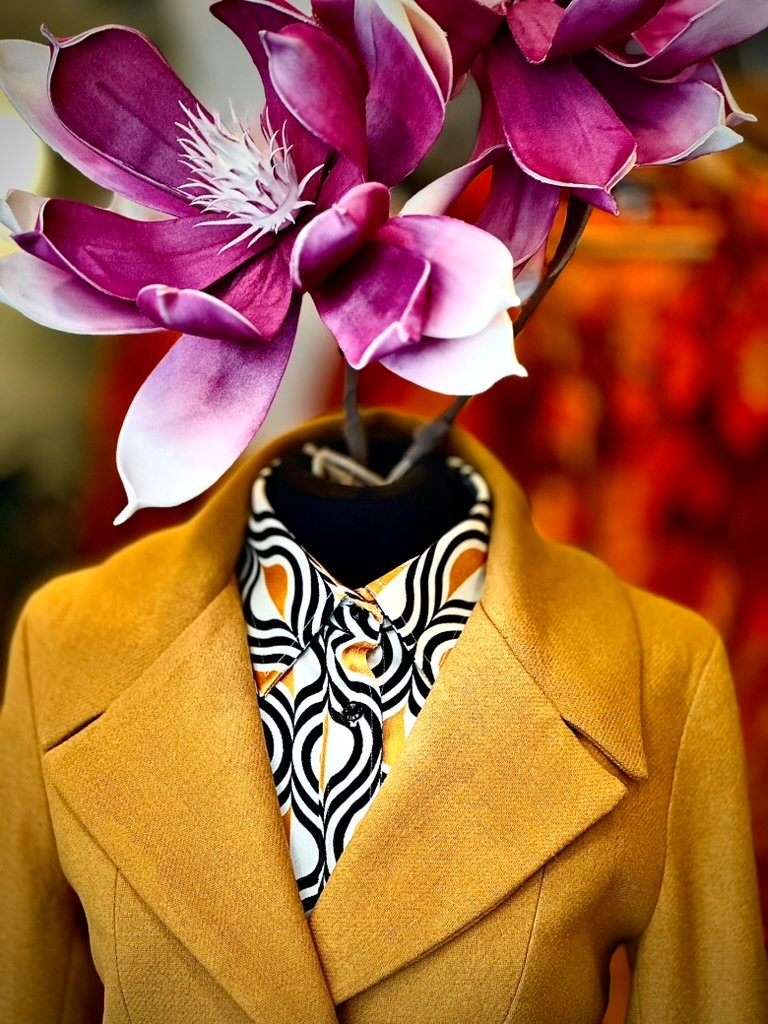
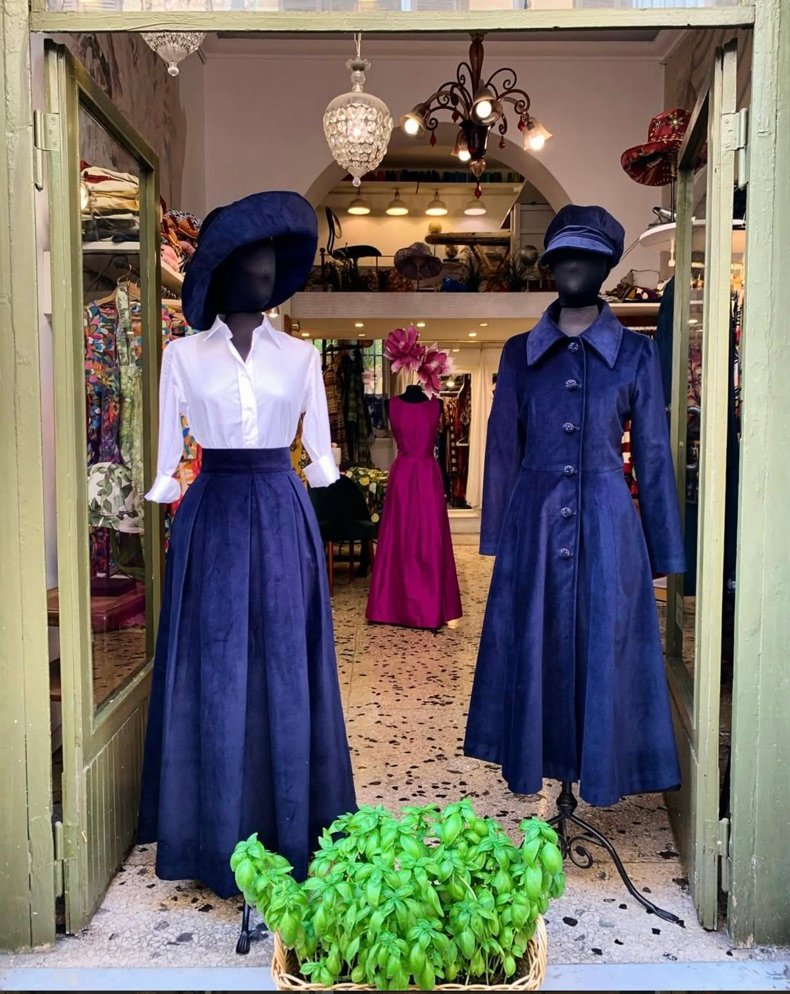
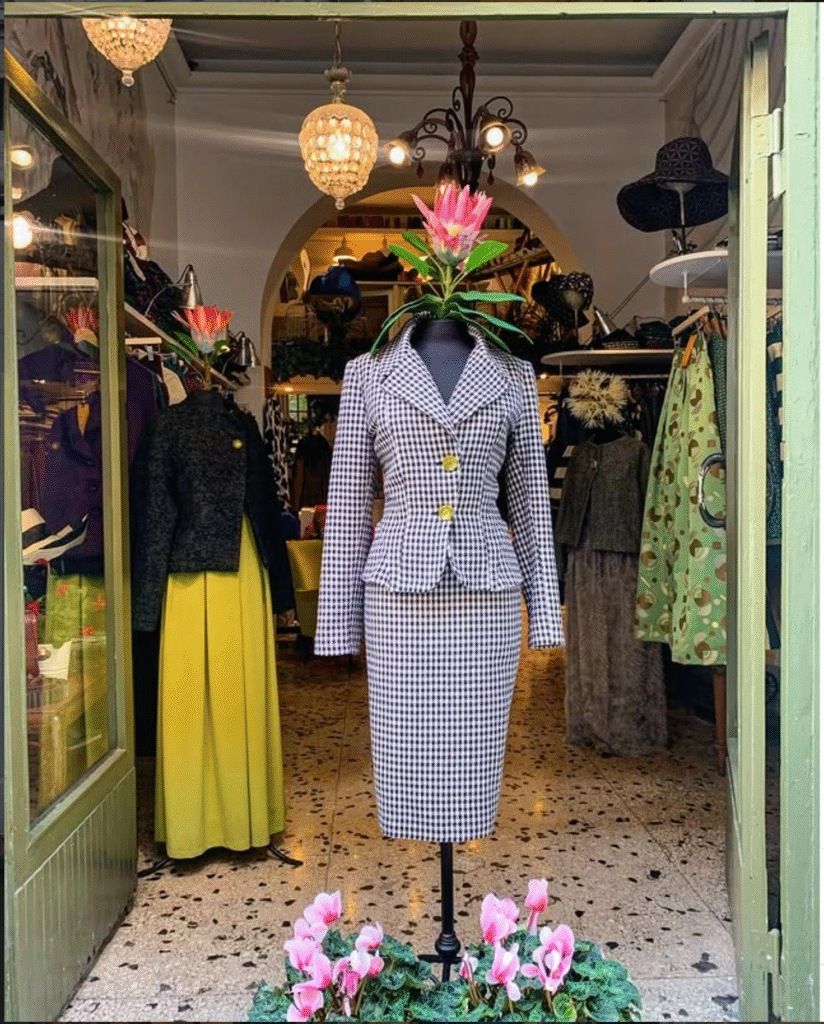
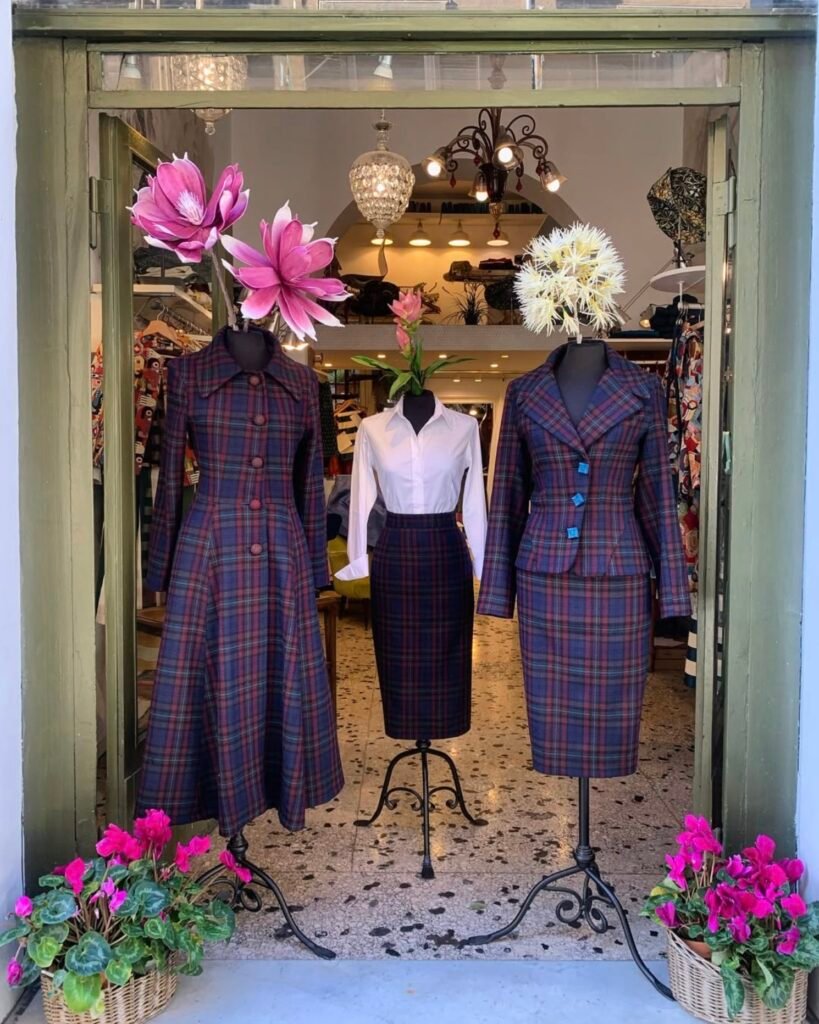
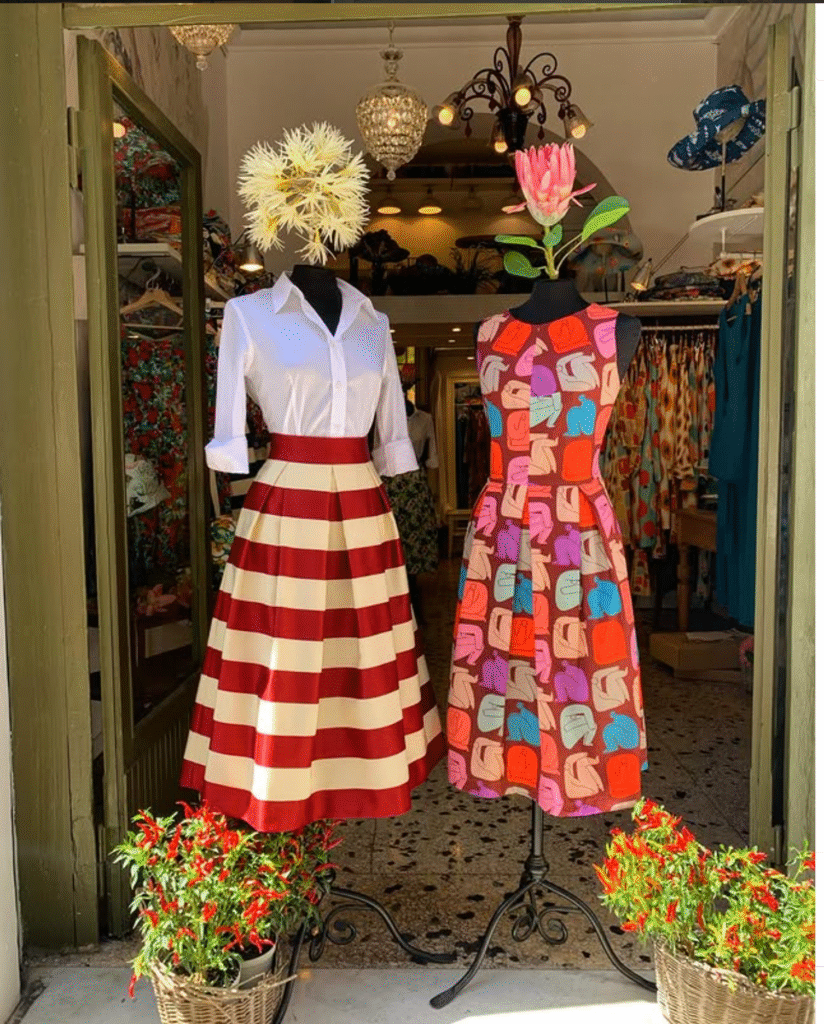
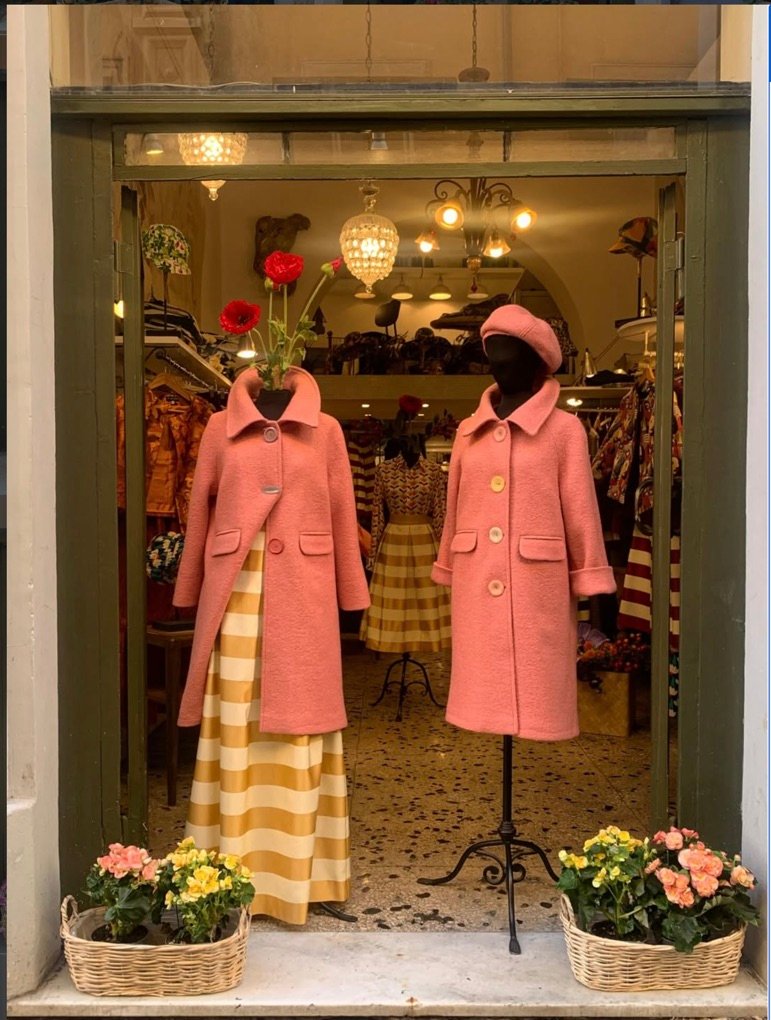
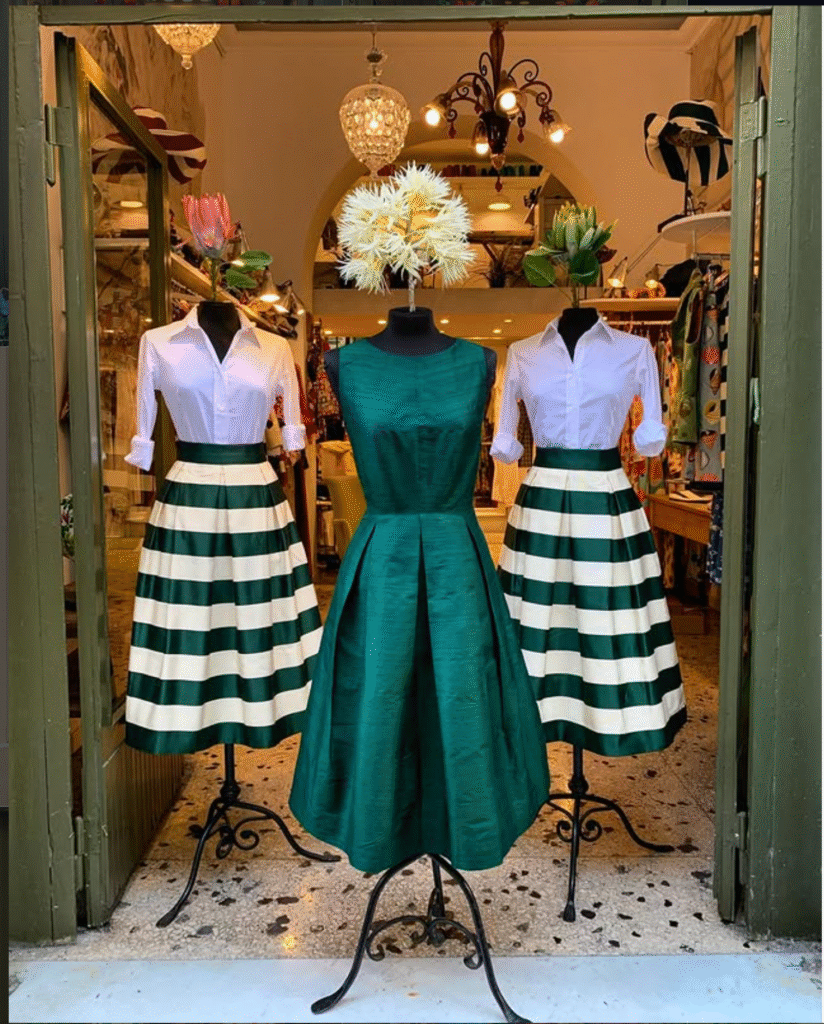
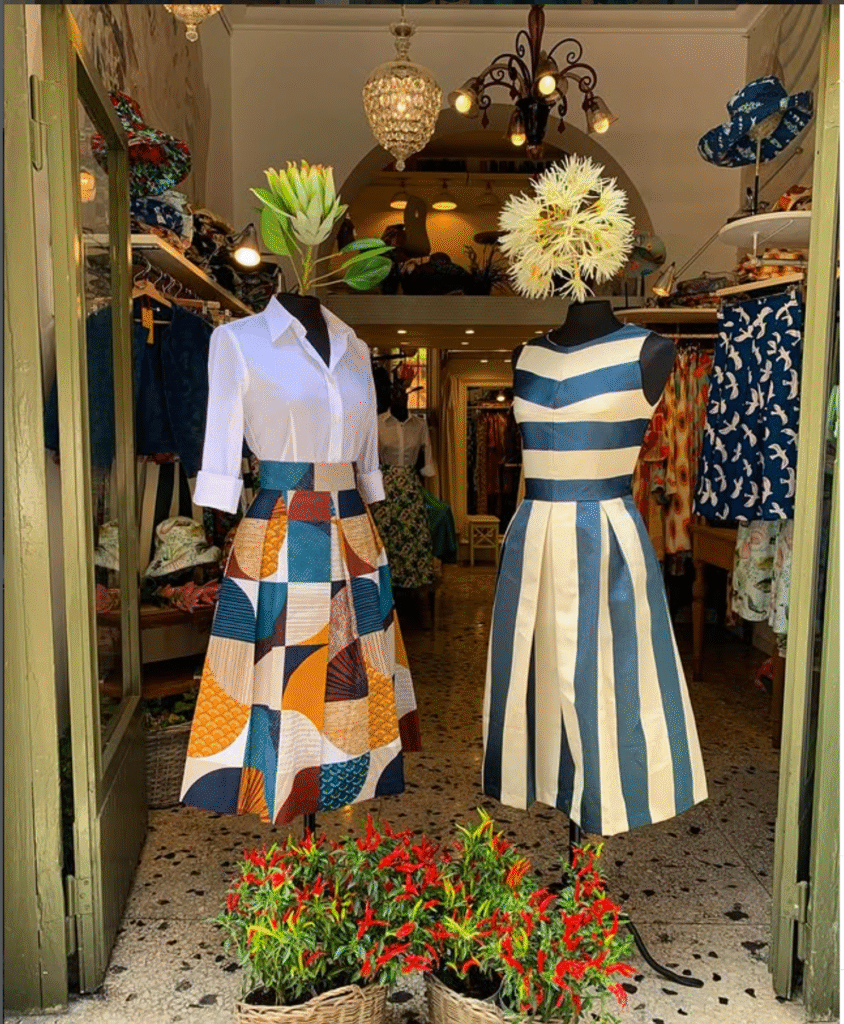
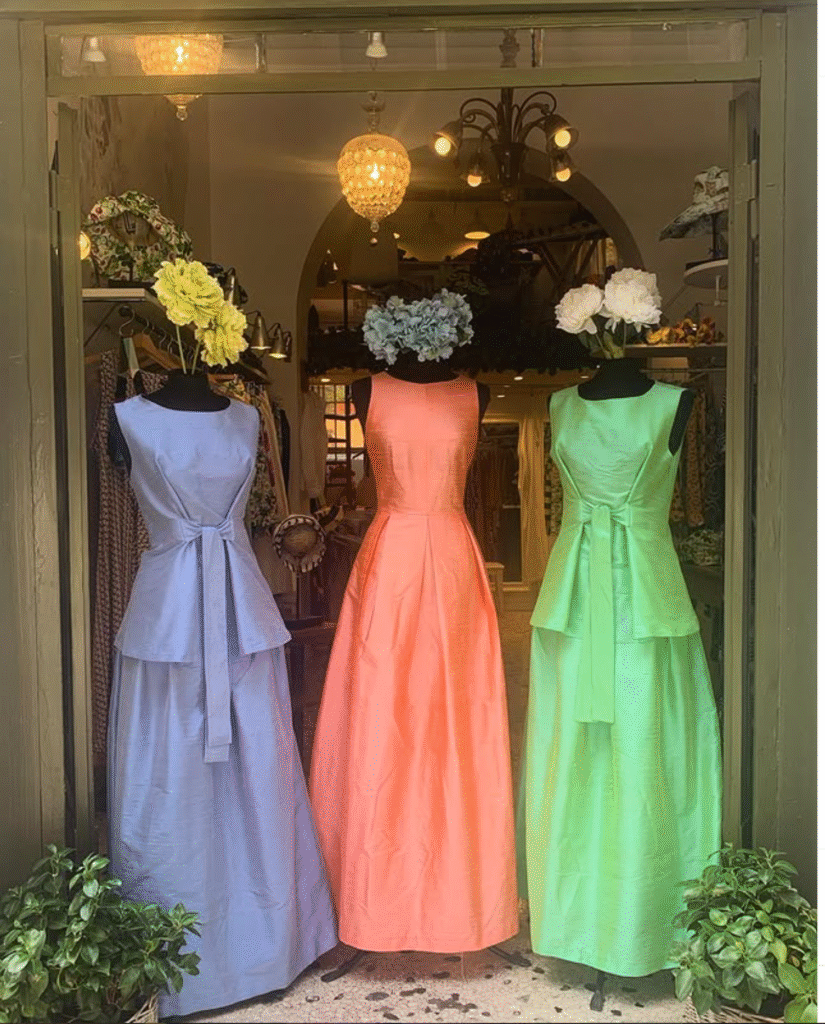
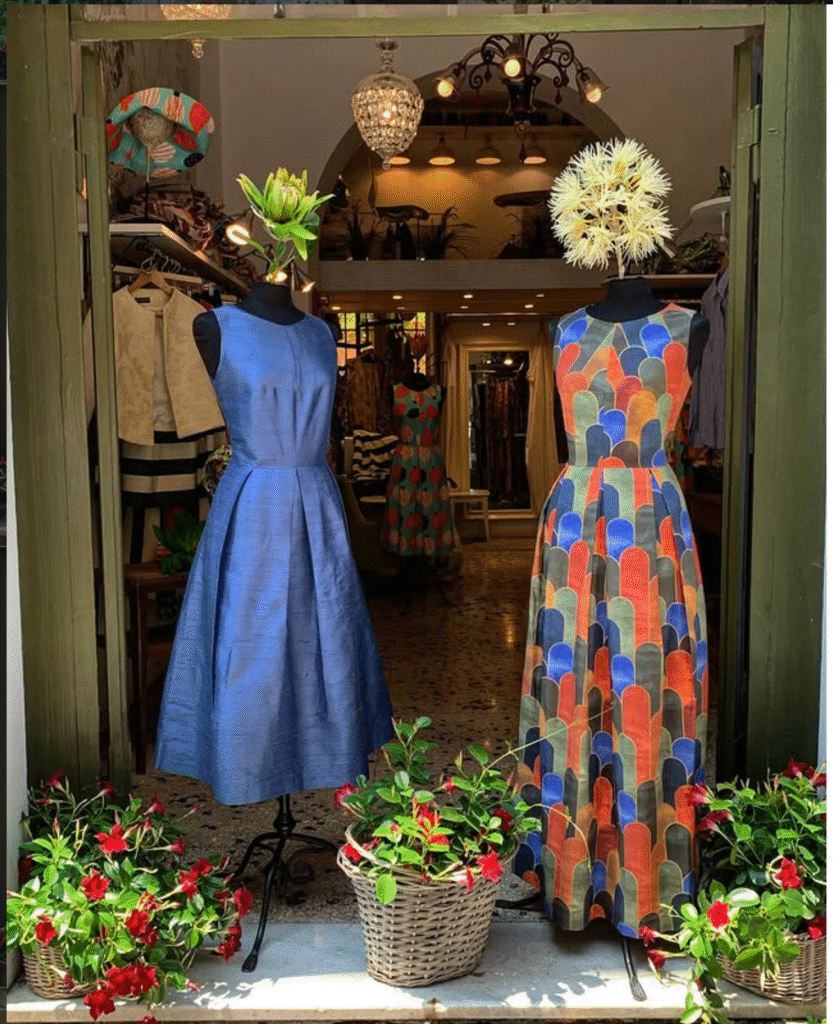
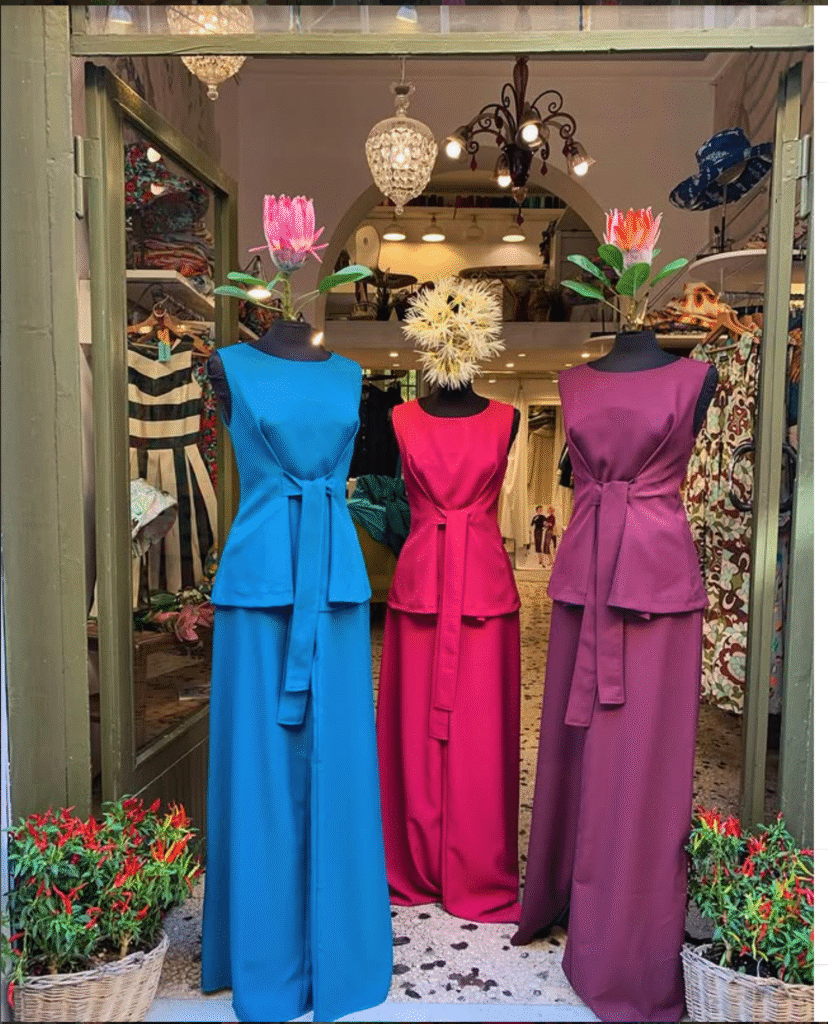
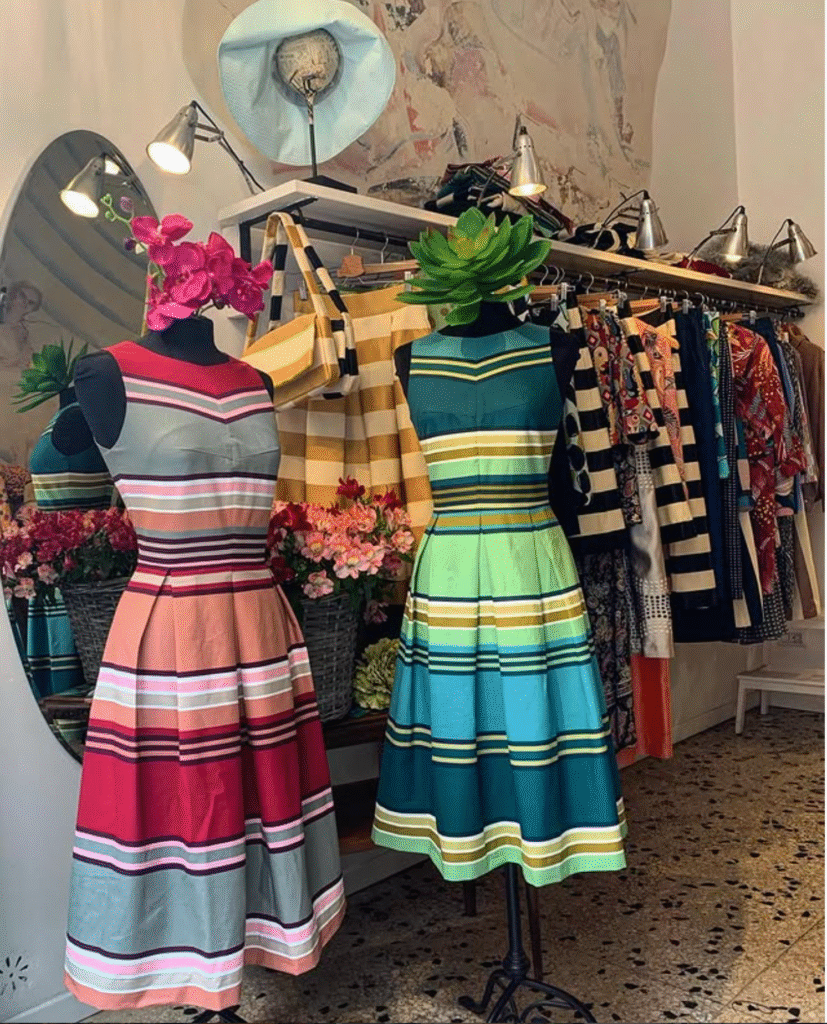
Tina Sondergaard’s striking window displays are an irresistible invitation to step inside her boutique. Her designs celebrate bold color, playful color combinations and unexpected graphic patterns, many of them her own creation. Inspired by the beauty of Rome, the dynamism of Futurist art and a lifelong love of stripes, the collections are unmistakably her own.
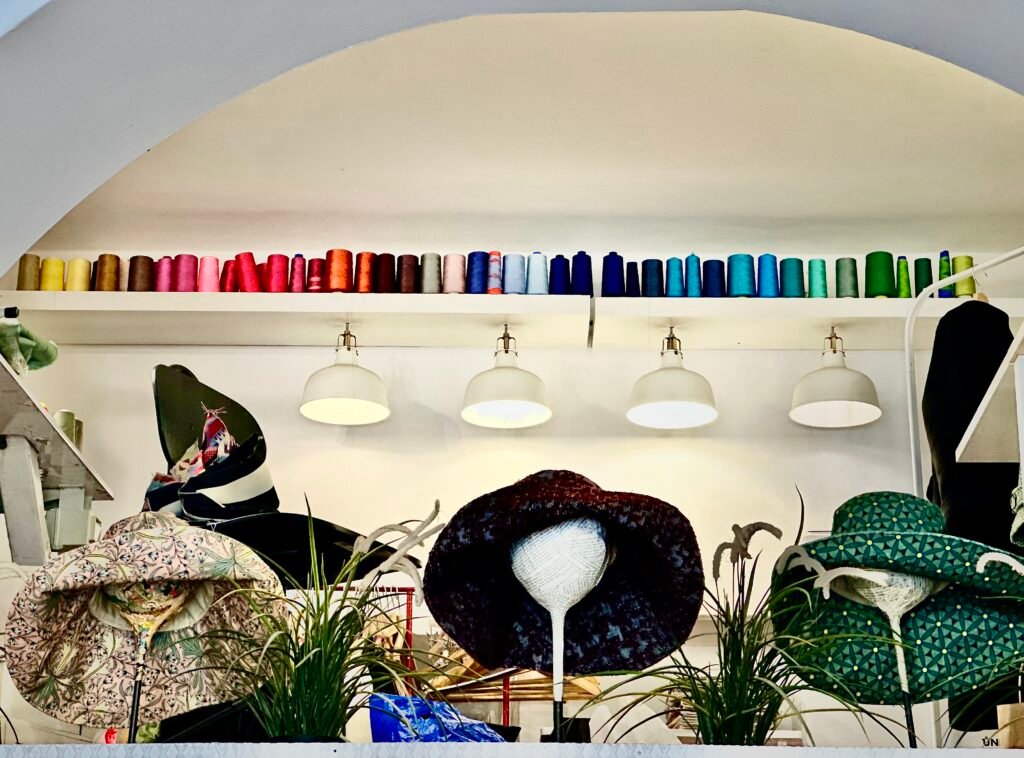
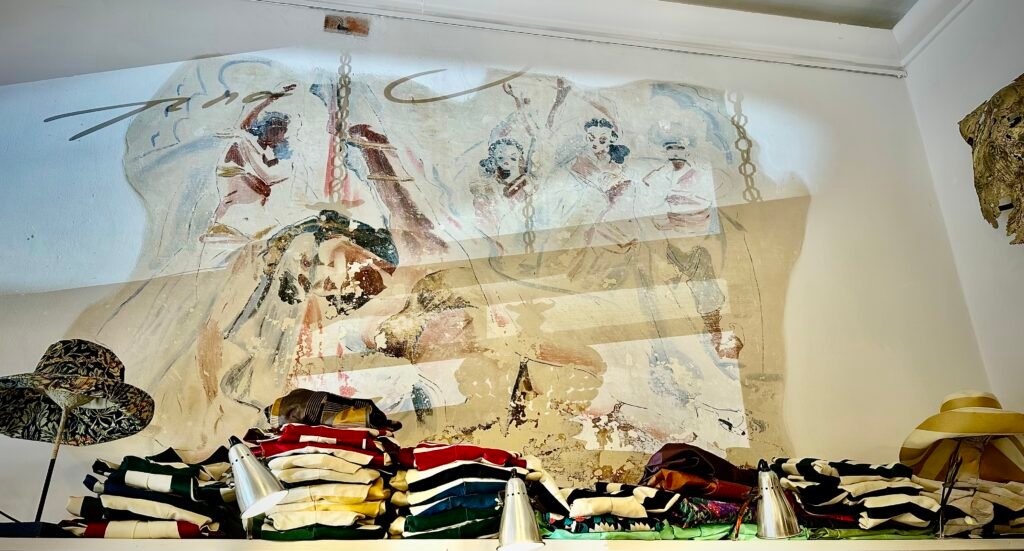
From the moment I stopped on the sidewalk, transfixed by her shop window, I had the feeling that I was entering more than just a simple boutique. The fabrics, their colors, texrtures and patterns, as well as the feminine almost retro silhouettes, and the space itself with 1930’s murals, combined to create a space that felt like a cross between a gallery, theater set and artist’s studio.
For more than four decades, Tina has been designing clothes and creating unforgettable window dispalys that have become a part of Roman neighborhood Monti’s visual landscape and I was curious to discover the woman and creative force behind them.
A Love Affair with Rome
What first brought you to Rome?
Well, I was six months old… let’s put it that way. (Laughs) I spent my first year [of life] between Paris and Denmark. Then, just before starting university to study law, I came to Rome for six months.
It was love at first sight. I fell in love with Rome from the very first day. After those six months I went back home, but I realized it truly was love. Not love for a man — love for the city. I’d always said to myself I would never move somewhere just because of a man. Love comes and goes but love for a city can stay forever.
So, I came back in 1982.
From Law Student to Fashion Designer
Before opening your first boutique in Borgo Pio in 1987, you orginally planned to become a lawyer and spend a year at the Sorbonne. What made you leave that path and pursue fashion instead?
I studied French literature at the Sorbonne for a year, but I was always sewing. I’m completely self-taught — I never attended fashion school. When I was little, my mother gave me my grandmother’s sewing machine and some old clothes that nobody wanted anymore. I cut everything apart and made little dresses. I must have been six or seven years old. That’s as far back as I can remember.
Your designs are instantly recognizable. Is there anything about you that people might be surprised to learn ?
I don’t know, I don’t think there’s anything particularly surprising. I think I’m quite an open person. I enjoy life, I enjoy good food, I don’t think there are many hidden sides to me. That’s who I am. What you see is what you get.
What do you love most about working in Rome?
The fact that I’m in the city I adore. Rome is history, Rome is culture. Beauty is everywhere you look. You’re constantly surrounded by beauty, and that inspires you every day.
And what’s the most challenging aspect of running a business in Rome?
Honestly, nothing in particular… There are always complications, but there are complications everywhere. The important thing is that challenges help you grow. As they say in Rome, “Ti fanno le osse” (“they toughen you up”), that’s how you gain experience.
If you had a magic wand and could change one thing to help artisans and small businesses, what would you suggest?
Honestly, I don’t think I’d change anything. Difficulties are part of life, and they’re part of building a business too. They make you stronger.
Creativity, Craftmanship and Inspiration
If you had a daughter who wanted to follow in your footsteps, what advice would you give her?
I’d tell her to follow her passion. It sounds like a simple thing to say, but it’s true. If she wanted to do what I do, I’d tell her to start from the beginning. Learn how to sew. You can’t really become a fashion designer if you don’t understand how clothes are made. So many young people graduate from fashion schools and produce beautiful sketches, but they don’t know how to make a garment! Even if one day you’re designing for a large company, you should know every step : from cutting the fabric, to sewing it together, to attaching the zip. Only then can you supervise production properly and know whether something has been done correctly. For me, that’s essential.
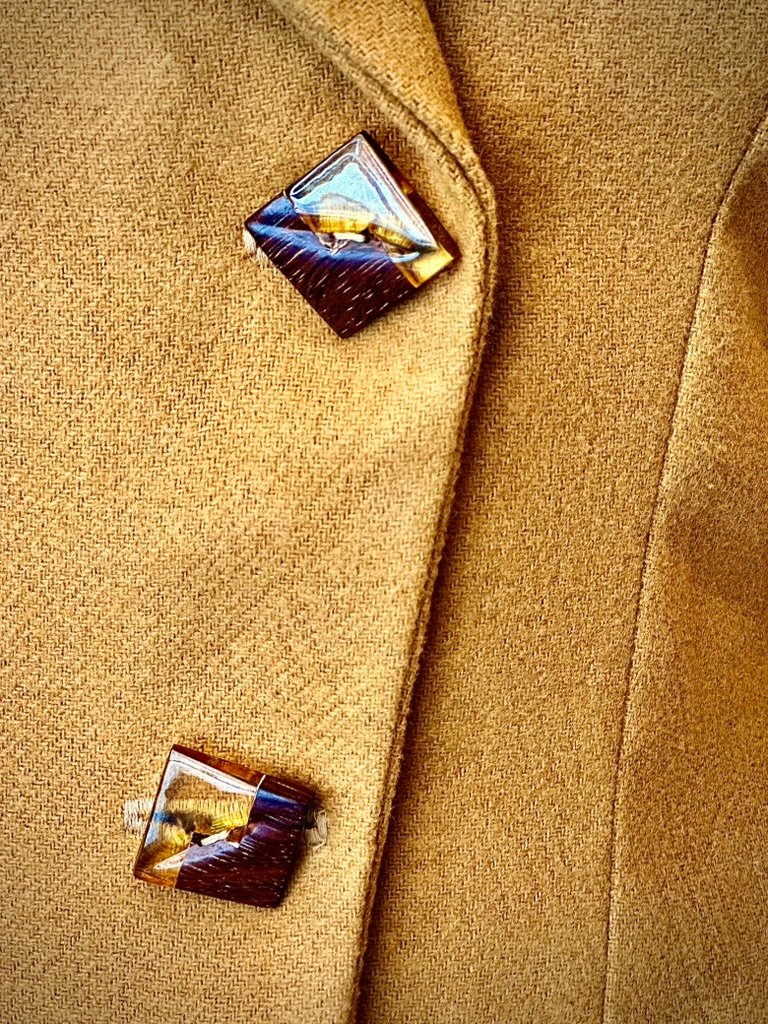
Is there a period in fashion history that inspires you more than any other?
Absolutely. It’s quite a long period—from the 1920s through the 1960s.The twenties, thirties, forties, fifties and sixties.
The seventies started to change direction, and the eighties… well, there were simply too many shoulder pads for my taste. It’s not that they bother me, they just don’t appeal to me. The earlier decades were elegant, everything was carefully thought out. They had style and grace.
Do you have a favorite color?
People always think it’s green. I always say green because green isn’t one color, it’s many colors. But, in reality, it changes with different moments in my life. Lately, I’ve been using a great deal of pink, even though I never used to like it.
Dusty pink, powder pink, especially when it’s paired with rust. It really depends on the moment.
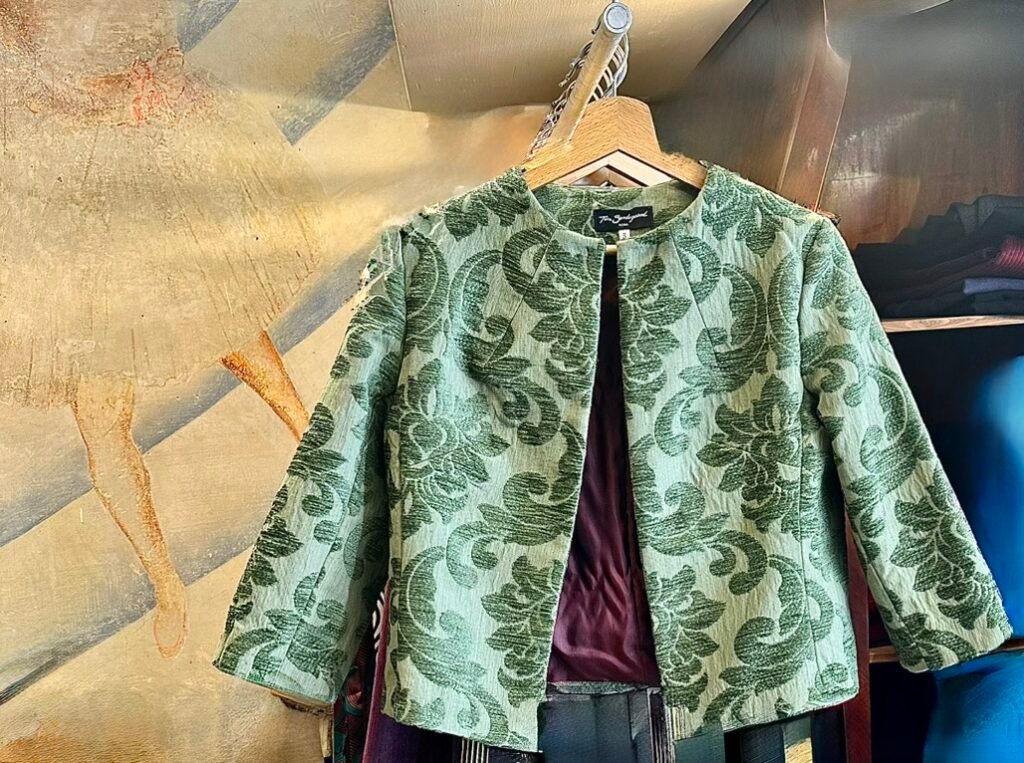
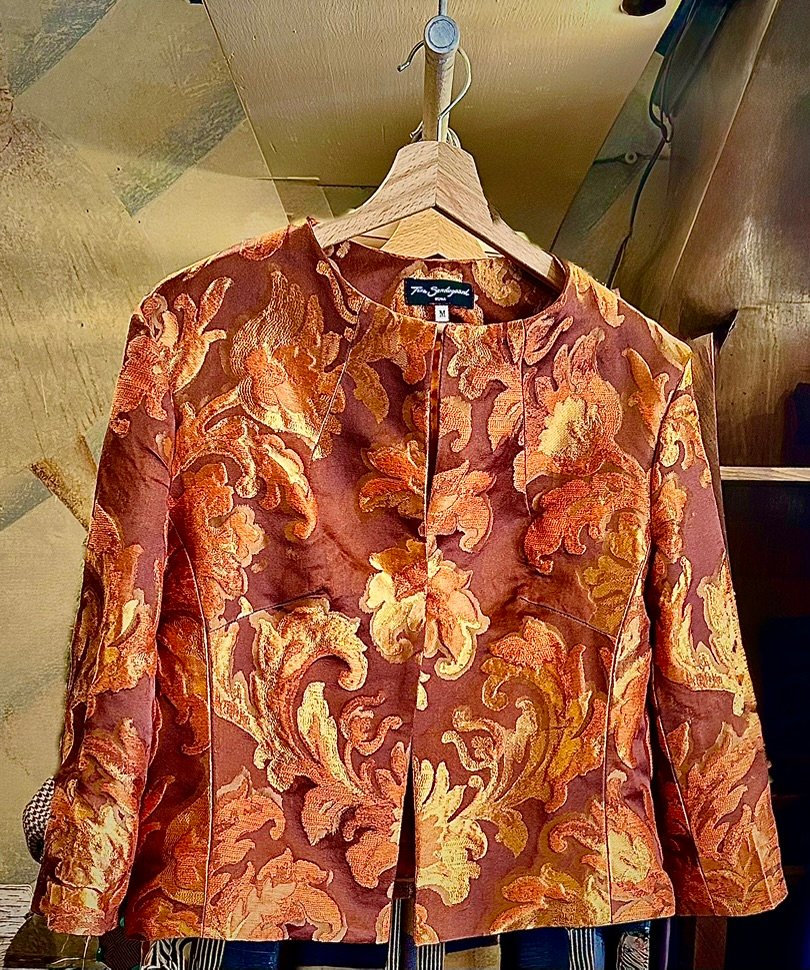
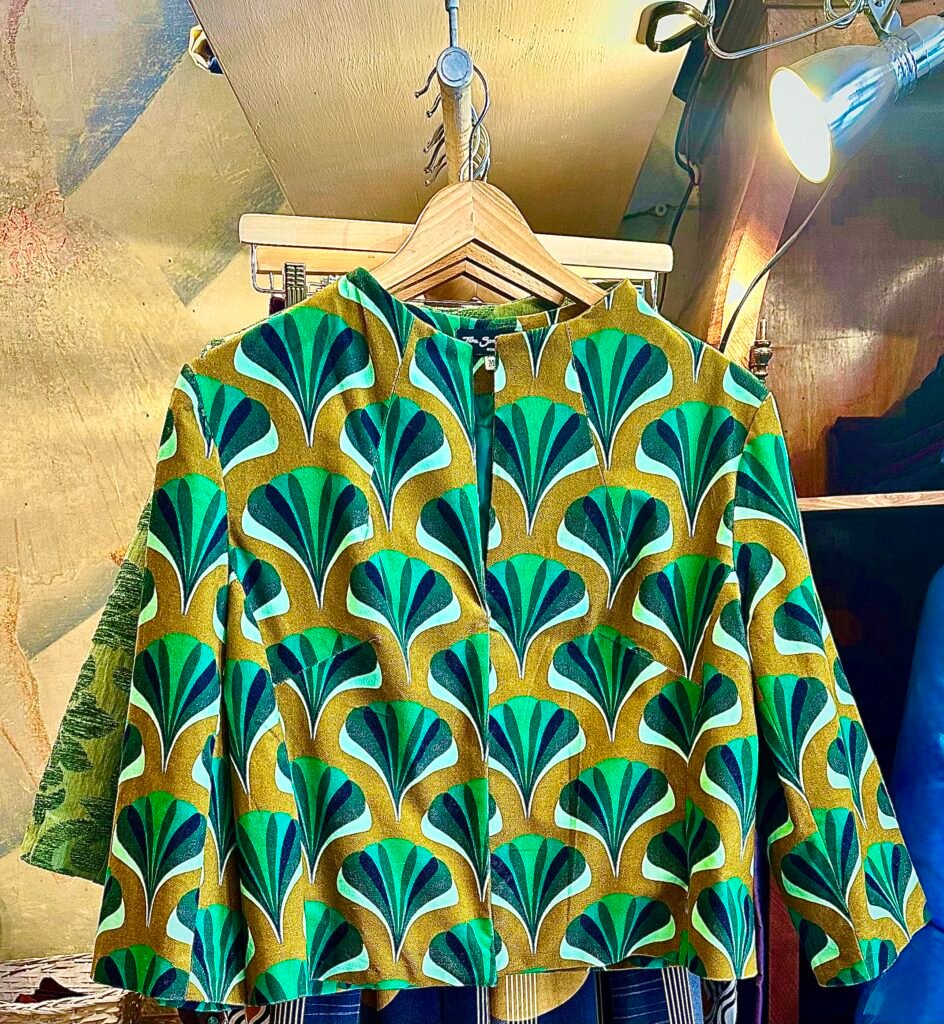
Where do you find inspiration?
I almost never read fashion magazines. Instead, I look at interior design magazines because I think interiors offer incredible inspiration for fashion. There are so many beautiful ideas there that can easily translate into clothing.
Music has also influenced me a great deal. My father was a musician, and my mother loved old Hollywood films. I grew up surrounded by creativity.
Inspiration comes from everywhere.
Who are your greatest inspirations?
Certainly, Edith Head, Hitchcock’s costume designer, as well as all of 1950s Hollywood. I love the elegance of those years.
Among fashion designers, Balenciaga has always been one of my favorites, and then Moschino — I love his sense of humor, that irony has always appealed to me.
If you could go back, is there anything you would do differently in your career?
No. Not at all. I wouldn’t change any of my mistakes because I think they were all necessary — they brought me to where I am today. I’m happy. Everything I did, even the mistakes, helped me reach this point.
When I was in Borgo Pio, that little boutique became my home. It was also my school –not only professionally, but in life.
You once said you were happy to move here to the Monti neighborhood because it gave you more visibility. What changed?
Borgo Pio was my home; it was a very special neighborhood. At the time, it wasn’t considered fashionable at all; it had a reputation. There were petty thieves and colorful local characters everywhere. But I always felt welcomed, I always felt protected. I could leave my shop door open without worrying that anyone would steal anything. In fact, if someone had tried, the whole neighborhood would have stepped in before I even knew about it!
Tina’s Journey to Rome and the Spirit of Borgo Pio
What made Borgo Pio so special?
I’ll never forget the day I opened the boutique. Four elderly gentlemen who lived opposite came over and said, “We’ve been watching you for days because we wanted to know who you were.” On the corner there was a little café where all the local men gathered every morning. Some of them had, let’s just say, “colorful” pasts. At first, they watched me to understand whether I was someone they could trust. Once they realized I was simply there to work and become part of the neighborhood, they accepted me completely.
Looking back, was it still the right decision to leave law school?
Absolutely. People think leaving law required courage, but I think staying would have required much more courage because it wasn’t my path. I would have been unhappy.
When I arrived in Rome, I didn’t immediately open a boutique. For about five years I worked in other shops. I wanted to understand how everything worked. Then, in 1987, I opened my own boutique. That had always been my dream.
Do you think there’s a difference between the Danish and Italian approach to fashion?
I honestly don’t know. I arrived in Italy when I was very young and built my life here; I’ve probably absorbed the Italian way of doing things. But your roots always stay with you, you always bring your origins with you. At the end of the day, though, you simply do things in your own way. That’s always been important to me: I’ve always wanted the freedom to do things my own way. That’s probably why I never worked for another company — freedom has always mattered enormously to me.
If you could go back and meet your 15-year-old self, what advice would you give her?
Be a little more careful. Don’t trust everyone.
If you could invite three people, living or from history, to dinner, who would they be, and what would you ask them?
That’s a beautiful question…I really don’t know…There are so many people!
If I wanted to spend an evening laughing, I’d choose someone with a wonderful sense of humor. And if I had the chance to sit down with someone extraordinary, I’d simply enjoy talking to them. But I don’t think I’d have one specific question prepared. I’d just love the opportunity to have a conversation.
The Grandmother Who Shaped Her
Is there someone from your own life you wish you could talk to again?
My grandmother. She had an extraordinary story. She became a widow in 1936 with five children and inherited a clothing shop that was full of debt. Those were incredibly difficult years. When my grandfather died, she put on her best dress and went to every person she owed money to, including the banks, telling them: “Trust me. I’ll repay every penny.”
During the day she worked in the shop and at night she sewed shirts. She even played the piano at the cinema to earn extra money. Little by little, she repaid every debt. Not only that, but she also eventually became wealthy enough to buy buildings. She was an extraordinary woman, very determined, a real heroine. I admired her enormously.
Did she know you were making clothes too?
Yes, she knew I loved making clothes. She never really saw what it became professionally because she died before then…She always hoped I’d return to Denmark, but she did know I’d opened my boutique, and she was happy about that.
My grandfather had originally opened their clothing shop, and when he died, everyone thought the business would disappear.
Instead, my grandmother carried it forward. She simply said, “I’ll take care of it.” She worked day and night because she had five children to raise. There weren’t many alternatives for women in those days, but she was incredibly brave.
Signature Designs and Bestsellers
Do you have a signature piece?Yes, without a doubt, it’s my striped dress. It’s become my signature piece over the years and people immediately associate it with me.
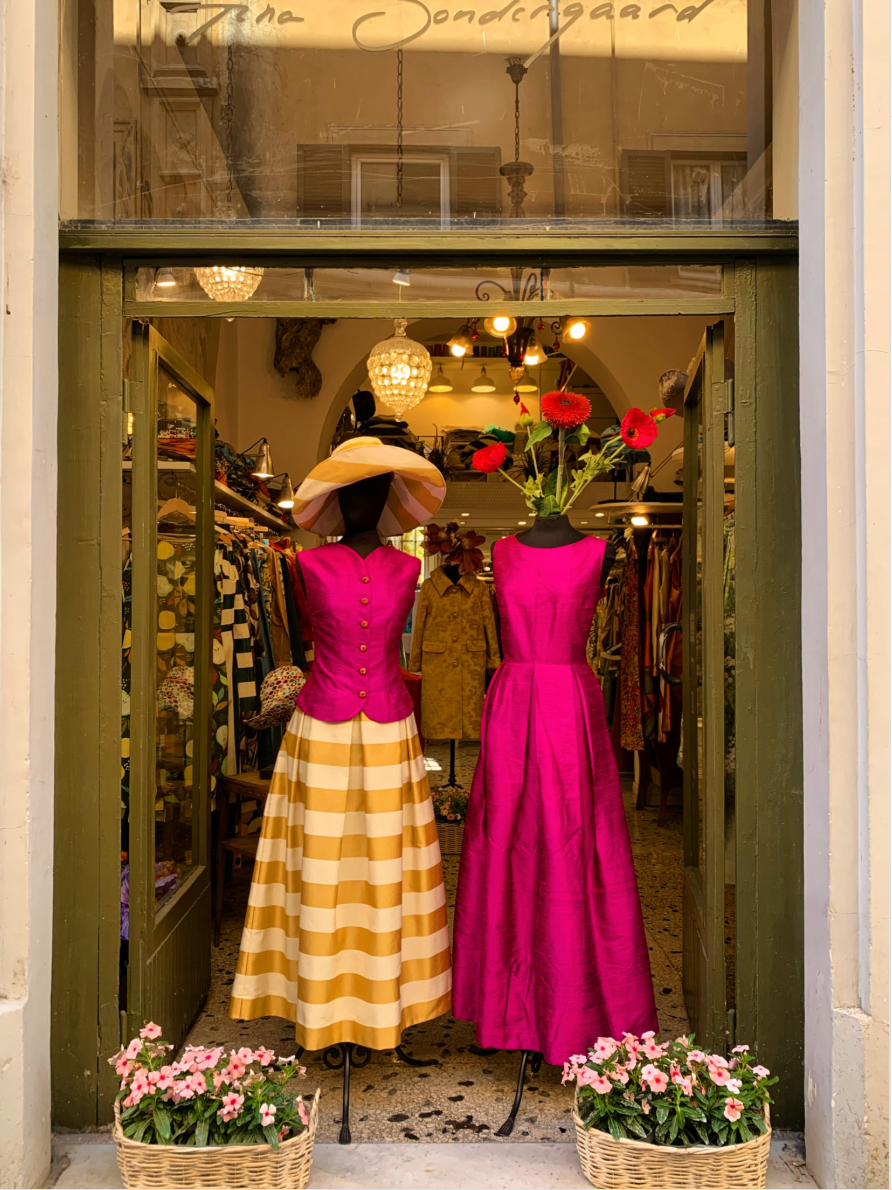
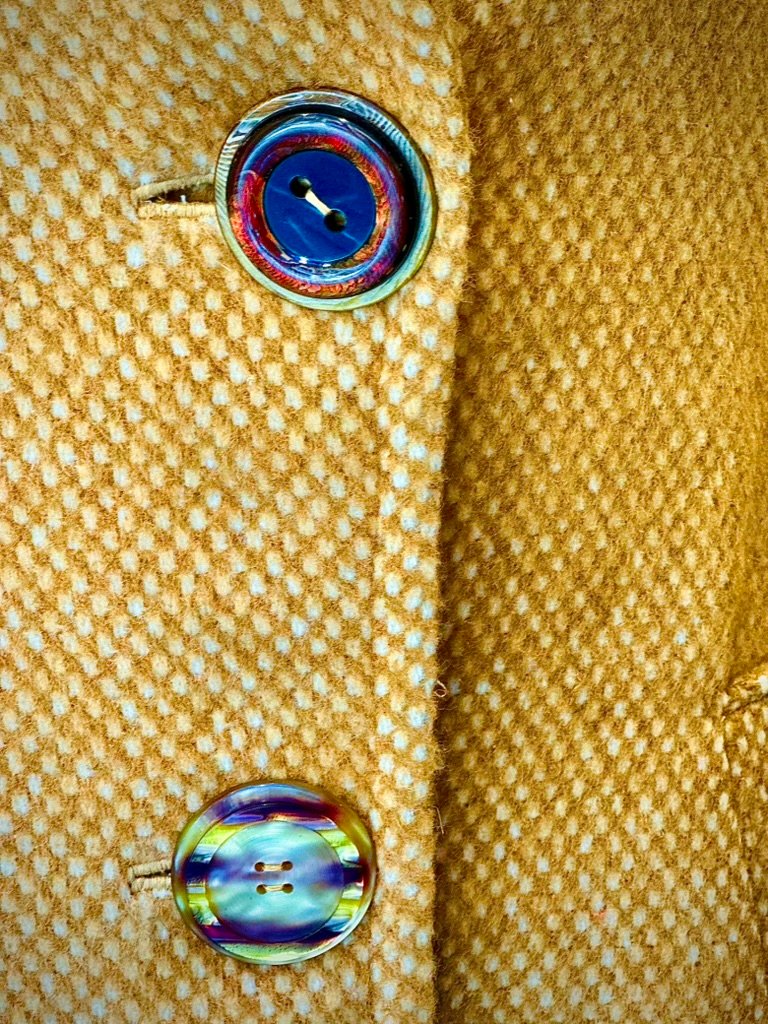
What’s your current bestseller?Right now, apart from the coats, it’s a dress with striped buttons.
Which piece in the boutique do you personally love the most right now?
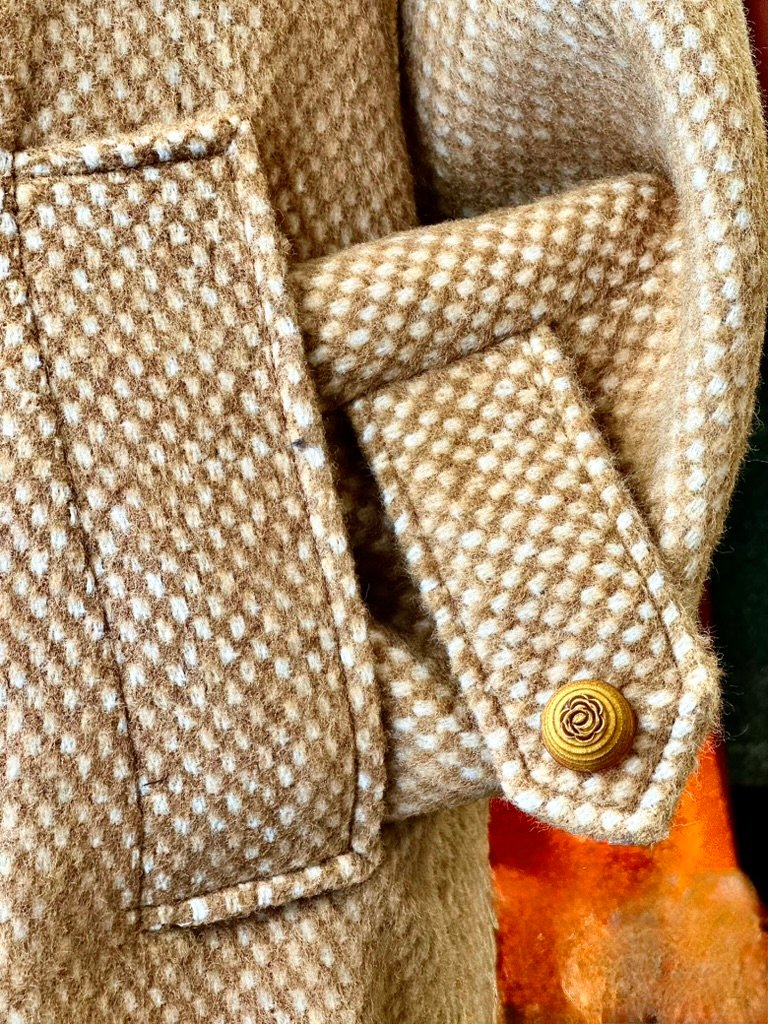
The coat.I love them all. People always ask me which one is my favorite, but I honestly can’t choose. They’re like children — you can’t really have a favorite!
In person, Tina is refreshingly direct and plainspoken, with a no-nonsense, unpretentious manner. Yet, after speaking with her about everything from a childhood steeped in creativity and the inspirations behind her designs to the extraordinary grandmother whose resilience shaped her life, another facet of Tina emerged. Beneath her straightforward, pioneering spirit is a woman of remarkable determination who has never allowed convention — or life’s inevitable challenges — to dictate her path. Her quest for freedom is matched only by her thirst for beauty.
What stayed with me most after leaving Tina’s atelier wasn’t a particular dress or a window display, but the way she sees the world. She finds inspiration in Rome’s streets, in old Hollywood films, in interior design and in everyday details that many of us overlook. Perhaps that, along with her indomitable spirit, is her greatest gift. Her designs are a reminder that beauty isn’t something rare or remote, but something already all around us, if only we choose to notice it. As Tina herself puts it, “Beauty is everywhere.”
Window display photographs courtesy of Tina Sondergaard